by Garrett Caples Being a devotee of the ultimately more funk-based grooves of Bay Area hip-hop, I tend not to pay attention to the doings of NYC, and I can’t claim to have ever followed the Wu-Tang Clan in general or Meth in particular, though I have always admired both from afar. Yet one needn’t follow the Big Apple's scene in great detail to appreciate its impact, and with Meth’s successful film and TV career, most recently as a recurring character in this season of HBO’s cop drama The Wire, one needn’t even listen to hip-hop anymore to appreciate his. This situation is exactly what’s troubling Method Man. His very success in the cultural mainstream, he feels, has been held against him by the hip hop-industry, a curious situation considering mainstream success is the perceived goal and direct subject matter of most raps these days. Unlike the recent fashion among rappers like Andre3000 to pooh-pooh their interest in music in favor of their “acting career,” Meth wants to be known primarily as an MC. But Hollywood success has proved to be a slippery slope, paved by Ice-T and Ice Cube -- each in his turn the most terrifying, authentic street rapper imaginable -- to the end of your hit-making potential in hip-hop. Couple this perception with Meth’s vocal challenges of the effect of corporate media consolidation, and it’s not difficult to imagine why Def Jam released his fourth solo album, 4:21: The Day After, without a peep at the end of August, as if the label had written him off despite his track record of one gold and two platinum plaques. Still, no one who’s heard the angry, defiantly shitkicking 4:21 (executive produced by the RZA, Erick Sermon, and Meth himself) or saw the show Meth put on that evening (leaping from the stage to the bar and running across it by way of introduction, later executing a backwards handspring from the stage into the crowd by way of ending) could possibly doubt his vitality as an MC. He put on a long, exhausting show, heavy with new material, that utterly rocked the packed house. Shortly after the show ended, I was brought backstage by Meth’s road manager, 7, to a tiny corridor of a dressing room crammed with various hangers on. A man in a warm-up suit with a towel over his head was sitting alone on a short flight of steps in the center of the room. “That’s him,” 7 said, before disappearing to take care of other business. It was like being sent to introduce yourself to a boxer who’d just finished a successful but punishing brawl. The face that looked up at my inquiry was that of a man who’d retreated somewhere far away into himself, requiring a momentary effort to swim to the surface. Quite suddenly I found myself face to face with Method Man, whose presence immediately turned all heads in the room our way as he invited me to sit down for a brief discussion of his new album and his dissatisfaction with his treatment by the music industry. SAN FRANCISCO BAY GUARDIAN: I read the statement on your Web site [www.method-man.com] in which you discuss your problems with the industry. Could you describe the problems you’ve been having? METHOD MAN: My big problem with the industry is the way they treat hip-hop artists as opposed to artists in other genres. Hip-hop music, they treat it like it's fast food. You get about two weeks of promotion before your album. Then you get the week of your album, then you get the week after, then they just leave you to the dogs. Whereas back in the day, you had artists in development, a month ahead of time before you even started your campaign, to make sure that you got off on the right foot. Nowadays it’s like there’s nobody in your corner anymore. Everybody’s trying to go into their own little club, for lack of a better word. Everybody has their own little cliques now. Ain’t no money being generated so the labels are taking on a lot of artists because of this at once that they don’t even have enough staff members to take care of every artist, as an individual. Their attention is elsewhere, or only with certain people. SFBG: Your new single [“Say,” featuring Lauryn Hill] suggests you’ve had problems with the way critics have received your recent work and even with the radio playing your records. How can someone of your status be having trouble getting spins? MM: You know what it is, man? A lot of people have come around acting like I’m the worst thing that ever happened to hip-hop, as good as I am. Hating is hating. I’ve been hated on, but just by the industry, not in the streets. They never liked my crew [the Wu-Tang Clan] anyway. They think we ain’t together anymore and they try to pick at each and every individual. Some motherfuckers they pick up. Other people they just shit on. I guess I’m just the shittee right now, you know what I mean? SFBG: Do you think it has to do with the age bias in hip-hop? The idea an MC is supposed to be 18 or 20? MM: You know what I think it is? As our contracts go on, we have stipulations where, if we sell a certain amount of albums, [the labels] have to raise our stock. A lot of times dudes just want to get out their contracts so they can go independent and make more money by themselves. There’s a lot of factors that play into it. SFBG: Are you not getting enough label support? MM: A label only does so much anyway. It’s your team inside your team that makes sure that you got a video. Or that you got that single out there, or that your tour dates are put together correctly. The labels, they basically just do product placement. They make sure that all your stuff is in the proper place where it’s supposed to be at. They’re gonna make sure your posters are up. They’re going to make sure that they’re giving out samples of other artists that are coming out also. [But i]t’s really up to us [the artists] to make sure our music is going where it’s supposed to. Right now there’s so many artists people can pick and choose from, don’t nobody like shit no more. SFBG: Do you think you’re getting squeezed out of radio play as a result of corporate media conslidation? MM: Absolutely; this shit ain’t nothing new. It isn’t just happening to me. It’s been going on since dudes have been doing this hip-hop music. They bleed you dry and then they push you the fuck out. That’s why I always stress to the fans to take your power back. I always hear people talking about things like, “Damn, what happened to these dudes? What happened to these guys? I always liked their shit.” But the fans, not just the industry, tend to turn their backs on dudes. They get fed so much bullshit, they be like, “Fuck it; I’m not dealing with that shit. I’m going to listen to this.” SFBG: So what about your acting career? Do you feel like you’ve been overexposed as an actor or that you’ve been spread too thin and are readjusting your focus? MM: Fuck Hollywood, B. SFBG: But I heard you say on the radio today you wanted to play a crackhead and get an Oscar.... MM: I do want to play a crackhead in a movie. I’m going to be a crackhead who dies of an overdose at the end of the movie, and people cry, and I’m going to get me an Oscar. But fuck Hollywood; tell ‘em to come see me. Tell ‘em to come to my door. SFBG: Obviously, from what you said during the show and the lyrics on 4:21: The Day After you haven’t renounced smoking marijuana, so could you discuss the concept behind “4:21”? Is it about the difficulties of living the hard-partying lifestyle of the rap artist? MM: It was just symbolic of a moment of clarity for me. I made a symbol for myself of a moment of clarity. You know I’ve always been an avid 4:20 person. I like to get out there and smoke with the best of them. But I picked “4:21” as like, the day after. I got tired of people running up on me and being like, “You was funny in that movie,” because I was an MC first and foremost. It used to be like, “Yo, that fuckin’ verse you did on that song, that was hot.” Now it’s like, “My kids love you; they love that movie, How High.” It gets to the point when even when I’m having a serious moment, or a serious conversation, people laugh at the shit like it’s funny. But they laugh cause they thinking of the movie; they thinking of some sitcom shit. SFBG: Besides yourself and RZA, Erick Sermon executive produced the album. Can you talk about your connection with him? MM: I’ve been fuckin’ with E ever since I’ve been fuckin’ with Redman. E knows what I like, you know what I’m saying? The same way he knows what Redman likes. And RZA, that’s a given right there. I’ve been down with RZA’s shit A1 since day one. SFBG: 4:21 also features a collaboration with Ol’ Dirty Bastard. When did you guys record this track? MM: “Dirty Meth” -- that’s a posthumous joint with O.D.B. It was after he was gone already. I tell everyone that so they know. SFBG: But he seems to permeate the new album. MM: He does. Good word, too. He permeates it.
San Francisco Bay Guardian online exclusive October 18, 2006
When a bumped phone interview with hip-hop legend and platinum artist Method Man mushroomed into a proposed backstage post-show encounter, I naturally jumped at the chance.
20061108
Method Man at the crossroads

Too Short -- Blow the Whistle (Short/Jive)
Album Review by Garrett Caples
San Francisco Bay Guardian October 11, 2006
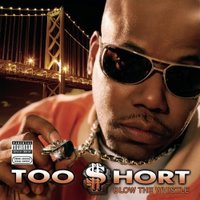 Although largely recorded in Atlanta with production by Jazze Pha and coexecutive producer Lil Jon, Blow the Whistle is Too Short's most Bay-sounding album in years and certainly his best disc since 2000's You Nasty (Jive). Having rapped professionally since 1983, Short might not bring his utmost to every recording, but Whistle sounds as hungry as the most hyphy debut imaginable. His subject matter has not changed significantly — shouts of “beeyatch!” still abound — but he brings a fresh intensity to his raps, as though reenergized by the youthful Bay Area movement.Songs like the title track and the Droop-E-produced "I Want Your Girl" (featuring E-40 and Mistah FAB) find Short Dogg perfectly at home with the latest Bay sound, while on "Keep Bouncing" he even gets Snoop Dogg "ghostridin’ the whip." While it may be true that Short's wordplay tends toward the misogynistic, it's equally the case that he receives no credit for his gestures in the opposite direction. Witness his support rap on Kelis's girl-power anthem "Bossy" and the following lines from Whistle's "Sophisticated":
Y'all thought Too Short was all about pimpin'No one has the right to take away from Short the word that made him famous. And nobody is obliged to take it seriously either.
Foul-mouthed mack just talkin’ bad about women
You heard bitch and cut it off
You ain't even listenin’
All I said was, if the shoe fits wear it
And if it don't apply, act like you didn't hear it.
E-40 on cover of Modern Luxury's mag, San Francisco
Big glossy E-40 gazing out from the fanciest magazine racks of the Bay this month. The high fashion mag tapped him to lead for the "70 hottest stars, sounds, scenes..."
[pic coming]
Regaining consciousness --East Oakland rapper Ise Lyfe spreads the word, makes his mark
"I think the only way to do it harder than Jay-Z is to have a real movement... I'd like to be that big but at the same time put a dent in the Earth." "I want to be a mainstream artist," says East Oakland rapper and spoken word poet Ise Lyfe, discussing his rejection of the label "conscious rap." "I'm not trying to be some backpack cat performing in Davis. I want to be ..." The 23-year-old trails off thoughtfully. "I think the only way to do it harder than Jay-Z is to have a real movement, something tangible that will effect change in the world through music. I'd like to be that big but at the same time put a dent in the Earth." At first glance, it's hard to imagine a rapper less like Jay-Z than Ise Lyfe, whose 2004 self-released debut, SpreadtheWord, is devoid of the big pimpin', cheese-spending exploits that have endeared Jiggaman to millions. But like James Baldwin — who once said he didn't want to be the best black novelist in America, he wanted to be Henry James — Ise isn't talking about betraying his identity for success. He's simply saying he wants to be the best, period. If there's anything common to all four of these artists, it's the awareness that in order to be the best you must change the game. With the rerelease of SpreadtheWord, complete with new artwork, a bonus DVD, and a mildly retooled track list, on fledgling independent Hard Knock Records, in addition to his recently concluded nationwide tour with the Coup, Ise Lyfe is hoping to do just that. Born in 1982, Ise was raised in Brookfield, deep in East Oakland next to the notorious Sobrante Park. "I grew up as a young kid right when the crack epidemic was flourishing and having a real effect on our families," he says. "My father had been affected by drugs. For me, growing up in a single-parent home was the manifestation of that existing in our community. But I also came up amongst a large level of social justice activity and youth organizing. That influences my music. I think Oakland has a history that unconsciously bleeds into everyone from here." The legacy of this history — which includes a spoken word scene at least as old as Gil Scott Heron's mid-’70s albums for underground label Strata East — endures in Oakland, where Ise first made a name for himself as a teen slam poet. "I would be three years deep into performing spoken word before there was any place I could go and perform hip-hop," he says. "Hip-hop was all 21-and-up venues, where I was the number one slam poet in the country when I was 19." Repping the Bay in 2001 at the Youth Speaks National Poetry Slam, Ise would achieve a modicum of fame through appearances on HBO's Def Poetry Jam. "When I started recording," he confesses, "folks didn't even know I was making a hip-hop record. They thought it was a spoken word record, but I fused both in there." The success of this fusion of art forms is all the more apparent on the rereleased SpreadtheWord, the continuity of which has been improved by a few judicious edits. Ise's flow is so dexterous that the moments of purely a cappella poetry enhance rather than disrupt the musical experience. In fact, musicality underscores an important difference between SpreadtheWord and most conscious hip-hop recordings, for most of the beats on even otherwise impressive efforts sound like they were made sometime in 1993. The lack of curiosity about the sound of contemporary hip-hop gives such music a perfunctory air, while the tracks on SpreadtheWord are infinitely fresher even after two years. While it's not exactly hyphy, a tune like "Reasons" still sounds like a Bay Area slap that would work on a mixtape with other new tunes. "My fan base is predominantly young people of color," Ise says, articulating his other major difference from most rappers who fall under the conscious rubric. "I think it's all good. The music is for everybody. But I'm proud of seeing the music connect with who it's really written to, directly from, and for. I don't want to be distant from the community." In the face of the failure of so many conscious rappers to continue to appeal to their original listeners, it's hard not to attribute Ise's own success to his closeness to both his audience and hip-hop. "It's important for me to have real community work behind what I say," he explains, commenting on a busy schedule that includes everything from teaching classes to street sweeping to performing at the Youth UpRising community center on the bill with Keak Da Sneak on Aug. 25. Moreover, his refusal to place himself in opposition to the hyphy movement despite his very different approach to hip-hop lends him a credibility unavailable to others. ISE LYFE
When this article came out, you made Ise Lyfe's album #1 at Rasputin's SF. Your power is recognized!
by Garrett Caples
San Francisco Bay Guardian August 23, 2006
Youth UpRising’s "Lyrical Warfare"
with Keak Da Sneak
Fri/25, 4–7 p.m.
8711 MacArthur, Oakl.
(510) 777-9909
Free
www.youthuprising.org
Confessions of a Gofessional
Free mixtape by Team member Kaz Kyzah scores 7,000 downloads in first week Things move fast in rap. By the time their second album, World Premiere (Moedoe/Koch), dropped in April, the Team already had a new single, the "Hyphy Juice" remix, which now rivals "It's Getting Hot" as their biggest radio hit. Since then, Moedoe label head K.O.A.B. has inked a deal for Hyphy Juice, the energy drink he co-owns with the group, to be sold at 7-11 stores nationwide, while Team member Clyde Carson just signed as a solo act to Capitol Records. Carson’s ambitious project, Theater Music — consisting of one multisong, album-length track à la Prince's Lovesexy (Warner, 1988) — will appear next year, cobranded by Moedoe as well as the Game's Black Wall Street. Yet my appearance at the Team's condo concerns none of these matters. Instead, I've been summoned by Kaz Kyzah to discuss The Gofessional, his new mixtape with KMEL managing director DJ Big Von Johnson. Consisting of 19 tracks of mostly original material, The Gofessional is part of a growing trend in the Bay Area mix scene — like Husalah and Jacka's Animal Planet and Beeda Weeda's Homework — of blurring the distinction between the carefully crafted album and the "anything goes" approach of mixtapes. What makes The Gofessional unique, however, is its method of distribution: it's available for free at bigvon.com. In the first week alone, the mixtape was downloaded 7,000 times on the strength of two singles currently spinning on KMEL: "Cocaine," a soulful love-as-addiction metaphor over a 9th Wonder beat, and the LT-produced original "Love" (featuring Jimmie Reign), an R&B-infused investigation of more serious subjects often neglected by the Bay's current "go dumb" ethos. Before beginning, however, Kaz clears up the lingering mystery around World Premiere's release, not, as anticipated, through major label Universal but rather through independent powerhouse Koch. "We were on a label of a Mexican artist, Lil Rob, and it wasn't the place for us," Kaz says, referring to the Universal-distributed Upstairs imprint, which caters primarily to Latino rap. "When we got over there, it wasn't what we wanted. But it worked out where we could use it to get the album done and move on. We didn't have to pay any bread. We actually came out winning." "At the same time, I was going through legal trouble," he continues, describing continuing fallout from a robbery charge he caught at age 18. "I was worried about going to jail and house arrest. I did end up spending a couple of months in jail, so it was a real hectic time." While the delays of label jumping and legal woes may have muted World Premiere's impact, the period of house arrest last year proved productive for Kaz, who with West Oakland rapper J-Stalin and East Oakland producers Tha Mekanix formed a side group called the Go Boyz and recorded an album at the condo. These late-night sessions featuring an ankle-braceleted Kaz were the genesis of the current Go Movement, which already constitutes a third front in the Bay's hyphy and thizz campaigns. "What I want people to understand about the Go Movement," the Hyphy Juice shareholder stresses, "is it's not not about getting hyphy, going dumb. But it encompasses a whole lot more and that's what makes it so powerful. Like when I talk to Dotrix [of Tha Mekanix], we'll use go 1,500 times and have an in-depth conversation. "It was Dot who said, 'You the Gofessional, man.' And that was one of my favorite movies, The Professional, so I used it for my mixtape. I didn't want to come out with the Go Boyz, and nobody know what Go is all about. I was talking to some people from Marin, they never even heard of the Go Movement. To us it's old, but a lot of people are still catching on." The free download format of The Gofessional is proving to be an effective means of spreading the word. (Another 5,000 hard copies have already been distributed for the benefit of those not online, and more are on the way.) For Johnson, who apart from Kaz is the author of this largess, the free mixtape is designed to boost record sales as well as keep the Bay's current buzz alive. "I got 7,000 downloads in a week, when I know artists who put out records that took seven months to reach that in sales," Johnson says later that day at KMEL. "There are a lot of big artists, a lot of songs on the radio, but sales aren't adding up. So I feel like, give some away. Instead of trying to break a song, I'm trying to break an artist in the streets. I definitely think this will stimulate album sales." It's refreshing to hear such a statement these days, when the "free download" has been blamed for bringing the recording industry to its knees. To me, Johnson's logic is irrefutable; I'm more likely to check out something for free than for $15, and I'm way more likely to buy a $15 album from someone whose previous work I have and like. As The Gofessional is easily better than dozens of albums I've actually purchased, the odds of me buying an eventual Kaz Kyzah solo album are extremely high. Given the current excitement in Bay rap and Carson's deal with Capitol, the interest in Kaz's mixtape hasn't failed to attract the attention of majors as well.
Things move fast in rap. ...I've been summoned by Kaz Kyzah to discuss The Gofessional...
by Garrett Caples
San Francisco Bay Guardian August 16, 2006STALLED PREMIERE?
GOING FOR THE STREETS
20061104
Dope, rap, and religion
With two hot collaborations, one new solo joint, and an upcoming reunion with Mob Figaz in the works, Husalah should be on top of the world. Instead, he's spending the next four and a half years behind bars I'm on the set of the video for "Never Blink," a song off Mob Figaz member the Jacka's 2005 solo disc, The Jack Artist (Artist), featuring Dubb 20 and J-Stalin. The "set" in West Oakland where 10th Street meets Mandela is not sanctioned by a film commission but monitored from a distance by a slowly circling caravan of three police cruisers. A Mercedes SL500 creeps through the crowd and parks in the middle of the road, retracting its hard top with the slow-motion elegance of a moon landing before a familiar 6-foot-3-inch frame unfolds from the low roadster and begins the usual round of hand slaps and hugs. Husalah is on the set. "I represent the Iraqi Space Program," he announces, then immediately reconsiders. "The Nigga Spaceship Association." He has the air of one whose wit is so fertile he must double-stack its results. Though Hus doesn't perform on "Never Blink," he has turned up on behalf of his fellow Mob Figa for some whoridin' — that art of dancing, lyric miming, and tough posturing behind the rapper — and for the next several takes nearly steals the show. He can't help it. Combined with his athletic build and strikingly handsome face, his height makes him conspicuous in any crowd, while his desire to "take it further," evident in his innovative, melodic flows and ever-evolving gangsta argot, also animates his appearance. Instead of imaginary bills, Husalah pulls out a stack of new hundreds, fans it to show it's all hundreds, shuts the fan, and begins to count, licking the bills instead of his thumb as he goes while bobbing to the mournful yet light-as-air RobLo production. Fielding an imaginary call, Hus shoulders his phone as he continues to count and dance, gazing off abstractedly as though processing information. It's a performance worthy of a Mac Dre or an André, though more thugged out and unmistakably Husalah's own. Husalah's been recording for eight years, debuting as a teen with the other Mob Figaz — Jacka, Fed-X, AP9, and Rydah J. Klyde — on "Ride til We Die," the opening cut on C-Bo's Til My Casket Drops (Awol, 1998). Now, at 25 he is hitting his creative stride just as Bay Area rap is making itself felt on a national level. Three hot Husalah projects are currently in stores: 3 da Hard Way (FriscoStreetShow, 2005), a trio with Jacka and hard-spitting MC Marvaless; Animal Planet (2006), a Demolition Men mixtape cohosted with Jacka; and Dope, Guns and Religion (Sumo, 2006), a solo debut drawing on new and unreleased material. With a Mob Figaz reunion on the horizon, the timing couldn't be better, except for one small catch. In February, Husalah was sentenced to four and a half years in federal prison for possession with intent to distribute "more than five kilos" of cocaine, a charge dating from 2001, when the rapper was 20. At press time, he was set to turn himself in July 10. "Where I come from," Husalah says several days before the video shoot, at the Mob Figaz's studio, hidden away in an upper-middle-class chunk of Antioch, "it's all about getting money, staying fly, being the coolest dude." Born in 1981 in nearby Pittsburg, the young Tito Alston grew up in el Pueblo Housing Project, notorious for its colorful "hood rich" hustlers, who made small fortunes dealing dope and pimping. It's exactly the sort of "subculture that glorifies swagger over work," according to a March 20 New York Times article and "causes the deepening ruin of black youth." Such preferences likely are also the effect of poor education and few opportunities for low-income inner-city families. Pittsburg may not be your classic inner city, but it's certainly no exurban paradise. An inland port first known as New York Landing, it was rechristened Black Diamond following the 1903 discovery of coal in the hills and received its present name in 1911 to honor the arrival of the steel industry. The low-paying jobs available to unskilled laborers (in chemical and power plants and oil refineries and distribution centers) are ones few would wish to take or even consider safe. As a teen Husalah rapped in talent shows, but his first love was sports. He played basketball and football and even boxed. His hoop dreams were quashed, however, when he was expelled from Pittsburg High in 10th grade after being caught with crack he intended to sell. Following a brief stint at the alternative Riverside High, where he was again busted with his stash, he was expelled for good and sentenced to a year of house arrest. "I used to sneak out at 10 every night, until 8 in the morning [to sell crack]," he recalls. "That was my shift." By 16, Hus was "heavy into the streets. I didn't care about music no more." "Then one day I was playing basketball in the gym," he continues. "Jacka, AP9, and RobLo came and got me. They was, like, 'C-Bo at the record store — he want to hear y'all rap.' I was, like, 'I don't care about this shit no more.' I got $4,000 in my pocket. To a young ’un that's big." Fortunately his friends managed to persuade the young Husalah to have his date with destiny. "We weren't even a group," he says. "We were just the tightest dudes in the area. But C-Bo was fresh off 2Pac's All Eyez on Me [Polygram, 1996], selling 300- or 400,000 units consistently. We went into the studio that day and did 'Ride til We Die.' After that, Bo's, like, 'We fittin' to do an album.' We went on tour, dropped the album [C-Bo's Mob Figaz (Git Paid, 1999)], and sold 140,000." If the number seems small to platinum-conscious readers, consider that this occurred in the middle of Bay Area rap's long commercial decline, when even an album with a radio hit — such as the Delinquents' Bosses Will Be Bosses (Dank or Die, 1999), featuring "That Man!" — only moved 50,000 units. Or that the stir caused two years ago by Frontline's Who R U? (IMG) was based on sales of 10,000. For an independent debut in the Bay, 140,000 would still be huge. The figure was more than sufficient to establish the Figaz as a force in Bay Area rap. For a couple of years, Husalah says, "I was, like, 'OK, this is money.' But then Bo went to jail and it got stagnated." The loss of C-Bo's leadership coupled with the Bay's commercial misfortunes slowed the group's momentum. "I fell back into [dope dealing] because it was lucrative," Hus confesses. "I've always been the nigga to wear the flyest kicks, the best fits, the best chick, so I gotta keep that standard going." Work on an attempted follow-up album, Mob Figaz, languished so long that the exasperated Warlock Records would eventually release it unfinished in 2003. As he returned to the streets, however, Husalah began to develop a spiritual consciousness. E-40's remark on In a Major Way (Jive, 1995) advising the listener to "read Proverbs" in times of stress got Husalah perusing the Bible, and from there he moved to the Koran. It was the Koran that spoke to his struggles and sensibility. "It's all about God first," he says. "It ain't about preaching. It's about knowing what's real." His conversion to Islam led him to wrestle seriously for the first time with the implications of selling crack to his community. "Allah says you can't be judged for what you weren't aware of," Hus comments. "I thought I was doing right as a youth. That's what all the older people I came up under did to make money. You get dope at hoop or be catching long bombs or sell dope. There's not a lot of opportunity here. But once you become a man, you get aware of what you doing. It's not an excuse now that you're aware of it." The ambivalence Hus developed toward his primary source of income is documented on Dope, Guns and Religion, which despite its celebration of the hustling lifestyle is threaded with contradictory feelings born of his spiritual awakening: "But at the same time I barely touch packages/ ’Cause I believe pushing poison is for savages/ But then again, this shit got advantages/ How could I live if my pockets is Somalian?" As these lines from "Rainman" illustrate, Husalah has tapped into Bay Area rap's 2Pac-inspired tradition of the "conscious thug," using the dope dealer or pimp persona to articulate the dilemmas faced by black high school dropouts — more of whom, by their late 20s, are incarcerated (34 percent) than employed (30 percent), according to the same New York Times article. But where 2Pac was a conscious rapper who adopted the thug persona, partly from his on-screen success in Juice, partly as a way to get his message across, Husalah is a thug rapper who achieved consciousness, seeking a way out of the dope game even as he remained ensnared by its financial rewards. Though he scaled back his activities, Husalah was unable to resist what seemed like a quick job for a big payoff in 2001 and arranged to help ferry "a large amount of cocaine" from Chicago to Cali. "That was a decision I made," he explains today. "It wasn't out of ignorance. It was out of a sense of desperation or hopelessness. I felt like I had no other choice." "Some dude ratted me out; we were being watched the whole time," he continues. "I caught a federal conspiracy charge in Chicago. There was another guy driving the car, but they said I was the one who coordinated, flew him out there to pick something up, to take something around. With the feds, you got to take the charge and do your time. You can't win." Nonetheless, after posting bail Hus returned to the Bay, hiding out for the next 18 months. "I wasn't really on the run because it was an out-of-state case and they didn't know where I was," he explains. "I'm, like, 'I'm not surrendering until they pick me up.' In the meantime, the grand jury indicted me, and I was snatched up by the task force in Pittsburg. "I didn't have no criminal record. I'd been to juvenile hall, but this was my first time going to jail and I'm looking at 10 years." Bailed out again, Hus would spend another three years fighting the case in court before eventually agreeing to plead guilty to possession and intent in exchange for the feds dropping the weightier conspiracy charge. Sentencing him to 53 months in February, the judge granted Husalah a six-month stay to get his musical affairs in order before entering the Federal Correctional Institute in Sheridan, Ore. "My whole thing now is making music," says Husalah, who, in addition to completing his parts for the upcoming Mob Figaz album, has been hard at work finishing a half dozen projects, including a rock album, The Unusual Suspects; a dancehall disc with Jacka as the Shower Posse; and Harsh Reality, the full-length he was making when his legal woes began. "Plus, I figure I'll still be able to work in there, because in the federal system it's a lot more open. I'm pretty sure I'll have a mini ADAT recorder. There'll be new product." With the group’s business partnership, MobFigaz, LLC, continuing in his absence, Husalah has no fear of losing his musical profits. “I know they’re gonna keep it rockin',” he says. “We gonna make sure our check is in the mail.” “Husalah is a phenomenal artist,” says Mistah F.A.B., who featured a farewell interview with Hus on the most recent installment of his new WILD 94 show. “He’s very intelligent and his character and charisma leave an impression on people. It’s unfortunate he has to go to jail for his past mistakes, but his stock will rise for doing his time and we’ll be waiting for him when he gets back. It’s going to be a learning experience.” Husalah, it seems, agrees. “If Allah made me go through what I had to go through, there's a reason. I'm a better person. I learned what not to do. The statistics show it's death or jail for a street nigga, so for me it happened to be jail. I feel like it's a blessing that I'm breathing, I'm healthy." "When you look at the whole situation, I had a lot of fun," he concludes philosophically. "I rocked a lot of models, rode a lot of rims, dropped a lot of tops, popped a lot of bottles, all that bullshit, so I'm trying to see what I'll evolve into now. I might be heavily religious. I might be into different types of music. Whatever it is, I'm gonna stay a real nigga, keeping this mob shit rocking. I'm gonna lay down and do my time. Then get right back and make money like I never left." www.myspace.com/husalahofthemobfigaz
by Garrett Caples
San Francisco Bay Guardian July 12, 2006BLACK DIAMOND
“THIS IS MONEY”
COKE ADDS LIFE?
Busta Rhymes -- The Big Bang (Aftermath/Interscope)
Album Review by Garrett Caples
San Francisco Bay Guardian June 28, 2006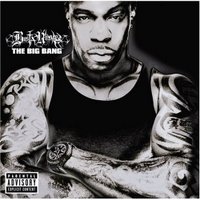 It's hard not to compare The Big Bang to E-40's recent My Ghetto Report Card (BME/Warner): Both are "relaunches" of rappers who never really fell off, and have many more albums left in them. But where 40's hookup with Lil Jon seemed like a stroke of brilliance, the teaming of Busta with Dr. Dre has a slight air of corporate reshuffling, like Clive Davis handing Jimmy Iovine the keys and saying, "See what you can do." Trouble is, Dre isn't as interested in Busta as Lil Jon is in 40. Dre produces five tracks, tweaks half a dozen more, and mixes all, yet he feels fairly remote. Of his tracks, only the Missy Elliot feature, "How We Do It Over Here," is single-worthy, though it sounds like Dre biting hyphy, an impression reinforced by Missy's "Pop ya colla like this/Bottles up like this" chant.
If Dre isn't putting up his best, you can be sure everyone else is. The Swizz Beatz–produced single, "Touch It," is old but retains its charms, although the same can't be said for Swizz's vocalizations on the otherwise fine DJ Scratch track, "New York Shit." Probably the two best numbers are J-Dilla's fat, soulful Fender Rhodes groove, "You Can't Hold a Torch," and Timbaland's frenetically minimalist, quasi-African "Get Down," which makes you wonder what kind of album he would cook up if he had Busta at his disposal. As a whole, The Big Bang isn't disappointing, but it doesn't quite live up to expectations.
The Team -- World Premiere (Moedoe/Rex/Koch)
Album Review by Garrett Caples
San Francisco Bay Guardian June 21, 2006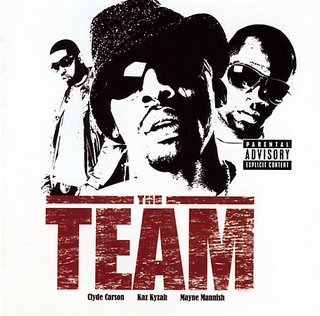 After months of delay, the Team's World Premiere has dropped, not on Universal as expected, but rather on large independent Koch. Whether this label jockeying had anything to do with the disc's belated appearance is unclear, yet the finished product is unquestionably one of the best, if most curiously assembled, albums to emerge under the banner of the hyphy movement.
While not a redo of the Bay Area group's 2004 debut, The Negro League (Moedoe), Premiere nonetheless lifts a pair of tracks, including the ShoNuff-produced hit "It's Getting Hot." The album also raids last year's Team mixtape, Go Music (Siccness.net), for the single "Patron," as well as the star-studded remix of "It's Getting Hot," which amusingly resuscitates MC Hammer. Two other singles from last year, "Just Go" and "Hyphy Juice," round out the familiar material, whereas their current single, the "Hyphy Juice" remix, is nowhere to be found.
All this sounds like a recipe for disaster, the same combination of ill timing and hit recycling that blunted the impact of Keak da Sneak's Kunta Kinte (Moedoe, 2006). Yet amazingly enough, Premiere overcomes its checkered origins and bangs from start to finish. The older material sounds fresh and is even heightened in the context of new tunes like "Top of the World" and "Good Girl," which add an almost psychedelic R&B dimension to the hyphy tonal palette. The innovative qualities of the music make any protest against its lyrical limitations — geared almost exclusively toward the club — beside the point, and the group's lack of gangsta posturing is refreshing in itself.
The Product -- One Hunid (Underground Railroad/Koch)
Album Review by Garrett Caples
San Francisco Bay Guardian June 14, 2006 A multiregional force composed of Houston legend Scarface, Young Malice of Jackson, Miss., and the Fillmore District's own Will Hen, the Product is one of the more intriguing new groups in hip-hop. One Hunid is that ultimate rarity: a conscious album made by hood rappers for hood consumption, rather than for the backpack circuit. ’Face's list of thug credentials is as long as anyone's — stretching back to the Geto Boys — so his commitment to such a project is of genuine worth; he reaches a vast segment of inner-city youth who are deaf to the more substantial critiques of, say, the Coup.
Perhaps inevitably, the consciousness on One Hunid is limited to a sense of consequences: "I wasn't trying to kill that man; he was in my way/And now I'll never see the light of day," intones Hen, suggesting fear of prison more than a realignment of values. Consciousness is also apparently for men, as little distinguishes the Product's talk of "bitches" from your average thug's. I've been told by rappers who know that this approach is a necessary exercise in spoon-feeding, but it's hard to recall 2Pac songs like "Keep Ya Head Up" and not wonder if there isn't another way.
Ultimately a record stands or falls on musical merit, and One Hunid doesn't disappoint. The rappers have heat — Hen arguably outshines Scarface himself. Oakland producer and longtime ’Face collaborator Tone Capone, who had a hand in the group's development, contributes five modern-day mob tracks, which serve as a useful reminder that there's more to Bay Area rap than just hyphy.
20061029
Ruling party -- Rising hip-hop star J-Stalin morphs from d-boy to Go Boy
by Garrett Caples
San Francisco Bay Guardian April 26, 2006
J-Stalin knows how to make an entrance.
The first time we meet, in November 2004 at the Mekanix's recording studio in East Oakland, he enters nonchalantly, sporting an embroidered eye mask as though it were everyday wear. He walks up to me and shakes my hand. "I'm J-Stalin. I write and record two songs a day," he says with boyish pride.
I had a hard time retaining the notion the rapper wasn't a boy, for though he'd recently turned 21, his five-foot frame and preternatural baby face gave the impression of a raspy-voiced, blunt-puffing, Henny-swilling 14-year-old.
Yet he already had a storied past. A teen crack dealer, or "d-boy," from West Oakland's Cypress Village, Stalin was busted at age 17, spending the next 11 months on parole with weekends in juvenile hall. During this period, to both stave off boredom and possibly escape the multigenerational cycle of dope-dealing in his family, the young Jovan Smith began writing raps, finding out about the other Stalin in 11th-grade history class, and soaking up game at the Grill in Emeryville, where family friend DJ Daryl had a recording studio.
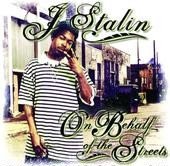
After letting him watch for a year, Daryl put Stalin on a track — the result so impressed Daryl's frequent collaborator, Bay Area legend Richie Rich, he immediately commissioned a hook. Stalin would end up on three cuts on Rich's Nixon Pryor Roundtree (Ten-Six, 2002) and on two as a member of the Replacement Killers, a group that included Rich and Crestside Vallejo's PSD. Several more songs from this period had just surfaced on Rich's 2004 compilation, Snatches, Grabs, and Takes (Ten-Six), though Stalin had since defected to the Mekanix's production company, Zoo Entertainment. By the time we met, the highly productive crew had recorded most of Stalin's upcoming debut, On Behalf of Tha Streets.He's next
During the next 18 months, J-Stalin would generate no small amount of buzz, thanks in part to high-profile guest shots on projects like the Jacka's The Jack Artist (Artist, 2005) and the Delinquents' Have Money Have Heart (Dank or Die, 2005). Three advance tracks from On Behalf — "Party Jumpin’," featuring Jacka; a clean version of "Fuck You"; and an homage to the classic drum machine, "My 808" — have accumulated spins on KMEL, while the video for "My 808" has more than 20,000 plays on Youtube.com. Too $hort says he's "next," E-40's dubbed him "the future," and major labels like Capitol and Universal are checking him hard.
To crown these achievements, Stalin's copped a coveted spot hosting an upcoming project for the Bay Area's mix-tape kings, DJ Devro and Impereal, alias the Demolition Men (see sidebar).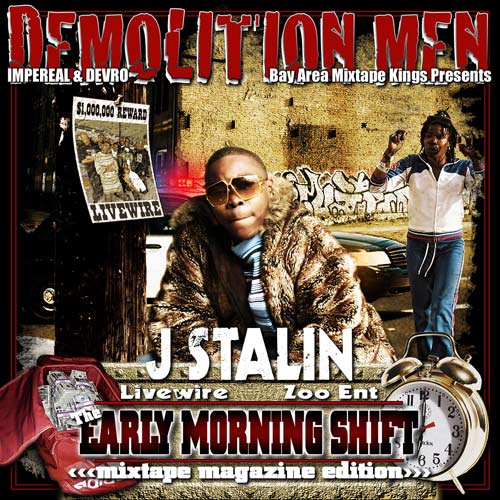 Named after Stalin's penchant for calling the DJs at 7 a.m., ready to lay verses, The Early Morning Shift is a potent fusion of mix tape beats and Mekanix originals, laced with Stalin's melodic raps and distinctively raw, R&B-style vocals. Taking advantage of the industry's current structure, whereby you can drop a mix tape or two without compromising your "debut" album marketability, The Early Morning Shift will be most listeners' first chance to hear the prolific J-Stalin at length, in the company of stars like Keak, F.A.B., and the Team, as well as Stalin's Cypress Village crew, Livewire. Having generated some 60 tracks in the scant two weeks devoted to recording the disc, Stalin has literally given the Demolition Men more than they can handle: Talk of a "part two" is already in the air, though the DJs are still rushing to finish the first for an early-May release.
 The Early Morning Shift comes at a pivotal time in J-Stalin's career. At the very least, the mix tape will warm up the Bay for On Behalf, which Zoo Entertainment plans to release independently in the next few months. With everywhere from Rolling Stone to USA Today catching on to the Bay's hyphy/thizz culture, and major labels lurking in the wings, it's probably only a matter of time before Stalin gets a deal. But the rapper is adamant on signing only as part of the Mekanix's Zoo.
"We don't want an artist deal," he says. "If they give us a label deal, it'll work, because I ain't fittin' to sign no artist deal."
If this sounds a tad dictatorial in the mouth of so young a playa, consider that Stalin left a famous rapper's camp to work with a then-unknown production duo, a decision fraught with risk. But Stalin's instincts regarding his own artistic strengths are sound. He thrives on quantity, and the Mekanix's intense productivity suits Stalin's seemingly endless supply of rhymes and hooks. The duo's ominous, minor-key soundscapes provide perfect vehicles for the rapper's exuberant tales of West Oakland street hustle and melancholy, often poignant reflections on d-boy life.
"I used to listen to their beats," Stalin recalls, "and be like, 'Damn, them niggas got heat!' Plus they ain't no haters. I mean, I'm a leader; I ain't no follower. They allow me to still be me and fuck with them at the same time."
A few months ago I had a chance to watch this process in action, dropping by the studio as Dot and Tweed were putting the finishing touches on a hot new beat, one in tune with current hyphy trends yet retaining the dark urgency characteristic of the Mekanix sound.
"Let me get on it," Stalin says, as he usually does when he hears something he likes.
Sometimes Dot says yes, sometimes no, depending on their plans for a particular session. With a beat this fresh and radio-ready, one they could easily sell, Dot is noncommittal: "What you got for it?"
Without a pause Stalin breaks into a melody, accompanied by an impromptu dance: "That's my name / Don't wear it out, wear it out, wear it out ..." Simple, catchy, the phrase totally works, and in less time than it takes to tell, he's in the booth laying down what promises to be the main single from On Behalf: "That's My Name."
Sitting behind the mixing board, Dot shoots me a smile, as if to say, "See why we work with this guy?"On the Go Movement
With The Early Morning Shift about to drop, and On Behalf on the way, the only thing Stalin needs is his own catchword, à la hyphy or thizz. Enter the Go movement. Among recent innovations in Bay Area hip-hop slang is a certain use of the word go to indicate a kind of dynamic state of being, widely attributed to Stalin.
"I ain't sayin' I made it up, but somebody from West Oakland did," Stalin says. "Even before there was hella songs talkin' about Go and shit, that shit came from ecstasy pills. We used to say, 'Goddamn, you motherfuckers go.' And then you refer to a female like, 'She go.' I swear it used to just be me and my niggas in the hood. I started fuckin' with the Mekanix and sayin' it at they place. Then, before I knew it, everybody was talking about Go."
Like thizz, Go quickly expanded beyond its drug-related origins, partly because it epitomizes so well the fast-paced environment of rappers' lifestyles. Among the early cosigners of the Go movement is the Team, whose album World Premiere (Moedoe) dropped at the beginning of April. Not only did the group release a between-album mix tape and DVD called Go Music (Siccness.net, 2005), but Team member Kaz Kyzah has hooked up with Stalin and the Mekanix for a side project called the Go Boyz. First previewed on Go Music, on a track also featuring Mistah F.A.B., the Go Boyz have already recorded their self-titled debut, and Zoo is in talks with Moedoe about an eventual corelease.
"Where I'm from, we don't say, 'Go stupid.' 'Go dumb.' We just go," Kaz Kyzah says, explaining the term's appeal.
"Really, it's a way of life for us," he continues. "Me, Stalin, Dot, and Tweed, we'd be up all night just goin'. Every song was recorded at like four in the morning. Listening to some of the stuff now, you can feel it in the music."Getting in early
Since I began this piece, Stalin, it seems, has gotten even bigger, as word of The Early Morning Shift and the Go Boyz has spread through the scene. People are suddenly lining up to work with him, and he's already committed to new projects with DJ Fresh, Beeda Weeda, the Gorilla Pits, and J-Nash, an R&B singer featured on Mistah F.A.B.'s upcoming Yellow Bus Driver. In a late-breaking development, E-40 confirms he intends to sign the Stalin/Beeda Weeda duo project to Sick Wid It Records.
During our interview, Stalin and I run by DJ Fresh's studio so J can lay a rhyme for an upcoming installment of Fresh's mix tape series, The Tonite Show. Another rapper, watching Stalin pull a verse out of thin air four bars at a time, is clearly awed: "He's amazing. I mean, he's on the records I buy."
Stalin takes it all in stride, though; aside from when I've watched him perform live, this is the first time I've ever seen someone react to him like he was a star. I get the feeling, however, it's far from the last.
J-Stalin
Fri/28, 10 p.m. doors
Club Rawhide
280 Seventh St., SF
$20
(415) 621-1197
myspace.com/jstalinofficialpage
Bring on the Demolition Men
by Garrett Caples
San Francisco Bay Guardian April 26, 2006
The Demolition Men, Impereal and DJ Devro, definitely didn't earn their reputation as the Bay Area's mix-tape kings by staying at home. As DJs the duo has performed together and separately at clubs all over the world, from China and Japan to South America and Europe. Native Spanish speakers — Impereal hails from the Colombian community in Queens, NY, while Devro is Southern California Creole — the pair also hosts Demolition Men Radio, broadcast Thursdays from 6 to 7 p.m. on Azul 1063, a hip-hop station in Colombia's Medellin. Yet if you live in the Bay, you're most liable to see them on the street, selling mix tapes out of their backpacks.
"We're like a walking promotional retail machine," Impereal jokes. "If you don't buy a mix tape, you going home with a flyer."
Such determination, coupled with the DJs' high output (more than 30 releases since late 2003, including three volumes each of R&B and reggaeton) and elaborate graphics, has finally kick-started the Bay's once lackadaisical mix tape scene.
An integral component of hip-hop in New York and the South, enabling new talents to be heard alongside vets and vets to issue bulletins with an immediacy unavailable to corporate labels, DJ-assembled mix tapes at their best are the ultimate in no-holds-barred hip-hop. Considered "promotional material" and usually printed in limited quantities, the discs are generally unencumbered by legal requirements like sample clearance.
Until recently, however, mix tapes weren't much of a factor here. While the Demolition Men are quick to pay homage to their local predecessors — like Mad Idiot, DJ Natural, and DJ Supreme — Natural acknowledges the mix tape scene was a bit dead before the Demolition Men began shaking it up.
"Out here DJs were concentrating on clubs," Natural says. "Then they started putting stuff out constantly." Now there's sufficient trade in mix tapes for Natural to move his formerly virtual business, Urban Era, to brick-and-mortar digs at 5088 Mission, making it the Bay's only all–mix tape music store. Yet even with increased competition, he notes, the Demolition Men still routinely sell out.
In addition to their up-tempo release schedule, the success of the Demolition Men's mixes might be attributed to the conceptual coherence they bring to their projects. While they do put together general mixes featuring more mainstream fare — such as the Out the Trunk series, which boasts exclusives from Ludacris — the duo's hottest projects tend to tap into the Bay's reservoir of talent. Aside from their multifaceted Best of the Bay series, the Demolition Men have released mix tapes hosted by Bay Area artists like Balance, Cellski, El Dorado Red, and the Team.
Currently the Demolition Men's most successful disc has been their most ambitious: Animal Planet, not so much a mix tape as music cinema, starring the Mob Figaz' Husalah and Jacka. A mighty 34 tracks — featuring production by Rob Lo, Traxamillion, and the Mekanix, and appearances by F.A.B., Keak, and Pretty Black — Animal Planet is an incredible collection of almost entirely exclusive, original material, seriously blurring the boundary between mix tape and album. Its success has encouraged bold undertakings, like The Early Morning Shift with J-Stalin and Block Tested, Hood Approved, a mix tape/DVD starring Fillmore rapper Big Rich. "I guess we're taking the mix tape to the next level," Devro says.
Demolition Men DJ
Thurs/27 and the last Thursday of every month, 9 p.m. doors
Vault
81 W. Santa Clara, San Jose
$10
(408) 298-1112
myspace.com/demolitionmenmusic
Prince -- 3121 (NPG/Universal)
Album Review by Garrett Caples
San Francisco Bay Guardian April 5, 2006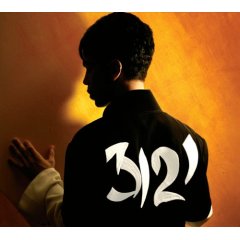
Following his massive Musicology (NPG/Sony, 2004) campaign, Prince was uncharacteristically silent for ’05, though clearly he spent a lot of time working on 3121, named after his new residence-complex in LA. The contrast between the albums is instructive, for where Musicology sounds like something Prince tossed off in a month, 3121 feels polished and composed.
Sony's publicity machine may have heavily exploited the nostalgia value of Purple Rain's 20th anniversary, but the current album is far more evocative of classic Prince.
"Love" directly quotes "Glam Slam." The cheese synth–driven "Lolita" by turns conjures "Soft and Wet," "Raspberry Beret," and the Time, far outshining its Musicology equivalent, "Illusion, Coma, Pimp and Circumstance." "Black Sweat," the hottest track, is like a combination of "Kiss" and "Housequake" — yet its freshness shows how ahead of their time such songs were. Derived from his own past rather than hip-hop's present, "Black Sweat" nonetheless sounds positively hyphy.
Having appeased fans with this high-gloss coat of purple paint, Prince proceeds to go about his business, largely devoted to his faith as a Jehovah's Witness and his desire to launch his new protégé, Tamar. Her slightly raspy, tremulous R&B vocals spice up several songs, including the bluesy title track, which, judging by the other personnel, is a souped-up outtake from The Undertaker (Warner, 1994), a live-in-the-studio power-trio album released only in Japan.
Exactly where 3121 ranks in the pantheon of Prince albums is uncertain, but even a cursory listen reveals a more substantial disc than Musicology.MTV2 My Block Bay Area

Super size me -- E-40's Ghetto Report Card
By Garrett Caples
San Francisco Bay Guardian March 1, 2006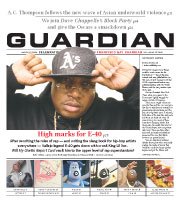
The suburban sprawl of Pleasant Hill is so generic it looks like it was squeezed from a tube — an unlikely setting for anything more exciting than an ATM transaction. Yet here at the Bay Area's first Fatburger franchise, at four p.m. on a Thursday, there's a throb of expectation beneath the din of its middle-school patrons and its digital jukebox that anticipates the arrival of the restaurant's owner. Reporters and photographers have begun to pile up due to a delay in his schedule, as the owner in question, Vallejo rap legend E-40, is in the midst of a full-blown press junket in preparation for the March 14 release of My Ghetto Report Card, the first album under his new deal with Lil Jon's BME imprint, on Warner Bros.
Following a prolific decade on Jive Records, with whom he released nine solo discs in addition to three with his family-based crew, the Click, and one retrospective, Best of E-40: Yesterday, Today and Tomorrow (2004), 40's move to the ultrahot king of crunk's label is both a testament to his enduring preeminence in a notoriously fickle industry and an opportunity to reach that upper echelon of rap superstardom inhabited by the likes of Jay-Z and Snoop, Puffy and Eminem.
Not that he isn't already a star, as is immediately apparent from his entrance with a small entourage, which includes his 18-year-old rapper-producer son, Droop-E, his longtime manager, Chaz Hayes, a bodyguard, and a documentary film crew. Visibly exhausted after a two-week promotional blitz of New York City and Los Angeles, not to mention a morning of radio interviews, 40 still radiates charisma, transforming his immediate surroundings through his larger-than-life presence. Unfailingly polite, patient with the steady stream of fans, and acquainted with his restaurant employees down to the busboys, the man born Earl Stevens provides a marked contrast to the crack-slinging, gun-toting, "let-you-have-it-in-the-bladder"-style exploits of his rap alter-ego.
He apologizes for the scheduling conflict. "Just let me knock out this other interview real quick," he says — and he does, with the brisk efficiency of Babe Ruth pointing out where he's about to hit a home run, combined with the Babe's air of infinite leisure in performing such feats.
"I ain't had time to eat a fortune cookie," he says, settling down to a bunless Fatburger with the works and, in an off-menu innovation, a small Gatorade bottle half-filled with burgundy. He touts its antioxidant properties. Newly health conscious after a dentist visit revealed he had dangerously high blood pressure, the inventor of exotic ghetto cocktails with names like "Num Num Juice" sticks to red wine and rarely touches weed these days. After shedding some 50 pounds, and gaining some back, the tall, burly MC looks positively svelte at his current 333. He even works out, though hectic road life can make it impossible.
"Out in New York I did Direct Effect, MTV radio, Music Choice, a bunch of local video shows. LA was all interviews like this. When I'm not doing regular interviews, I'm doing phoners from 10 a.m. to 7 at night. But I'm not pitching a bitch, because it's part of the game."GAME RELATED
E-40 speaks of the "game" with authority, for he rewrote many of its rules. Judged "too eccentric" by early-'90s record executives for his high-pitched, high-speed delivery and his compulsive coinage of slang — the very qualities defining his appeal — 40 began his own label, Sick Wid It, selling albums from the trunk of his car; after the label's third release, an EP titled The Mailman (1993), debuted at number 13 on Billboard's R&B chart, deals came to him. Signed through Sick Wid It by Jive in 1994, 40 pioneered the rapper-as-independent-label-head methodology that's since become industry standard.
Clearly the arrangement netted him a lot more money than many a rapper who's moved more units under direct contract with a major label. 40's got the gouda — his current currency euphemism — to invest in things like the Fatburger franchise or the Ambassador Lounge in San Jose, yet he readily acknowledges that the relationship between independent and major labels lends itself to the familiar corporate vice of outsourcing work as a means of cutting costs.
"A lot of A and Rs don't go to the hood like they used to and look for talent," he says. "They know all the rappers is connected, so they don't mind giving a big-name rapper a label deal. It's the smart thing to do. They're watching their money more than ever. They're not shipping as much as they used to. You're not going gold out the box any more."
E-40 himself has felt the pinch. Including the Click's Game Related (1995), 40 scored four gold albums between 1995 and 1998, one of which, In a Major Way (1995), was eventually certified platinum in 2002 by the Recording Industry Association of America. While his numbers, like everyone's, took a hit with the proliferation of Internet file-sharing and the general economic downturn under Bush, his albums continued to debut in Billboard's top-20 R&B chart, and aside from his own childhood idol, Too $hort, who has long since relocated to Atlanta, E-40 was the only Bay Area rapper signed to a major for the duration of the region's turn-of-the-century commercial drought.
"For anybody from the early '90s to still be here, they're keeping in touch with the kids on the street," Oakland rapper-producer E-A-Ski says. "40 don't get caught up in what he's done. He reaches out to what's going on now."JIVE DEAL
Yet 40 also feels Jive underpromoted his more recent work. "Jive was a good label when they wanted to be," he says. "The first three or four years of the deal, it was excellent. Later, when the pop music started kicking in — no disrespect to Britney, *NSYNC; they made Jive a lot of money — that took the focus away from rap, from people who helped build the label.
"Don't get it twisted: I made a lot of money with Jive," he concludes diplomatically. "But the last few years, I think they dropped the ball on a few hits, a few videos they shoulda did."
Case in point: One of Lil Jon's earliest hits outside the Dirty South was "Rep Yo City," from 40's 2002 album, Grit and Grind. "BET wanted a video, and Jive lagged on it. They said, 'You need to get up to 800,000 spins,' and we was there. It would've been smart because you got E-40, Bun B, Petey Pablo. All three of us were on Jive, so why not do a video? That's what made me think, they ain't even interested.
"Lil Jon used to be signed to Too $hort's label [the Jive-distributed $hort Records]," 40 recalls. "$hort and Jon had a group together, a whole album ready to go, and Jive didn't want to do it. Me and $hort had an album, The History Channel, ready to go. They didn't want to do it. We had someone ready to put money in our pockets. Jive coulda got points, put their logo on it. They just didn't see the big picture. So I turned in my greatest hits and left."
Granted, crunk was so startlingly new — immediately becoming its own subgenre — that Jive's failure to predict Lil Jon's immanent explosion in popularity is perhaps understandable. But the label's inability to capitalize on a collaboration between two popular artists on its own roster, or even to let someone else do it and simply make money without spending any, is incomprehensible. (At press time a publicist for Jive was still tracking down who made that particular call.) Judging from their already classic collaborations like 1996's "Rapper's Ball" and 1999's "Pervin'" (a 40ism for intoxication that's passed into wider usage), a whole album of E-40 and Too $hort would have been a signal artistic event and wouldn't have failed to turn a profit, even if sales were restricted to their own overlapping fan bases.HISTORY IN THE MAKING: DROOP-E
Jive's decision not to put out the still unreleased The History Channel, if not an act of outright incompetence, at the very least doesn't reflect the best interests of either artist, and one can hardly blame 40 for leaving. Yet, in an undeniably cruel twist of fate, 40's voluntary abdication from his deal came at a time when Bay Area hip-hop began to recover its shine. The transition between labels meant that 2005, the hottest year in the Bay since the mid-'90s, was also the first year since '97 that 40 didn't release an album.
Still, he made his presence felt through guest appearances, most notably on Mistah F.A.B.'s hit "Super Sic Wid It," produced by Droop-E. E-40's oldest son, the young Earl Stevens Jr., made his recording debut, at age three, on his father's 1991 debut, Federal (Sick Wid It, reissued by Jive, 1995), before dropping his first rhyme, at age seven, on In a Major Way. "I didn't force him into none of this," 40 insists, though he does cop to making Earl Jr. take five years of piano lessons. "Just in case he did want to go into it, so he'd know where all the notes are."
Such precautions, coupled with Droop-E's own inclinations, have paid off, as these days he's better known for his production work behind F.A.B., Turf Talk, and Messy Marv. The all-Droop-E-produced Bay Bridges Compilation (Sick Wid It/Navarro, 2005) — one of the best hip-hop albums of last year, period — also yielded a hit by Oakland's BavGate, "On the Radio," which literally exhorted KMEL-FM to "play the Gate on the radio." Such gimmickry aside, Droop-E's success is no joke: Having grown up in rap, yet still a teen, he brings an astonishing freshness to the music that's difficult to summarize but whose unifying characteristic might be a greater emphasis on sounding fun than on sounding hard, beeping or whistling where others simply slam. Yet his beats have no shortage of knock, and the hardest street-rappers — Marv, Keak Da Sneak, Little Bruce — sound perfect over them. Being 40's son may have gotten Droop-E a hearing, but his own abilities have placed him in the front rank of Bay Area producers.STILL BREADED
While 40 is clearly proud of his son's success and was otherwise occupied with his club and restaurant, an albumless year must nonetheless have been agonizing for a rapper who, on the 1999 track "Get Breaded," claimed to be "like a pregnant lady, [coming] wit a album every eight or nine months." It's not that 40 lacked offers to leave Jive but rather that he wanted to make the right move. "I kept recording, marinated around for about a year. I prayed on it," he explains. "Baby from Cash Money was ready to sign me. Puffy was on deck, wanting me to sign. But when I went with Lil Jon, they was like, whatever your situation is, it's all love.
"Lil Jon and I powwowed. We knew our chemistry was there. I was, like, 'This might be a good look.' He hollered at his folk, hollered at Warner. They were like, 'Let's go.' We put the paperwork in motion, and there we is right now."
BME was an inspired choice for 40 not simply because it entailed joining forces with Lil Jon, America's favorite rapper since Snoop, nor because the label obviously intends to give the Vallejo vet the major push Jive never quite managed to deliver. But of all of 40's options — significantly, from labels run by rappers rather than by executives — Lil Jon and BME are the most organically connected to his music. E-40 was probably the first Bay Area artist to try his hand at crunk. Having long enjoyed a Southern following, he was only too ready to tackle its homegrown variety of hip-hop.
But on a deeper level, crunk and the current Bay Area sound known as hyphy are intimately related: "cousins," as 40 puts it. The production style of crunk could be said to have evolved from the classic Bay Area mob sound — from producers like Studio Ton, Bosko, Mike Mosley, and Tone Capone — that powered E-40's earlier releases and was immensely popular in the pre–Dirty South. "Everyone in the South was influenced by E-40," Murder Dog editor Black Dog Bone affirms. Hyphy, exemplified by longtime 40 associate Rick Rock, not to mention Droop-E himself, evolved as a Bay Area response to the crunk dominating the airwaves earlier this decade, when KMEL wasn't playing local music. The most obvious stylistic distinction is, of course, vocal, as Bay Area producers stripped away the screaming chants of crunk and replaced them with raps more in tune with local mob music traditions.
E-40's ability to navigate between crunk and hyphy is well documented on My Ghetto Report Card. First conceived as a dozen tracks, half by crunk king Lil Jon, half by hyphy maestro Rick Rock, the project gradually expanded to include tracks by original mob-music makers Bosko and Studio Ton, as well as Droop-E, who has more than proved his ability to hold his own in such company. With the first single, the Lil Jon–produced "Tell Me When to Go," featuring Keak Da Sneak, already creating a buzz, My Ghetto Report Card seems poised to bring 40 to the wider audience his talents deserve. At the very least, as 40 is aware, the new album is sure to extend the present hot streak in Bay rap through 2006.
"I'm the quarterback," he concludes. "I'm the billboard of the Bay, and I'm here to let the world know that we back like hockey."
My Ghetto Report Card will be released March 14. Watch the video for "Tell Me When to Go" at myspace.com/e40.
20061028
The Mob Figaz Meet Marvaless -- 3 Da Hard Way (FriscoStreetShow.com)
Album Review by Garrett Caples
San Francisco Bay Guardian January 25, 2006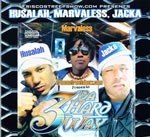
Except for a retrospective Best of (Thizz), Pittsburg's own Mob Figaz spent 2005 in divide-and-conquer mode. Particularly hot were Rydah J. Klyde – who dropped two duo discs (El Pueblo Children with Freako and Bang Fo Bread with Johnny Cash as Money Gang) and a solo What's Really Thizzin? (all on Thizz) – and Jacka, whose solo debut, The Jack Artist (Artist), generated a huge buzz in the early part of the year. The present disc, teaming Jacka and fellow Figa Husalah with tough-talkin' Sac Town female rapper Marvaless, is one of the tightest side-projects in hip-hop history. If this were a full-time trio, they'd be a hardcore Fugees. It doesn't hurt that most of the tracks are produced by Rob-Lo, who provides ample evidence of why people speak of him in the hushed tones reserved for Rick Rock or E-A-Ski. He cooks up tracks in every style, yet everything he does is his own.
With all eyes on Klyde and Jacka, picking Husalah as your favorite Mob Figa is a bit like claiming George as your favorite Beatle, but I'm convinced that, like George, whose interest in India added unexpected depth to the band's psychedelia, Husalah is the Mob's special ingredient, bringing a sublime ridiculousness to every track. Witness "Shower Posse," a faux-dancehall gem that Husalah handles in a patois of Jamaican slang and invented nonsense, or "Moblife," where he phones in some vocals from the freeway. This willingness to go the extra creative mile is what distinguishes the Mob from every other thugged-out crew out there.
20061024
B-Legit -- Block Movement (SMC/Sick Wid It)
Album Review by Garrett Caples
San Francisco Bay Guardian January 11, 2006
Apart from cousin E-40, B-Legit 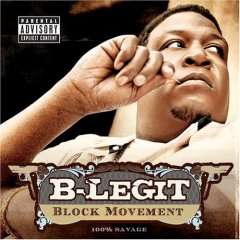 is the most accomplished rapper from Vallejo's Sick Wid It camp, his danked-out baritone providing the ideal complement to 40's high-pitched, hyperspeed delivery. With two mid-'90s discs for Jive, and two on Koch earlier this century, Block Movement is B-La's fifth solo album, and it shows just how far the Bay Area's original Savage has evolved since his most popular release, The Hemp Museum (Jive, 1996). Where that album relied heavily on 40's early blueprint – a solid mob foundation by the likes of Studio Ton and Mike Mosley – Block Movement shows B-La cultivating a distinct artistic sensibility. Other than 40's guest spot on "Guess Who's Back," produced by longtime associate Rick Rock, the album's best tracks – "Sick Wid It" (Damon Todd), "Trap Game" (Bedrock and Clyde Carson), "Get High" (One Drop Scott) – have little resemblance to 40's recent hyphy phase, taking advantage instead of the sheer depth of B's voice to explore more atmospheric vocal effects. This tendency is heightened by appearances from vocalists Harm and Naté on a trio of tracks produced by LJ, recalling his work on BavGate's The InstaGator (Black Mafia/Thizz, 2004).
20061022
Don't hate the playa ... Hate the game: Mac Dre's murder is still a mystery, but that doesn't mean he ought to be crucified

By Garrett Caples
Mac Dre painting by Eustinove P. Smith
San Francisco Bay Guardian November 16, 2005
VALLEJO'S CRESTSIDE NEIGHBORHOOD occupies a tear-shaped square mile on the northeastern edge of town, wedged between a major thoroughfare and the freeways shuttling tourists to nearby Marine World. Centered on Crest Ranch Park, with bucolic street names like Miravista and Haviture Way, it was clearly designed as suburban space – modest homes with tidy lawns are laid out in traffic-impeding loops and dead ends, at once labyrinthine and insular. But far from being a commuter haven, Crestside is the toughest hood in Vallejo, home to a small, proud, extremely close-knit African American community that contributes a disproportionately large share of talent to Bay Area hip-hop.
The Mac may have been first, and Mac Mall may have been more famous due to his mid-'90s stint on Sony/Relativity, but the undisputed king of the Crest for more than a decade was Andre Hicks, better known as Mac Dre, a pioneer of Bay Area independent rap who scored his first underground hit in 1989 with "2 Hard 4 the Fuckin' Radio." A prolific artist with more than 20 releases – the vast majority released after 1996 on his own Thizz Entertainment/Romp Records label – the 34-year-old Mac Dre had already dropped three solo albums in 2004 and was more popular than ever when he was murdered on Nov. 1 that year, in a Kansas City highway shooting.
A year later, I'm in the Crest for a block party marking the anniversary of Dre's death. The Associated Press's subsequent characterization of the event as a "memorial service" attended by "150 people" fails to do it justice; there had to be a few hundred people in the street, mostly Crest residents of all ages who came together by word of mouth, without a permit, to celebrate Mac Dre in the most spontaneous manner possible.
"Dre loved his neighborhood," his friend and fellow Crestsider PSD told me earlier. "He loved people. As a result, people loved him."
The feeling is palpable in the Crest. I'm riding with another of Dre's friends, J-Diggs, in a van wrapped in an ad for his CD California Livin', Part Two, one of six new albums released that day on Thizz (see "Nation of Thizzlam," page 38). As we approach the block party, Diggs cranks Dre's "Boss Tycoon" and literally dances the van through the crowd, assisted by a half dozen dudes who jump on the running boards to rock us in time to the beat ("Dipped in sauce"–step–"I floss"–step–"I'm a boss"–step-step). People dance, or rather, parade, in front of the van as it struts around the block, and for a few moments I'm in the center of a communal outpouring of love, the kind usually reserved for folk heroes and saints. Dre's charisma had that effect on people, even his closest associates.
"He was the word of the Crest," affirms Dubee, a.k.a. Sugawolf, who started a neighborhood supergroup, the Cutthroat Committee, with Dre and PSD in the late '90s. "Just to get a response back from him was to know your existence in this turf shit was acknowledged."
The party rages on, rowdy but cordial, for a couple of hours: People drink, smoke, dance, and generally testify about Dre. At length, I return to the van, drunkenly devouring barbecue, when I hear two shots pop off. I quickly get acquainted with the floorboard.
Another volley – I count five shots – screams, and then another burst of gunfire. People are fleeing in all directions, by car and on foot.
Diggs packs his entourage into the van and sends us around the corner while he investigates. He immediately returns and pilots us out of Crestside's intricate maze. A 20-year-old Crest resident, Michael Clinton Banks, is dead of a gunshot wound. No one's sure who shot him or why – or even if it was intentional.
"I apologize for all the gunshots around your head today," Diggs later says. "But that's the neighborhood. That's what Dre rapped about. Some people who came to the Crest today was tourists, but tonight was living proof it's not a tourist attraction. To us in the neighborhood, that's routine."
Before the night is over, two other men – including Baygeen of the Crest Creepaz, whose CD The Thizzics Room also dropped that day – are shot near the crime scene. It's a bit much, even for Diggs: "Imagine getting shot the same day your album comes out!"
In the age of 50 Cent, in which being shot is fetishized as evidence of a rapper's street authenticity, being shot might help your career. But Diggs – who carries a bullet in his arm and one in his back, an inch away from his spine – knows it isn't a joke. It might kill you.
'They knew who they were after'
From the world-famous Tupac Shakur to local legends like Plan Bee of Hobo Junction, Rappin' Ron of Bad Influenz, and Eclipse of Cydal, the list of Bay Area rappers to die from gunshot wounds is as distinguished as it is long. The Crest itself had already suffered losses. The first rapper in Crestside, if not all Vallejo, Michael "the Mac" Robinson was fatally shot in 1991. Cecil "DJ Cee" Allison – a local mainstay who worked with both Macs – was killed in a drive-by shooting in 1995. Both incidents occurred in Vallejo, and both were reportedly cases of mistaken identity. In fact, with the exception of Shakur, none of the rappers mentioned above was an actual target – they were instead victims of proximity or misidentification, and the availability of firearms.
Dre's murder is different, however, as he was definitely the intended target of a hit, according to Kansas City police detective Everett Babcock, lead investigator in the case. "They knew who they were after," he says in a phone interview from Kansas City. Over the past year, Babcock has been piecing together a picture of the crime in terms of suspects and motives, though he cautioned it could take years before conclusive evidence comes to light. While he couldn't divulge details due to the ongoing nature of the case, he would confirm that his investigation turned up no evidence of any criminal activity on Mac Dre's part.
This is a detail worthy of emphasis, for the overwhelming impression left by media coverage of Dre's death was that he was a gangster whose criminal past had finally caught up with him. Most reports were based on a single Nov. 1, 2004, AP story, "Underground Rapper from Bay Area Killed in Shooting in Kansas City," which introduces Dre as a "rap star, who police say was also a member of a gang of robbers," before even printing his name. Only eight paragraphs later do we learn that this alleged gang membership was in "the early 1990s," and the story imperfectly distinguishes Kansas City from Vallejo police throughout, making his death seem connected to 15-years-old events.
Granted it'd be unrealistic to expect nuanced coverage of Dre's death on what happened to be the day before the most contentious presidential election in US history. But the way his death was reported not only denigrates Dre's artistic achievements, but also relies on the crudest of stereotypes (black male = rapper = criminal).
Rapper gone bad?
This is not to deny Dre's criminal record. Like many aspiring MCs, Dre began writing raps to stave off boredom in juvenile hall. After his release in 1988, he hooked up with the Mac and producer Khayree, who'd already put out the Mac's The Game Is Thick. (The last album Dre released, 2004's The Game Is Thick, Part 2, on Sumo, is a sequel/homage to his friend and mentor's underground classic.) Building a buzz with songs like "2 Hard for the Fuckin' Radio" and "California Livin' " (1991), Dre was clearly on his way to the majors when his career was derailed by an arrest for "conspiracy to commit bank robbery." Accused of being a member of the Romper Room Gang, responsible for a string of old-fashioned bank holdups in the Vallejo area in the early '90s, Dre wound up doing four years and four months in federal prison. But he maintained he was framed by Vallejo police, whose inability to catch the robbers he had mocked in the 1992 song "Punk Police."
According to J-Diggs, Dre's codefendant, who served eight years on the weightier charge of conspiracy to commit armed bank robbery, "the Romper Room crew was a group of youngsters growing up together – the name 'gang' was attached to us by the media. Our crew was only 11 deep and 9 of us went to the feds."
"I was into the bank robbery game," J-Diggs freely admits. "But not Dre. We was going to Fresno to rob a bank – me, my cousin, and another guy who was an informant wearing a wire. Dre ended up coming down there with us, to go mess with some girls. We had 32 FBI agents following us around for a couple of days.
"All they wanted out of Dre was to say, 'Yeah, I knew they was going to rob a bank. I didn't have nothing to do with it.' He could've went home, but he kept his mouth shut. Out of the crew, Dre is the only person I can say went to prison for nothing, for basically not telling on nobody."
What's really going on
Regardless of how you weigh such testimony – and Lt. Rick Nichelman, the Vallejo Police Department officer named by Dre on his recorded-over-the-phone-from-jail album, Back N Da Hood (Young Black Brotha 1993), maintains Dre was guilty as charged – one thing is certain: If Dre committed a crime, he'd done his time. Friends and collaborators describe the postprison Dre as completely focused on music, to the exclusion of extracurricular income.
"Dre wasn't a criminal," PSD insists. "He wouldn't know how to steal. I heard him denounce pimping, the whole getting supported from a female, three or four Gs every night. He said, 'Man, I just want to rap.' He was dedicated."
Dubee similarly recalls Dre's encouragement to concentrate strictly on music: "I'm a street rapper. He used to get mad at me because I'm so street. 'Dubee, you got to leave this street shit alone sometimes.' We didn't know it, but Dre had stopped looking at us as 'the little cuddies.' He was like, 'Y'all with me now.' "
"He gave a lot of people the opportunity to do music," says North Oakland rapper Mistah F.A.B., who became tight with Dre in the last year and a half of his life. "He was a good dude, a philanthropist. He didn't base a lot of things on the materialist ideology a lot of rappers have. I've never heard anyone say anything bad about Dre."
Such universal goodwill in the notoriously factional world of Bay Area hip-hop is rare, but stories of Dre's own generosity to his fellow artists are legion. Perhaps the most illustrative comes from producer One Drop Scott, who himself was brutally beaten and left for dead in an incident at the Berkeley Marina a couple of years ago.
"When I got out the hospital, I was at Harm's studio at the Soundwave. I ran into Mac Dre. He listened to what I'd been doing since I got back. He was loving that I was still doing my thing. He came back the next day, handed me a fat-ass check. 'Drop, I need you, bro.' He was the first to chisel me off and make sure that I was cool."
Clearly Dre appreciated defiance in the face of overwhelming odds and appalling setbacks. When he was about to blow up, he was sent to prison for what would be considered his prime in an age-conscious industry like hip-hop. When he got out, he had to start over at a time when the Bay was ice cold; even then, he consistently moved around 30,000 units, with the occasional disc selling more than 60,000 copies, according to SoundScan reports. When he started getting hot again after the Treal T.V. (2003) DVD, he warmed up the Bay with him. When he was about to blow up again, he was murdered.
When all is said and done, Dre was the one who was robbed.
Nation of Thizzlam: The Rebirth of Thizz Entertainment
by Garrett Caples
San Francisco Bay Guardian November 16, 2005
The real legacy of Mac Dre is not his criminal record but rather the music he made and the label he started as Romp Records after his release from prison in 1996. In a characteristically generous move, Dre’s first project was a Rompalation featuring the new generation of Crestside rappers who’d begun to establish themselves in his absence. In 2001, continuing friction with the Vallejo Police convinced Dre to relocate to Sacramento and rename his company Thizz Entertainment, downplaying the association with “Romper Room Gang” (see main article). Originally slang for an ecstasy high, “thizzin’” grew to be an extremely elastic concept in Dre’s hands, encompassing a wide range of hedonistic associations.
While Thizz long boasted an impressive roster of largely Crestside-bred talent, the death of its charismatic leader and best-seller obviously threatened the company’s existence. But Thizz wouldn’t die. Dre’s business partners, Miami Tha Most and Kilo Curt, instead brought in Crestside native Mac Mall as co-owner, flagship artist, and public face of the organization. Though Mall and Dre had fallen out in the mid-’90s, they’d recently reunited to record Da U.S. Open (Thizz 2005), the last project Dre completed, down to its tennis-themed cover art.
“We started doing a lot of shows on the road and bonded our friendship first,” Mall recalls. “Then that record was the easiest I ever made in my life. It was so organic. Me and Dre was getting ready to take over the world, doing projects together and then solos, along with the rest of Thizz. So we already had this in mind.”
“When dude passed, I made a vow; I’m not gonna let this story end. I gotta step up and keep Crestside music alive.”
Thizz has done more than keep alive. The period since Dre passed has been one of the hottest times for Bay Area rap in years, and no label has brought more heat than Thizz. In addition to maintaining Dre’s own vast catalogue, Thizz has dropped one underground banger after another, releasing new albums from its established core of Crestside artists like PSD (The Guru), Little Bruce (Base Rocks & Pimp Socks), and J-Diggs (California Livin’, Part 2), as well as more recent affiliates like former Steady Mobbin’ member BavGate (The InstaGator) and North Oakland’s Mistah F.A.B. (Son of a Pimp), whose Droop-E-produced single, “Super Sic Wid It” featuring Turf Talk and E-40, cracked the top 5 on KMEL, making it the label’s biggest radio success. (Dre’s own Sean-T-produced “Fellin’ Myself,” from his 2004 album Ronald Dregan, continues to play in heavy rotation.) Mob Figaz member Rydah J. Klyde, a friend of Dre from his Sacramento days, already had two big albums on Thizz this year—The Best of the Mob Figaz and a duo album, as Money Gang, with Johnny Cash of Da Hoodfellas, called Bang Fo’ Bread—when he dropped two more: one solo, What’s Really Thizzin?, one duo, with Freako, El Pueblo Children. This doesn’t even exhaust the list, which also includes four Thizz Nation compilations. Taken as a whole, it’s an unprecedented single-year output for a Bay Area independent hip hop label.
Dreganomics
The sheer volume of Thizz releases over the past year has been made possible by an increased level of collaboration within Bay Area hip hop’s notoriously cutthroat business environment. Dre’s goodwill extended far beyond Crestside, and the tragic circumstances of his death provided a sudden common ground on which a divided scene could unite.
“Thizz Nation, that’s everybody all put together, because that’s what Dre always wanted,” PSD says. “The Bay Area didn’t know how to come together. But with Thizz it’s starting to happen. A lot of neighborhoods that had problems squashed those problems in the name of Mac Dre and Thizz.”
“We’re trying to carry on what Dre had going on, to put the shine back on the Bay,” he continues. “This is a fire he started. It’s up to us to keep it lit. It’d not only be disrespectful not to; we’d be idiots.”
“Thizz isn’t just a label; it’s a movement,” says Mistah F.A.B. “Of course we want to do ourselves as our artists but really we want to keep Mac Dre’s legacy alive. He started a lot of things that’s taking place right now. We want to put the Bay Area back out front.”
This new spirit of cooperation involves more than just pooling creative resources, though this helps; in F.A.B.’s case he recorded his entire album, including guest shots and producers, for free. More radically, however, has been Thizz’s adaptation of the co-branding principle to local hip hop on an unprecedented scale, teaming with rappers like F.A.B. or BavGate, who often have their own labels and put their own albums together. “We do albums and we bring them to Kilo, who is the C.E.O.,” F.A.B. explains. “Each artist has their own different ways of completing his album. But if it’s an album Thizz feels is worth putting out, putting their stamp on, they’re gonna put it out.” In exchange for a cut of the profits, Thizz lends logistical support and promotional dollars, as well as the “Mac Dre Presents” logo. Ultimately such independent dollars only go so far; as is increasingly the case even with major labels, it’s ultimately the artist’s responsibility to break the record. But Thizz lends the power, infrastructure, and name-recognition of a corporation to artists who otherwise might not be able to push a record without it; it also exposes them to potential new fans through association with other Thizz artists.
“There comes a point of saturation,” F.A.B. admits. “You don’t want people to burn out on the whole movement before it even gets a chance to expand.” What is striking, however, is the sheer quality of the Thizz releases thus far. Obviously Dre’s death has lent an incredible urgency to this music. The effect might best be gauged by comparing PSD’s current The Guru to his 2003 U Ain’t Heard of Me???, both co-released by Thizz and his own Gateway Entertainment. While the earlier disc is an impressive if overpacked collection of a top-notch rapper, The Guru is a true masterpiece of an album, bluesy and soulful, tinged throughout with PSD’s Mississippi roots.
With the addition of Keak Da Sneak, who confirmed his much awaited upcoming album will be a Thizz co-release with his own AllNDaDoe label, Thizz continues to gain momentum. The one hold out thus far is Dre’s fellow Cutthroat Committee member Dubee. While he willingly helped PSD finish the group’s second album, Money Iz Motive, among the final projects Dre worked on, Dubee doesn’t feel ready to drop another album yet. “I put my game on pause,” he says, “out of respect for the cuddie.” While he may not agree, PSD understands his friend’s position; no one wants to exploit Dre even as they want to further his work.
“We could have used more songs with Dre,” PSD says, “But we were like no, save it for his kids. We have to eventually let go; we can’t just keep giving you Dre songs like Dre alive.”