Showing posts with label Dotrix. Show all posts

20070528

J-Stalin -- On Behalf of the Streets (Livewire Records/Zoo Entertainment)

Album Review by Garrett Caples
San Francisco Bay Guardian January 3, 2007

Following two superb, albumlike mixtapes — Early Morning Shift with the Demolition Men and The Real World: West Oakland with DJ FreshOn Behalf of the Streets is J-Stalin's so-called official debut, produced by Tha Mekanix, a.k.a. Dotrix4000 and Kenny Tweed. While the East Oakland producers have dropped album-length bombs in the past, Streets is the first release over which they've had total control, and the result is one of the most individual Bay Area rap albums since the region got hot again. With their ultrasynthetic sonic palette and penchant for minor chord filigree, Tha Mekanix are among the most distinctive producers in the area, making music that works with hyphy (check "The Function") but also is its own thing.

Much credit, of course, goes to the pint-size rapper with the gravelly voice whose self-harmonized hooks lend real poignancy to semiautobiographical tales of life as a young d-boy in West Oakland's Cypress Village: "A long time ago, man, I was told / If you got money, man, crack you sold," Stalin warbles on "I Was Told." Stalin is most surprising with his unabashed flair for R&B, evident on "Party Jumpin' " and the sensuous "Fuck U," on which the young playa engages in Prince-like seduction over the fattest, roundest bass thump in recent memory. With the right mix of local dons (Keak Da Sneak, Mistah FAB) and Stalin's own formidable crew (Shady, Jonah, Maybeck), Streets is state-of-the-art Oakland hip-hop from a rapper who's only just begun.

Read More...

20061108

Confessions of a Gofessional

Free mixtape by Team member Kaz Kyzah scores 7,000 downloads in first week

Things move fast in rap. ...I've been summoned by Kaz Kyzah to discuss The Gofessional...

by Garrett Caples
San Francisco Bay Guardian August 16, 2006

Things move fast in rap. By the time their second album, World Premiere (Moedoe/Koch), dropped in April, the Team already had a new single, the "Hyphy Juice" remix, which now rivals "It's Getting Hot" as their biggest radio hit. Since then, Moedoe label head K.O.A.B. has inked a deal for Hyphy Juice, the energy drink he co-owns with the group, to be sold at 7-11 stores nationwide, while Team member Clyde Carson just signed as a solo act to Capitol Records. Carson’s ambitious project, Theater Music — consisting of one multisong, album-length track à la Prince's Lovesexy (Warner, 1988) — will appear next year, cobranded by Moedoe as well as the Game's Black Wall Street.

Yet my appearance at the Team's condo concerns none of these matters. Instead, I've been summoned by Kaz Kyzah to discuss The Gofessional, his new mixtape with KMEL managing director DJ Big Von Johnson. Consisting of 19 tracks of mostly original material, The Gofessional is part of a growing trend in the Bay Area mix scene — like Husalah and Jacka's Animal Planet and Beeda Weeda's Homework — of blurring the distinction between the carefully crafted album and the "anything goes" approach of mixtapes. What makes The Gofessional unique, however, is its method of distribution: it's available for free at bigvon.com.

In the first week alone, the mixtape was downloaded 7,000 times on the strength of two singles currently spinning on KMEL: "Cocaine," a soulful love-as-addiction metaphor over a 9th Wonder beat, and the LT-produced original "Love" (featuring Jimmie Reign), an R&B-infused investigation of more serious subjects often neglected by the Bay's current "go dumb" ethos.

STALLED PREMIERE?

Before beginning, however, Kaz clears up the lingering mystery around World Premiere's release, not, as anticipated, through major label Universal but rather through independent powerhouse Koch.

"We were on a label of a Mexican artist, Lil Rob, and it wasn't the place for us," Kaz says, referring to the Universal-distributed Upstairs imprint, which caters primarily to Latino rap. "When we got over there, it wasn't what we wanted. But it worked out where we could use it to get the album done and move on. We didn't have to pay any bread. We actually came out winning."

"At the same time, I was going through legal trouble," he continues, describing continuing fallout from a robbery charge he caught at age 18. "I was worried about going to jail and house arrest. I did end up spending a couple of months in jail, so it was a real hectic time."

While the delays of label jumping and legal woes may have muted World Premiere's impact, the period of house arrest last year proved productive for Kaz, who with West Oakland rapper J-Stalin and East Oakland producers Tha Mekanix formed a side group called the Go Boyz and recorded an album at the condo. These late-night sessions featuring an ankle-braceleted Kaz were the genesis of the current Go Movement, which already constitutes a third front in the Bay's hyphy and thizz campaigns.

"What I want people to understand about the Go Movement," the Hyphy Juice shareholder stresses, "is it's not not about getting hyphy, going dumb. But it encompasses a whole lot more and that's what makes it so powerful. Like when I talk to Dotrix [of Tha Mekanix], we'll use go 1,500 times and have an in-depth conversation.

"It was Dot who said, 'You the Gofessional, man.' And that was one of my favorite movies, The Professional, so I used it for my mixtape. I didn't want to come out with the Go Boyz, and nobody know what Go is all about. I was talking to some people from Marin, they never even heard of the Go Movement. To us it's old, but a lot of people are still catching on."

GOING FOR THE STREETS

The free download format of The Gofessional is proving to be an effective means of spreading the word. (Another 5,000 hard copies have already been distributed for the benefit of those not online, and more are on the way.) For Johnson, who apart from Kaz is the author of this largess, the free mixtape is designed to boost record sales as well as keep the Bay's current buzz alive.

"I got 7,000 downloads in a week, when I know artists who put out records that took seven months to reach that in sales," Johnson says later that day at KMEL. "There are a lot of big artists, a lot of songs on the radio, but sales aren't adding up. So I feel like, give some away. Instead of trying to break a song, I'm trying to break an artist in the streets. I definitely think this will stimulate album sales."

It's refreshing to hear such a statement these days, when the "free download" has been blamed for bringing the recording industry to its knees. To me, Johnson's logic is irrefutable; I'm more likely to check out something for free than for $15, and I'm way more likely to buy a $15 album from someone whose previous work I have and like. As The Gofessional is easily better than dozens of albums I've actually purchased, the odds of me buying an eventual Kaz Kyzah solo album are extremely high. Given the current excitement in Bay rap and Carson's deal with Capitol, the interest in Kaz's mixtape hasn't failed to attract the attention of majors as well.

"I got a lot of labels looking at me," Kaz confesses. "I ain't put out an album. They're checking for me off of mixtapes, which is weird, but it's a beautiful thing. People be, like, this is hotter than people's albums. But I'm a perfectionist, so doing a solo album is going to take a minute, really sitting down and figuring out what I want to do with it. And not being too quick to jump on the wrong deal."

Read More...

20061022

The Luniz: 10 On It!

by Garrett Caples
Luniz 10th Anniversary Special exclusive to hyphythizzgo.com

2005 marks the 10th anniversary of Operation Stackola (Noo Tribe/Virgin, 1995), the platinum debut of Oakland duo Jerold “Yukmouth” Ellis, Jr. and Garrick “Numskull” Husbands: the Luniz. Featuring fat tracks by the likes of Shock-G, DJ Fuze (both from Digital Underground), DJ Darryl, and E-A-Ski & CMT, Stackola is best known for the Tone Capone-produced “I Got 5 On It,” which a decade later remains the weed-smoking anthem of hip hop. The album also established the Luniz’s peculiar brand of outrageousness. At a time when the persona of the millionaire rapper became the norm, the Luniz portrayed themselves as small-time hustlers, usually broke, always on something. Their sense of humor, moreover, was bizarre and inimitable; who but the Luniz would begin their very first album depicting their own death, at the hands of a machine-gun-toting “playa hata” shouting “Fuck the Luniz!”? (About half-way through Stackola, on “5150,” the pair are killed again, floating up to heaven to encounter Jesus, Shock-G’zus, who promptly kicks them out, though in truth Shock would bring them into DU, both on stage and in the studio.)

But what defined the Luniz above all else was the chemistry between Yukmouth and Numskull. Friends since their early teens, the two forged a bond based on their determination to succeed in hip hop. “We was both sleeping on the park bench,” Num recalls, “because his grandma and my mom wanted us to get jobs, and we’re like ‘No, we want to be rappers.’” Such shared hardships infused the pair’s complementary vocal styles, for Yuk’s frenetic flow was a perfect match for Num’s almost talking style of rap. “In every great duo, one partner brings something the other lacks,” says Mekanix production team member Dotrix, who dj’ed for the Luniz on tour for their second album, Lunitik Muzik (1997). “Num’s flow sounds simple, though it’s actually complex, but with him it’s more what he says, rather than how. Yuk, on the other hand, is all style, like a NY rapper, more how he says it than what.” Such differences mirror the Luniz’s distinct personalities. Yukmouth, to invoke a song from his 2003 album Godzilla, is “stuntastic,” rocking jewels and platinum teeth, puffing high-grade weed, sipping Moet; Numskull, by contrast, is laid back and hood, sporting white tees with no ice, no longer smoking weed but still committed to Mickey’s malt liquor.

The history of the Luniz begins in the late ’80s when Yukmouth joined Numskull’s Brothaz Wit Potential as a non-rapping visual artist who quickly became one of the tightest rhymers in the crew. Forming a duo originally called Luni Tunz, their first break came in the early ’90s when they met Chris Hicks of C-Note Records, who was in the process of recording the debut of another Oakland sensation, Dru Down. Hicks put the Luniz in the studio with Dru, where they recorded “Rescue 911” and “Ice Cream Man,” a local underground hit. The Luniz also recorded “5 On It,” which was sufficient to land a deal with Noo Trybe, while Dru’s album, Explicit Game, was picked up by Relativity.

The international impact of “5 On It” should have paved the way for the Luniz’s future. Instead, as if presaged by their multiple deaths on Operation Stackola, the duo was dealt a series of setbacks of the career-killing kind. Hoping to replicate Stackola’s success, Noo Trybe chief Eric Brooks tried to steer the Luniz in a pop direction Yuk & Num stubbornly resisted. Lunitik Muzik thus ended up sounding like the biggest-budget street album ever recorded; lacking a pop hit, the album nonetheless went gold, though it fell short of the label’s expectations.

Industry pressures began to take their toll. Ensnared in bad deals with both Brooks and Hicks, as well as legal difficulties owing to wild behavior on tour, the Luniz began to grow apart, and when Yuk jumped at a solo offer from Rap-A-Lot, their days as a duo seemed over. Yet, though mostly leading seperate lives, the Luniz never really broke up, playing the occasional gig and making joint appearances on various projects, including each others’, as well as the West Coast Mix of P.Diddy’s “5 On It”-based “Satisfy You” (Bad Boy 2000). Gradually they renewed their bond and recorded what was to be their third album, Oakland Blaze. But new complications arose. Noo Trybe folded, leaving Hicks with the rights to the Luniz name, while Yukmouth remained under contract to Rap-A-Lot. Numskull, meanwhile, refused to do business with Rap-A-Lot, as he’d never been paid for his appearances on Yuk’s projects. As negotiations ensued, bootlegs of Blaze began selling all over Oakland, even spawning the underground hit “I’m a Raider.” After endless delays, the album was finally rushed out, with a slightly different track list, in the summer of 2002, as Silver & Black (Rap-A-Lot). Though previous bootlegging resulted in low sales, the buzz the project generated was undeniable proof fans were still hungry for the Luniz, and the Luniz could still deliver.

To celebrate the Luniz’s 10th anniversary in the industry, I touched down with both Yukmouth and Numskull. With 3 solo albums, 2 United Ghettos of America comps, and 1 duo disc with C-Bo as Thug Lordz already under his belt, Yuk is promoting All Out War, Vol. 2 (Smoke-A-Lot), the second mixtape by his crew the Regime. Num, meanwhile, is preparing his first “solo” release, Caliban, named after his own new group, who are featured on the album. While the music on each reflects their respective personalities, it’s hard not to notice that both the Regime and the Caliban have adopted camouflage and fatigues, as if, even at a distance, Yuk and Num are attuned to the same wavelength. Both are optimistic about an eventual 4th Luniz album, but only when the conditions are right. “I wanna do it for me,” Numskull says, “not because of the Luniz name.” Yukmouth agrees: “We gotta build that bond back because that bond ain’t there right now. Soon as we can vibe together as the Luniz, then we can do it.”


(part two: Yukmouth: The Regime Declares War
part three: The Mystery of Numskull)

Read More...

The Mystery of Numskull

by Garrett Caples
Luniz 10th Anniversary Special exclusive to hyphythizzgo.com

Numskull is a hard man to pin down. When I first interviewed him in March, he was staying in Sacramento, shuttling back and forth to Reno to work on Caliban—his long-awaited first solo album—with producer C-Dash. Since then, we’ve periodically touched base by phone, at Digital Underground shows, or at the Garage in East Oakland, where former Luniz dj Dotrix and partner Kenny Tweed produce tracks as Tha Mekanix. One night in September in San Francisco, I bump into Num after a DU show, during which he brought down the house with a 3-song set from Caliban, backed by his group of the same name. Thizzing on a pill as well as on the crowd’s enthusiastic response, he gives me hug and tells me the album is done. Then he pulls me aside.

“This is important; you have to put this in the interview,” he says. “I was actually born in Mississippi; my mom moved to Oakland when I was a baby. And on my birth certificate, under race, its says ‘Negro.’”

He doesn’t elaborate further, but, only about a month after Hurricane Katrina, it was easy to catch his drift. Num was born in the ’70s, well after the peak of the civil rights movement when the term fell into disuse, but his birth certificate is evidence of the kind Katrina provided in abundance, that very little in fact had changed for certain black populations in America. If this seems like an atypical concern for the rapper who sometimes records under the name Drank-A-Lot, it does give a foretaste of what Caliban has in store for listeners.

“It’s gonna be Numskull’s solo album,” he says, “but I’m introducing the group so I got ‘em on a lot of songs. The Caliban is basically artists who don’t see the world like everybody else see it. We’re not worried about this club shit. Caliban—we took it from the Taliban, so we bitter about hella shit that’s going on. In the United States and overseas, all the shit. We hate Bush. It’s a Num album. And Num don’t really give a fuck about shit.”

The logistical details behind Caliban are still in flux. One minute Num is in talks with basketball players starting labels, next it’s supposed to be Koch, next he’s releasing it himself on the internet. Even the line-up of the Caliban seems to periodically undergo reassessment, though the core seems to be former No Limit soldier Don P; former Dangerous Crew member F.M. Blue, whose own long-delayed first album, The World Is Blue (FastLife 2004), is largely produced by the Mekanix; Blue’s younger brother Cheese Whosain; and DU member Esinchill, who just dropped his own C-Dash-produced project, a duo disc with King Beef called Choice Cuts (RCeason).

One thing, however, I can say for sure: the music Num played for me during our interview in Sacramento was some of the most advanced hip hop I’ve ever heard. Both Numskull and Esinchill hooked up with the newly-thriving Reno scene through Element, a trio who spent 5 years on the road as DU’s support crew and appear on Shock-G’s solo album, Fear of a Mixed Planet (33rd Street 2004). The beats coming out of Reno these days are wildly futuristic blends of the synthetic and the organic that sound truly like nothing else in rap. Clearly they inspired Num to take his own experimental approach to the vocals; the group tracks feature incredibly tight interplay between the rappers, as opposed to the usual structure of simply trading verses. As half of one of the greatest hip hop duos of all time, Num appreciates the power of group dynamics.

“I don’t like to be alone,” he confesses. “On stage, at home, anything. So I always bring people with me wherever I go. And these cats have talent, so why not put ‘em on?”

Such an attitude goes a long way towards explaining Num’s career in the years since Lunitik Muzik, for while Yukmouth has remained highly visible and productive—preparing to release his fourth solo album, Million Dollar Mouthpiece, in 2006—Num has kept a much lower profile. This has been partly due to circumstance; though he recorded a solo album in the late ’90s for NY-based K-Tel Records, the company folded before releasing it. Yet he also freely admits, “I didn’t think I was ready to do a solo album, at all. I was still into that Luniz shit. When I came out with my own album, I wanted it to be me, not people thinking he gotta make shit like the Luniz.”

Instead of pursuing a solo career, Num spent much of the period between Muzik and 2002’s Silver & Black on the road with the steadily-touring DU. “I was the animal on tour,” he admits. “I’m talking about drugs everywhere every night, drinking. And Shock was kinda coming along with me. But then he was like, we’re not going to take you and Clee on the next one. We understood. We were wild, acting a fool. I was still living out my Luniz fantasies. But Shock told me the reason we wasn’t making good music anymore was that we were partying too much. And I appreciated him for that.”

While the rest of DU embarked on tour, Num and Clee began hanging out in LA with producer Poli Pol, prior to his association with the Black-Eyed Peas. “The guy had a studio,” Num recalls. “We were just kicking it really cause we’d brought some other cats over to work with him. We were making songs that we wanted to hear. Shit that we were going through at that time. Like, you don’t have no pussy, so we made a jack off song. Shit like that. We weren’t even thinking about doing an album together at all. But then he’s like, fuck it; let’s do a whole album.” The result of these sessions was the brilliant but hard-to-find, label-less disc Good Laaawd That’s a Lot of Drank (1999), credited to Clee and Drank-A-Lot.

“That’s a classic album,” Num says proudly. “But we tried to put it out ourselves, and we didn’t know nothing about going independent. We pressed up 5,000 units and sold all 5,000 in stores. We would get the money back from the first sales, and we would try to put it into promotion. Then we’d have no money to press it up again when everybody’s asking for it. But I’ve never heard one person say that they didn’t like that album. I actually want to rerelease it.”

The duo eventually parted on friendly terms, but not before teaming with Money B for his Poli Pol-produced single “Putcha Thang on Me,” a Bay Area hit in 1999. Based on the chops displayed on his video for Good Laaawd’s single, “Knockdiesel,” Clee, now known as Cleetis Mack, went on to direct the successful Sex in the Studio adult hip hop dvd series (Metro Entertainment). Num, meanwhile, used Good Laaawd to help launch his proteges, Hittaz on tha Payroll, whose Mekanix-produced Ghetto Storm (Hitta) was one of the hottest albums in the Bay in 2003. The association continues, as Num co-hosts Sex in the Studio’s second episode (2004) and also features in the soundtrack single, “Drank-A-Lot,” with Money B and Eddi Projex of the Hittaz. Produced by the same Fifth who portrays “The Lame” on Yukmouth’s Regime mixtape, “Drank-A-Lot” generated a buzz earlier this year from numerous spins on BET’s late-night video show Uncut.

After years of crew-oriented endeavors, Num feels he’s finally “ready” to do a solo album, especially as he’s put together a powerful new crew to do it. The quality of the music on Caliban reveals the hidden perfectionism behind Num’s slow development into a solo artist

“Before I was just doing songs just to do them, and I don’t think that that’s my best work. A lot of those songs came from like me dealing with people and they’re like, ‘Num you should put this on your album.’ And I do hella songs by myself. None of it was worthy to me. That’s why I took so long. Out of 60 songs that I have, I’ll probably pick like 7 that I like.”

“I’m trying to make a classic album,” he concludes. “I don’t want an album with 2 good songs and 16 ok songs. I want an album that’s a classic all the way through, that you can just sit down and listen to. And I got something for everybody too. I have a song for this group, but other groups’ll want to listen to that song too. That’s the type of album I want to do.”


(part one: The Luniz: 10 On It!
part two: Yukmouth: The Regime Declares War)

Read More...

20061018

Make them party -- T.M.F., a.k.a. Tha Muthafuckaz, return to the Yay

by Garrett Caples
San Francisco Bay Guardian October 26, 2005


GIVEN THE TURN -of-the-century commercial drought in Bay Area hip-hop, a whole generation of rappers disappeared under the radar. Among the crews to reemerge now that the scene is flourishing again is T.M.F. (Tha Muthafuckaz), a trio whose members include Cool Ass Cris, Smoke G Ryda, and Chilli D.O.G. Best known for the anthem "Planet 62nd," referring to their home street in East Oakland's "Avenues," T.M.F. were a live threat in the mid- to late-'90s, headlining their own small club dates as well as opening for artists like E-40, C-BO, and Digital Underground. Their upcoming appearance with DU, Oct. 28 at the Red Devil Lounge, in fact marks a reunion with a group who played an important role in T.M.F.'s past.

"Digital Underground brought us into this game," Chilli recalls. "They gave us shows at Geoffrey's Inner Circle, in Reno, LA, San Jose. Now we're on our own. The parents have raised the kids, and it's time for us to become the parents."

The history of T.M.F. begins in 1994, when then-DU DJ and current Mekanix producer Dotrix was seeking acts to develop. While Chilli and Cool Ass Cris had each separately worked with Smoke G, "Dot basically put us together," Chilli says. "He helped us format hooks, a lot of stuff for our first project."

Smoke G also remembers the discipline of this formative period under Dotrix's tutelage. "We constantly practiced," he says. "Before we got the music, we had the lyrics down. We don't just sit down separately and write verses – we write together. We'll come up with a concept, every time."

Indeed, though it may seem straightforward enough, the name T.M.F. is conceptual. Smoke G drew the initial inspiration from the tag of a San Francisco graffiti group. "T.M.F. can be whatever – 'The Most Famous,' "The Most Fantastic' – but we are 'Tha Muthafuckaz.' It's a fitting name for three brothas." DU frontman Humpty Hump adds, "T.M.F. decided to represent us, like 2Pac did with Thug Life. 'I didn't create Thug Life,' Pac said, 'I just organized it.' To different degrees, we're all muthafuckas, right?"

Cris, for one, concurs. "We're not putting ourselves on another level from average, everyday people," he explains. "If we come into a spot to perform, we're not going to be hid backstage where can't nobody talk to us. You're liable to see us on the dance floor. We might be passing a blunt to you. That's part of the name. We're real muthafuckas."

In an age when 50 Cent needs to mobilize a small army before engaging in the most trivial pursuits, such an attitude is rare, if not outright unfashionable, but it conveys the peculiar essence of T.M.F.'s aesthetic. "We try to keep our music where it starts from," Cris says. "It's always had that real grimy, street touch, but it's not the same as what everybody else is talking about. It's not about getting hyphy or stupid, or shooting someone. We just bring it strictly from reality."

"They were like the Luniz, on some real hood shit," says former mentor Dotrix, who brought the group to DU's Money-B in 1995. As the first signees to his Bobby Beats Records, T.M.F. earned a spot on the compilation Folk Music, Volume One (1996). But despite the impressiveness of their Dotrix-produced theme song, "The Motherfuckas," and the string of successful gigs that followed, the trio had difficulty settling down to the business of making their album.

"We had our days," Cris recalls, "going to the studio, drunk and loaded. We needed to learn the work ethic – it's a job." By the end of decade, when Money-B wound up the label and moved to Los Angeles, the trio found itself without a deal or the crucial access to industry connections DU's presence afforded.

"We had problems that were greater than the group could handle," Chilli confesses, alluding to "vacations at Club County." Frustrated by a lack of progress at a time when Bay Area rap was tightening its belt, the group temporarily split. "I chose to do other things," Chilli says, "like go to work, but music was still in there." Cris began a solo career, while Smoke G, under the name Vulcangundalero, recorded two discs of Oakland Raiders-themed rap as a member of Stadiumkings. Gradually, however, the three realized they missed the tight vocal interplay that characterized T.M.F. Reuniting with penitent zeal, the group banged out a long-overdue debut, Chill wit Us, released this year on Cris's label, Contagiouz Entertainment. While distribution is largely "out the trunk," these days that trunk is also virtual – you can sample Chill on T.M.F.'s Web site (www.myspace.com/contagiouzentertainment) or download it from Artistgigs.com for $6. A stripped-down, street-style party album mingling the pimp talk and social consciousness that traditionally, if paradoxically, undergird Oakland hip-hop, Chill wit Us is hardcore rap unencumbered by the jewels, guns, and Gucci-obsessing of the average MC. While they're still a far grimier act than generally comes to the Red Devil – or to Blake's in Berkeley (Nov. 25) – T.M.F. are confident they can please any crowd.

"Even if they're not the type that would normally hear our music," Cris says, "people aren't intimidated by our group. I guess it's the vibe and energy that we bring. Even though it's on a street level, they feel comfortable with it. And once we on stage, we make the muthafuckas party."


T.M.F. play with Digital Underground (with Esinchill and King Beef) Fri/28, Red Devil Lounge, 1695 Polk, SF. Call for time and price. (415) 921-1695, www.ticketweb.com. They also play Nov. 25, Blakes, 2367 Telegraph, Berk. Call for time and price. (510) 848-0886.


Read More...

20061014

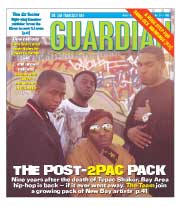
Is There Really a New Bay Rising?


The post-2Pac pack
Did the death of Tupac Shakur throw Bay Area hip-hop into a tailspin? And is there really a "New Bay" rising?

By Garrett Caples
San Francisco Bay Guardian March 16, 2005


You can pick me up; I'll be posted on 10th Street

'Cause you know that's where I'll be

Stuck like a telephone pole.


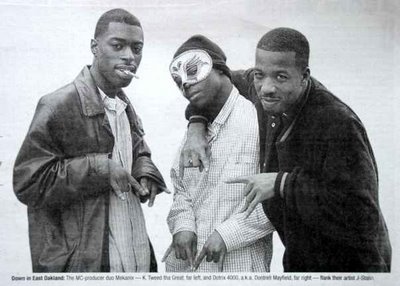
SO SINGS YOUNG rapper J-Stalin – a DJ Darryl discovery and former Richie Rich protégé – on a hook from his recent first mix tape, R-N-B. And it's true. As I roll up 10th Street in West Oakland's Oak Center, I see the short, wiry MC in the distance, standing in the middle of the street, talking on his cell. On the other end of the line, next to me in the car, is Dotrix 4000, a.k.a. Dontrell Mayfield, a former Digital Underground DJ turned MC-producer as half of the Mekanix. We've just driven from his house in East Oakland to pick up Stalin and bring him back to the Mekanix's studio, where they're finishing Stalin's debut, On Behalf of the Streets, for the duo's new label, Zoo Entertainment.

I live downtown, in a neighborhood no one calls Lakeside, about 20 blocks from where Stalin's "posted." In effect, I've spent my day doing a citywide doughnut. But Stalin's hood is worth it. A post-WWII black community inhabiting the structures of a middle-class Victorian past, Oak Center is funky as hell, beautiful blocks of houses in all shades and states of repair, dotted with buildings of a more recent vintage.

According to the fall 2003 Oakland Heritage Alliance News, the entire neighborhood was slated for demolition by the Department of Housing and Urban Development in the early '60s to make way for vast, anonymous housing projects. Only stubborn local resistance thwarted the plan.

'New Bay' vibed

Like Oak Center, Bay Area hip-hop is characterized by stubborn resistance, epitomized by 2Pac and still evident in Stalin's provocative choice of namesake. And that same spirit animates the community's reception of the catchphrase "New Bay." Coined by Oakland MC Balance but popularized by Richmond duo the Frontline, the term "New Bay" has led to press in national publications like Vibe and XXL. The latter forecast a "resurrection" of Bay Area hip-hop based on Virgin's 2004 success with the Federation (from Fairfield) and Ryko's signing of the Frontline on the strength of their EA-SKI-produced hit "What Is It." Since the single broke into the rotation of the notoriously local-leery KMEL, 106 FM, the radio exposure has helped the group move 10,000 copies of Who R You (IMG), their 2004 independent debut, which will be updated and rereleased by Ryko as Now U Know.
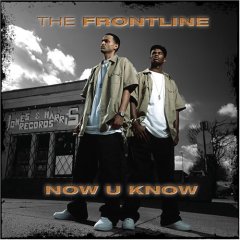
Yet the phrase has also sparked a firestorm of controversy in the Bay Area hip-hop scene.

"I guess people are like, we done worked too hard to let people come in and say, 'We're the New Bay – fuck all the old shit,' " Dotrix 4000 says. "Those cats screaming, 'New Bay' – they ain't connected. But the underground is all connected. We've been connected."

As if cued, G-Stack of Oakland's Delinquents calls Dotrix 4000's cell. "I think it's bullshit," he says of the New Bay concept. At the same time, he lets it be known his gripe isn't personal. "I think the Frontline does have talent, and I wish them well. But it's about public perception. 'New' comes right after 'old.' "
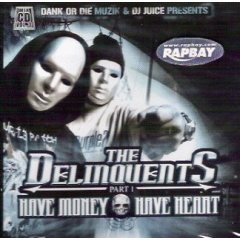
Therein lies the problem. Like most forms of popular entertainment, hip-hop is extremely susceptible to the cult of the new. Careers start young and end early, unless you can adapt to rap's ever-changing circumstances. It requires indefatigable effort to stay on top of the game, the type of effort that's driven the Delinquents to record not one but two mix CDs – Have Money Have Heart volumes 1 and 2 (Dank or Die Records) – addressing the New Bay controversy. In a gesture of defiance, G-Stack and fellow Delinquent V. White enlisted the aid of Too $hort, Oakland's ultimate OG, for "Say Bitch," the lead single, which disses the New Bay in no uncertain terms.

The "2Pacalypse" Theory

To fully understand why a phrase so small could generate a reaction so extreme from a vet like G-Stack, we must invoke the "2Pacalypse" theory. Believers argue that Pac's death in '96 triggered an artistic decline that left Bay Area hip-hop incapable of attracting a national audience or major-label interest. Thus, the Frontline's bio on www.thefrontlineonline.com offers, "In the past six years, the Bay Area hip-hop scene has become stagnant, passing off replicas of established artists as new talent." Add a couple of years to account for the age of this blurb and we're back at 1997, without even mentioning Makaveli directly. The New Bay clearly presupposes the 2Pacalypse, insofar as there must be a grave from which to resurrect Bay Area hip-hop.

But the 2Pacalypse theory has at least two major holes that make it an unsuitable foundation on which to build an understanding of local hip-hop. For starters, it holds the artists responsible for the behavior of major labels. Yet even before 2Pac's death, major labels were getting cold feet in the Bay. On his Web site, www.guerillafunk.com, for example, Paris is vocal about his problems with Tommy Boy and then Priority regarding the political content of his work, which effectively stalled his career in the mid-'90s.

Or take the case of Ray Luv, 2Pac's partner in the Marin City group Strictly D.O.P.E. In 1993, Ray scored an independent radio hit with "Get Your Money On," on Mac Dre's Strictly Business Records. In 1995, with Dre in prison, Ray signed with Atlantic (once part of Time Warner and now with Warner Music Group), through Khayree's label, Young Black Brotha. Atlantic, he tells me, "put out my album about six weeks before Time Warner was about to fire Interscope over Death Row and 2Pac. So every record like Pac's basically got shelved because they didn't want you to blow up."

"I'd be in L.A. – I'm getting walk-ons on the biggest shows," he says. "Shows they couldn't get me, I'm getting. Atlantic moved me from there and sent me to Kansas City for five days. And I'm like, what just happened? Once we pissed each other off, they were sending me to hotels where my window faced a brick wall. It got weird, so I quit. I took from '96 to '99 off."

If this sounds like the paranoia of a could've-been contender, consider the source. Handsome and charismatic, Ray was already a proven hit-maker, as was Khayree. The label exec who couldn't exploit so close a connection to Pac for at least gold in 1995, when he was already the biggest-selling rapper ever, strikes me as an underachiever at best.

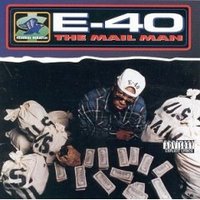
The second hole in the 2Pacalypse theory is the fact that the creative decline of Bay Area hip-hop never really occurred. With the major labels increasingly reluctant to sign acts, much of the scene went underground. If you generated huge numbers, like E-40, whose 1993 EP, The Mail Man, debuted in the Billboard Top 20 with no distribution deal, you could force the majors to deal with you. (E-40 was quickly signed by Jive.)
But it grew increasingly apparent that you could do without them. Indie scenes sprang up around artists like Blackalicious and the Soulsides/Quannum collective. In Oakland, Pam the Funkstress and Boots reinvigorated political rap on a national level as the Coup. Artists like Del tha Funky Homosapien left labels like Elektra to establish their own companies, while others, like the Delinquents, built huge followings from the ground up.

New bosses

By 1999, the revolution was in full swing, as independent tunes began to infiltrate the airwaves. Among the local hits on KMEL that year was "That Man!," by the Delinquents, who went on to move 50,000 copies of 1999's Bosses Will Be Bosses (Dank or Die). By the end of the year, however, Clear Channel had bought KMEL, and G-Stack says he's been unable to get airplay since. (As of press time, KMEL musical director "Big Von" Johnson was unavailable for comment.)
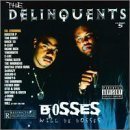
The Delinquents maintain a sizable fan base. "They are Oakland," Dotrix 4000 says, "in terms of selling records and reppin' our city. They can't throw a party and it's not sold out." But while successful acts like the Delinquents have countered the lack of radio exposure and label support through relentless hustle, it's unclear whether hustle alone can withstand the effect of the media actively promoting other artists as New Bay hip-hop.

On the phone, the Frontline are more conciliatory than they come off online. They seem genuinely nonplused by the furor the New Bay catchphrase has provoked. "Without the veterans," MC Locksmith of the Frontline says, "you have no Frontline, without the Too $horts, the E-40s, the Delinquents, the Luniz, without any of these cats." His partner, Left, concurs: New Bay was meant to be "a fresh way of looking at Bay music" rather than an attack. "Let everybody come up. Let's all make good music and all come up together."

I brought this statement to a number of rappers, and responses ranged from "They should've said that first" to "SKI should've known better" to "Fuck them niggas" – disappointing, but you can see their point. We're talking about a scene that still produces entire albums dedicated to Rappin' Ron of Bad Influenz, who died in a car crash in 1997. Most Bay Area rappers I've spoken to have real reverence for the tradition on which they build, and the New Bay concept offends their sensibilities.

Like the residents of Oak Center, they're proud of their community and don't want it wrecked by decisions made outside. In that light, the resentment provoked by the New Bay concept and the flurry of accompanying diss records shouldn't be ascribed to envy. They signify, instead, the stubborn resistance of a community that has survived without assistance and that refuses to cooperate, or be co-opted, except on its own terms.


Read More...