Showing posts with label G-Stack. Show all posts

20070528

Holdin' the weight of the Bay -- Mistah F.A.B.

By Garrett Caples
San Franciso Bay Guardian May23, 2007

The rapper all rapers want on their album, and the first pure product of the hyphy movement. Mistah FAB works around Atlantic's delay of his major-label debut, walks out the independent Da Baydestrian...

Still looks like slavery

But it's the black legacy

--Mistah FAB, "100 Bars"

One night last September, I hitch a ride with G-Stack of the Delinquents and Dotrix of Tha Mekanix to Dem Hoodstarz's album release party in San Francisco. As we park outside the club, Mistah FAB rolls up with a modest posse. In contrast to his usual iced-out Technicolor clubwear, the man also known as Fabby Davis Jr. is low-key, dressed all in black, a pair of designer stunna shades supplying the main clue to his identity. He hops in Stack's car to hear a newly laid track for the latter's upcoming Purple Hood, then we set out for the club, a less than half block journey whose distance is lengthened interminably by a series of well-wishers and business consultations. It's like following two CEOs across the floor of the stock exchange: Stack is on two cell phones, trying to shake hands with someone. FAB, meanwhile, handles minor transactions, poses for a photo, and takes a call, all while briefing me on the deal he had just signed with Atlantic Records for Da Yellow Bus Rydah, the much-anticipated follow-up to his 2005 disc, Son of a Pimp (Thizz Ent.).

Near the door, a man takes FAB aside. "FAB, you gotta do something about the violence," he says, meaning specifically the 141 homicides in Oakland in 2006 under former mayor and present attorney general Jerry Brown. FAB nods at what is clearly an unreasonable request, albeit one that reflects the disproportionate political burden borne by black entertainers in America. No one would turn to, say, Justin Timberlake to stop violence. Then again, I imagine no one asks Keak Da Sneak either. FAB's position, in other words, is unique.

Though he made his early reputation as a freestyle battle rhymer and owes his success to hyphy hits like "Super Sic Wit It," FAB's lyrics seldom stray into gangsta or pimp terrain — the title of his last album is simply literal. Yet he can get down on a track with the most thugged-out MCs. Aside from the giants Too Short and E-40 and on par with the perpetually hot Keak, FAB is the rapper all Bay Area rappers want on their albums, because he has the biggest buzz on the radio and in the streets. His popularity gives him influence, but FAB commands respect in the hood because he's from the hood: his compass-based hit "N.E.W. Oakland" was the first major rap recognition of his native North Oakland as a hood. This rapport with the alienated and isolated ghetto youth who constitute hyphy's core audience separates him from the vast majority of MCs to whom the label "conscious" may be applied.

"You go up to someone in the hood and be, like, 'Dick Cheney had a heart attack,' they be, like, 'Who the fuck is Dick Cheney?'" FAB says later. "But you tell him, 'Jay-Z donated a million dollars to improve water in Africa,' they be, like, 'For real?' That's something of their world. Being a Bay Area artist, I'm of their world. So you have the opportunity to teach without them knowing."

"People who have influence," FAB continues, "have an obligation to tell people, 'Preserve life. Save lives. Help lives.' But it's hard to reach people if you're not giving them something they relate to. The hyphy movement is something they relate to. Hyphy gets you in the door, to open their ears to what I'm saying. It's up to them to digest it."

That night at the club, FAB exerts his influence. When things get salty between security and Dem Hoodstarz's East Palo Alto associates, the group calls FAB to the stage to perform their collaboration "Ugh." Things chill out. FAB issues an impromptu plea against violence and murders. These are problems no single person can solve, but FAB is doing his part. Yet by the show's finale — the "Getz Ya Grown Man On" remix, on which he has a verse — Fabby Davis has left the building. Being Mistah FAB, I realize, can be exhausting.

FOLLOW THE YELLOW BUS ROAD

Mistah FAB's deal with Atlantic is a landmark in a scene long neglected by the majors. Along with Clyde Carson's signing with Capitol, FAB's arrangement — including distribution for his Faeva Afta Entertainment — is the first serious acknowledgment of the renaissance Bay Area rap has undergone in the past three years. Unlike E-40, a regional star who'd already achieved platinum sales on Jive before his push last year by Warner Bros., FAB's an unknown quantity outside the Bay. And in contrast to Frontline or the Federation — whose deals came through the respective backing of nationally known producers E-A-Ski and Rick Rock — FAB is the first evidence for a new generation of local rappers that enough talent and dedication can get you signed. It's another weight on the shoulders of the man born Stanley Cox Jr.

"Lots of people are putting their hopes into the album," he acknowledges. "They're, like, 'I hope FAB do it, because it'll kick in the door for all of us.' I realized when I was creating this album it's not just something I want to do. It's something my whole region depends on."

Da Yellow Bus Rydah's journey has been anything but smooth, however. Bottom line: Atlantic has postponed the album's tentatively scheduled spring release, due to controversy surrounding the Ghostbusters-themed advance single, "Ghost Ride It." A tribute to the hood-invented practice of throwing your car in neutral as you walk alongside and steer, "Ghost Ride It" was generating a buzz through its a video on YouTube and the minor-league MTVs when a Dec. 29, 2006, Associated Press story ("Hip-Hop Car Stunt Leaves 2 Dead") linked the song with a pair of unrelated deaths: Davender Gulley, 18, of Stockton, who "died after his head slammed into a parked car while he was hanging out the window of an SUV," and an unnamed "36-year-old man dancing on top of a moving car [who] fell off, hit his head and died in what authorities said was Canada's first ghost riding fatality." While the scant details obscure whether these incidents stemmed from ghost riding or more traditional automotive horseplay, Fox News's Hannity and Colmes found the trend alarming enough to call FAB on the carpet in January.

"You understand that a lot of kids look up to you?" Sean Hannity accused rather than asked FAB. "They sing your songs. They dress like you. They talk like you — they wanna be you!" Aside from displaying an oversimplified sense of the relationship between artist and audience, Hannity's remark reveals a comic lack of familiarity with hip-hop and their guest in particular: what part of "Super Sic Wit It" do you sing? Moreover, while rap fans undoubtedly draw from the same well of slang, the idea that they all talk the same — or even like FAB, for that matter — is a stereotype.

"I don't think they expected me to be so articulate," FAB recalls with a laugh. Yet among MCs, FAB is singular interview subject. While he has a clear sense of his talent and importance, he's more apt to discuss his personal relationship with God or how his lonely childhood as a latchkey kid inspired him to create rather than brag about how real he is. His power to articulate the struggle of urban youth — to explain the rage that motivates, say, ghost riding — is the very reason he's often labeled the spokesperson for a hyphy movement otherwise devoted to "going dumb."

Hannity treated FAB like he's dumb, but FAB turned the tables. Hannity's denunciation of his effect on the "kids" prompted the rapper to question whether his influence rightly extends to a Canadian 11 years his senior, which Hannity countered by accusing FAB of wanting as much "money and controversy" as he can get. When FAB speculated on the influence of turning on the TV and seeing 3,000 soldiers die in Iraq, Alan Colmes was sent in as a balm, ending the segment.

"Both those people were adults," FAB says later of the ghost-riding deaths. "I feel bad for the families, but at the end of the day, an adult has to take responsibility for his actions."

GHOSTBUSTED

The next pothole for Yellow Bus was a late March cease and desist letter from Columbia Pictures for copyright infringement in the "Ghost Ride It" video — just as it was about to debut on MTV's 106 and Park. "We had permission [to use the Ghostbusters van] from the man who built it and owns it," FAB explains. "But Columbia owns the logo." The video was immediately pulled from all media outlets, impairing Atlantic's ability to market the single nationally. As a result, the Yellow Bus has been parked. The official explanation, from Atlantic VP Mike Carin, is that the label is focusing on FAB's "artistic development." Despite the inevitable rumor that the rapper was dropped, Carin confirms that "the deal is still in place."

Still, such delays have silenced many MCs' buzz: witness how the delay of Raekwon's album on Aftermath has converted excitement into skepticism, or how the Team's World Premiere (Moedoe/Koch, 2006) dropped too long after its singles had peaked, leading to lower-than-expected sales. Fortunately, the structure of FAB's distribution deal allows him an unusual degree of freedom.

"They were willing to sacrifice certain things," he says of his initial decision to sign with Atlantic among competing offers. "They allowed me to do what I want to do — if I want to drop an independent album, I can."

ENTER DA BAYDESTRIAN

This flexibility has allowed the prolific FAB to immediately walk out another new album, Da Baydestrian, on May 15, through SMC/Fontana. Although, according to SMC cofounder Will Bronson, Atlantic has options to include as many as five of its songs on Yellow Bus, Baydestrian is an otherwise distinct project intended to satisfy the demand for a follow-up to Son of a Pimp. FAB's also preparing a series of summer releases, including a second installment of the all-freestyle Tonite Show with DJ Fresh. (Fresh, incidentally, edited FAB's 2005 DVD, The Freestyle King, now packaged with Baydestrian as a bonus.) With Beeda Weeda and J-Stalin, representing the East and West respectively, FAB's formed the multihood group N.E.W. Oakland, whose mixtape is nearing completion. Prince of Da Bay (In Yo Face/Hooker Boy Filmz), a documentary on FAB by local hip-hop director Dame Hooker, should be out by press time, while FAB's next DVD, Shoobalaboobie TV, is in the works.

"You do what you have to do to keep the buzz going," FAB says. "Also sales — on the independent level, your numbers are what's important [to major labels]." Da Baydestrian thus has Atlantic's blessing, but its commercial success will determine the fate of his deal.

Yet the need to appeal to the marketplace hasn't inhibited FAB's creativity, and Da Baydestrian refuses to play it safe. Rather than exploit the hyphy sound he helped establish, FAB only sprinkles it in, most obviously on the remix of the Traxamillion-produced "Sideshow" and the opening title track, one of six bangers produced by FAB protégé Rob-E. The young Martinez-born producer proves his versatility on tracks like the triumphant "Get This Together" and the melancholy "Life on Track," featuring Faeva Afta vocalist J-Nash, whose Hyphy Love drops in August. Another four productions by Son of a Pimp collaborator Genessee contribute to Baydestrian's in-house feel even as the family breaks new ground: "Can't Wait," say, evokes Andre 3000's explorations of go-go, filtered through FAB's hyphy sensibility, while "Shorty Tryin' 2 Get By" is a contemporary "Keep Ya Head Up" spiced with Bay Area R&B. The album is refreshingly free of skits, and guest stars are kept to a minimum, but Too Short blesses the disc three times, an unambiguous stamp of approval from Bay rap's founder.

What makes Da Baydestrian one of the most extraordinary albums since hyphy's inception, however, is its social consciousness. "Deepest Thoughts," for example, hits out at President George W. Bush, but even more pointedly at Gov. Arnold Schwarzenegger for expanding the prison system instead of aiding the poor. The Sean T–produced "Crack Baby Anthem" addresses teen dope dealers, seeking to uplift without castigating or glorifying their activities — for the nonghetto audience, the song connects the dots between poverty, crime, and the present political climate. FAB describes his approach as "hip-hyphy," presenting an alternative to hip-hop fans who consider hyphy juvenile or incomprehensible. Granted, the disc's school bus and helmet imagery — referring to the hyphy concept of acting "retarded" — is hardly p.c. Nonetheless, FAB's lunchbox-wielding Baydestrian is a welcome change from the exaltation of guns and dope adorning your average rap album.

"In no way am I trying to say I'm like Martin Luther King or Malcolm X," FAB explains. "But I realized I could create nonsense and seem to support ignorance, or I can get people to start looking at the reality of it, and the reality of it is that young blacks are dying, not only in the Bay; they're dying everywhere. We've been raised in a warlike civilization. We've been brainwashed to accept war as the proper thing to do when things don't go right."

"Tupac [Shakur] said it himself," FAB concludes. "He said, 'I'm not going to be the one to change the world. But I guarantee I'll plant a seed in the mind of someone who does.' We're all the Tupac generation. Pac was hyphy."

While I don't think it's my place to declare FAB the next Tupac, I can't fail to be struck by his invocation of the Bay Area icon. On a superficial level, of course, with all his non-thugged-out, cartoonish imagery, FAB is nothing like Pac, just as the hyphy movement differs from the Bay's mid-'90s sound. Yet locally, if not nationally, the two rappers occupy the same position on the map of hip-hop: like Pac, FAB has cred with nearly everyone, he has a positive message within an utterly street aesthetic, and he makes tunes everyone wants to hear.

No rapper has embodied all three attributes since Pac, and that combination makes FAB extraordinary.

www.myspace.com/mistahfab


Read More...

Purple Reign

G-Stack and V-White of East Oakland's Delinquents drop some very unhyphy solo projects as they contemplate a final album together

By Garrett Caples
San Franciso Bay Guardian February 14, 2007


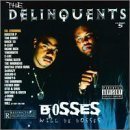
I first heard the Delinquents in 1999, when "That Man!" was in heavy rotation on KMEL. Its subject matter — caring for the kids while the wifey's out cheating — was unique in gangsta rap. "We came from the left with that," G-Stack says, yet the freshness of the concept, combined with a funky Mike D beat and memorable Harm hook, made it an instant classic. By then their 1999 album, Bosses Will Be Bosses (Dank or Die) was six months old, and they already had a storied past.

Part of the Bay's early '90s independent scene, building a buzz from the ground up, G-Stack and V-White dropped their debut, the cassette-only Insane, circa 1993, on their label, Dank or Die. After a pair of 1995 EPs — The Alleyway and Outta Control (both Dank or Die) — the Delinquents signed to Priority at the same time the imprint inked its distribution deal with Master P's then-Richmond-based No Limit Records. Yet during the promotional campaign for the 1997 full-length Big Moves, the duo learned the difference between being on Priority and being a priority.

"This was when 'I'm 'bout It, 'bout It' blew up for Master P," a relaxed Stack recalls at the East Oakland studio where he's completing G-Stack Presents: Welcome 2 Purple City (4TheStreets), due March 27. "We promoting our album down south, West Coast, Midwest. Down south everything halted. We going into stores, they got huge Master P displays, and they didn't even know we was coming out." The effect of this tepid label support, moreover, was compounded by backlash from their home audience, who equated independence with authenticity.

"At that time," Stack explains, "if you signed to a big label, people thought you weren't real anymore. That affected our underground fan base. Then Priority didn't support us. So we went back independent with Bosses, and our fans started messing with us again."

"Now we got a record buzzin' on the streets. And radio wouldn't support us, so a lot of local rappers started meeting, and everybody went up to KMEL. Nobody had a record at the time, and ours was doing good, so everybody pushed our record." He reviews the memory with satisfaction. "We kinda forced them to play it."

While the success of "That Man!" helped move 65,000 copies of Bosses, radio play was short-lived, because Clear Channel–owned KMEL had stopped playing local music. Yet even during the Bay's leanest hip-hop years from 2000 to '03, the Delinquents maintained a loyal following, selling out shows, moving units, and putting new talent on, as well as throwing the free Lake Berryessa Bash — something like a sideshow on Jet Skis — for thousands of fans every couple years. "They were the crazy glue of the town," says Dotrix 4000, who, as half of Tha Mekanix, produced several hot tracks on Purple City. "They held the scene together when it could've fell apart."

While the Delinquents have never lost their iconic status in the Bay — witness Stack's representation of East Oakland on Mistah FAB's geographical hit "N.E.W. Oakland" — they have strikingly chosen to pursue solo careers right as the region's commercial fortunes are on the rise. Both rappers insist the decision has nothing to do with aesthetics or personal differences, and this is apparent from the warm vibe when V-White arrives for the photo shoot. Promoting his just-released Perfect Timin' (V-White Ent./SMC), V explains the move as a way to stay original in what they see as an increasingly contentless hyphy movement.

"Chuck E. Cheese music," V says. "When I came up, the Bay was about game-spitters, cats with swagger. Now it's, like, make up a word — do something stupid. That ain't where I'm coming from. I'm with the reality rap, from them days when you rapped about what you was going through."

Stack is similarly defiant: "Our machine wasn't built on what radio did for us. Now it's hella different. If you independent, people think you're weak. You need the radio to support you. I don't like how it is now — I don't kiss ass."

"I don't have to make music the radio gotta play," V concludes. "I'm making music from my heart." Judging from Timin' — a 27-track opus largely produced by protégé Big Zeke, spiked with hitworthy tracks by E-A-SKI and an intriguingly nonhyphy Traxamillion — V has a big heart, punctuating his tales of street crime with more personal memories, such as his daughter catching her first fish.

Stack meanwhile is using Purple City to introduce his own young crew, the Heem Team, as well as his alter ego, Purple Mane, who's something like a dope-slinging superhero. A warm-up for Purple Hood, Stack's proper solo debut, slated for July, Purple City began as a mixtape but morphed into a formidable album, including all-original beats by the likes of Tone Capone, FAB associate Rob-E, and Stack's in-house team Sir Rich and Q. (For the record, the Delinquents were on the purple aesthetic — stemming from a variety of weed popular in Oakland — by the time of their 2003 mixtape, The Purple Project, a year before Big Boi and Dipset adopted it.)

The solo careers of V and Stack raise the question of what will happen to the Delinquents as a group. Both confirm a new album is on the table — most likely the final Delinquents project.

"We've been rapping since '93," V says. "If I'm doing the same thing I was doing in '93, that means I ain't grew none. We're just getting older."

"I feel very comfortable doing the last Delinquents album," Stack adds. "I can actually feel like I've completed it."

Read More...

20061014

Is There Really a New Bay Rising?


The post-2Pac pack
Did the death of Tupac Shakur throw Bay Area hip-hop into a tailspin? And is there really a "New Bay" rising?

By Garrett Caples
San Francisco Bay Guardian March 16, 2005


You can pick me up; I'll be posted on 10th Street

'Cause you know that's where I'll be

Stuck like a telephone pole.


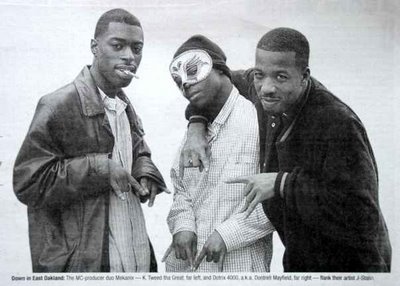
SO SINGS YOUNG rapper J-Stalin – a DJ Darryl discovery and former Richie Rich protégé – on a hook from his recent first mix tape, R-N-B. And it's true. As I roll up 10th Street in West Oakland's Oak Center, I see the short, wiry MC in the distance, standing in the middle of the street, talking on his cell. On the other end of the line, next to me in the car, is Dotrix 4000, a.k.a. Dontrell Mayfield, a former Digital Underground DJ turned MC-producer as half of the Mekanix. We've just driven from his house in East Oakland to pick up Stalin and bring him back to the Mekanix's studio, where they're finishing Stalin's debut, On Behalf of the Streets, for the duo's new label, Zoo Entertainment.

I live downtown, in a neighborhood no one calls Lakeside, about 20 blocks from where Stalin's "posted." In effect, I've spent my day doing a citywide doughnut. But Stalin's hood is worth it. A post-WWII black community inhabiting the structures of a middle-class Victorian past, Oak Center is funky as hell, beautiful blocks of houses in all shades and states of repair, dotted with buildings of a more recent vintage.

According to the fall 2003 Oakland Heritage Alliance News, the entire neighborhood was slated for demolition by the Department of Housing and Urban Development in the early '60s to make way for vast, anonymous housing projects. Only stubborn local resistance thwarted the plan.

'New Bay' vibed

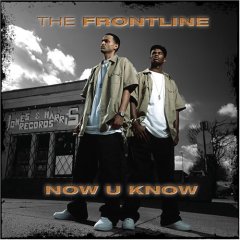
Like Oak Center, Bay Area hip-hop is characterized by stubborn resistance, epitomized by 2Pac and still evident in Stalin's provocative choice of namesake. And that same spirit animates the community's reception of the catchphrase "New Bay." Coined by Oakland MC Balance but popularized by Richmond duo the Frontline, the term "New Bay" has led to press in national publications like Vibe and XXL. The latter forecast a "resurrection" of Bay Area hip-hop based on Virgin's 2004 success with the Federation (from Fairfield) and Ryko's signing of the Frontline on the strength of their EA-SKI-produced hit "What Is It." Since the single broke into the rotation of the notoriously local-leery KMEL, 106 FM, the radio exposure has helped the group move 10,000 copies of Who R You (IMG), their 2004 independent debut, which will be updated and rereleased by Ryko as Now U Know.

Yet the phrase has also sparked a firestorm of controversy in the Bay Area hip-hop scene.

"I guess people are like, we done worked too hard to let people come in and say, 'We're the New Bay – fuck all the old shit,' " Dotrix 4000 says. "Those cats screaming, 'New Bay' – they ain't connected. But the underground is all connected. We've been connected."

As if cued, G-Stack of Oakland's Delinquents calls Dotrix 4000's cell. "I think it's bullshit," he says of the New Bay concept. At the same time, he lets it be known his gripe isn't personal. "I think the Frontline does have talent, and I wish them well. But it's about public perception. 'New' comes right after 'old.' "

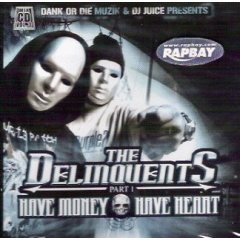
Therein lies the problem. Like most forms of popular entertainment, hip-hop is extremely susceptible to the cult of the new. Careers start young and end early, unless you can adapt to rap's ever-changing circumstances. It requires indefatigable effort to stay on top of the game, the type of effort that's driven the Delinquents to record not one but two mix CDs – Have Money Have Heart volumes 1 and 2 (Dank or Die Records) – addressing the New Bay controversy. In a gesture of defiance, G-Stack and fellow Delinquent V. White enlisted the aid of Too $hort, Oakland's ultimate OG, for "Say Bitch," the lead single, which disses the New Bay in no uncertain terms.

The "2Pacalypse" Theory

To fully understand why a phrase so small could generate a reaction so extreme from a vet like G-Stack, we must invoke the "2Pacalypse" theory. Believers argue that Pac's death in '96 triggered an artistic decline that left Bay Area hip-hop incapable of attracting a national audience or major-label interest. Thus, the Frontline's bio on www.thefrontlineonline.com offers, "In the past six years, the Bay Area hip-hop scene has become stagnant, passing off replicas of established artists as new talent." Add a couple of years to account for the age of this blurb and we're back at 1997, without even mentioning Makaveli directly. The New Bay clearly presupposes the 2Pacalypse, insofar as there must be a grave from which to resurrect Bay Area hip-hop.

But the 2Pacalypse theory has at least two major holes that make it an unsuitable foundation on which to build an understanding of local hip-hop. For starters, it holds the artists responsible for the behavior of major labels. Yet even before 2Pac's death, major labels were getting cold feet in the Bay. On his Web site, www.guerillafunk.com, for example, Paris is vocal about his problems with Tommy Boy and then Priority regarding the political content of his work, which effectively stalled his career in the mid-'90s.

Or take the case of Ray Luv, 2Pac's partner in the Marin City group Strictly D.O.P.E. In 1993, Ray scored an independent radio hit with "Get Your Money On," on Mac Dre's Strictly Business Records. In 1995, with Dre in prison, Ray signed with Atlantic (once part of Time Warner and now with Warner Music Group), through Khayree's label, Young Black Brotha. Atlantic, he tells me, "put out my album about six weeks before Time Warner was about to fire Interscope over Death Row and 2Pac. So every record like Pac's basically got shelved because they didn't want you to blow up."

"I'd be in L.A. – I'm getting walk-ons on the biggest shows," he says. "Shows they couldn't get me, I'm getting. Atlantic moved me from there and sent me to Kansas City for five days. And I'm like, what just happened? Once we pissed each other off, they were sending me to hotels where my window faced a brick wall. It got weird, so I quit. I took from '96 to '99 off."

If this sounds like the paranoia of a could've-been contender, consider the source. Handsome and charismatic, Ray was already a proven hit-maker, as was Khayree. The label exec who couldn't exploit so close a connection to Pac for at least gold in 1995, when he was already the biggest-selling rapper ever, strikes me as an underachiever at best.

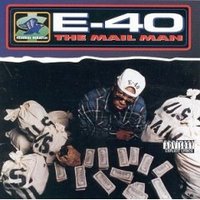
The second hole in the 2Pacalypse theory is the fact that the creative decline of Bay Area hip-hop never really occurred. With the major labels increasingly reluctant to sign acts, much of the scene went underground. If you generated huge numbers, like E-40, whose 1993 EP, The Mail Man, debuted in the Billboard Top 20 with no distribution deal, you could force the majors to deal with you. (E-40 was quickly signed by Jive.)

But it grew increasingly apparent that you could do without them. Indie scenes sprang up around artists like Blackalicious and the Soulsides/Quannum collective. In Oakland, Pam the Funkstress and Boots reinvigorated political rap on a national level as the Coup. Artists like Del tha Funky Homosapien left labels like Elektra to establish their own companies, while others, like the Delinquents, built huge followings from the ground up.

New bosses

By 1999, the revolution was in full swing, as independent tunes began to infiltrate the airwaves. Among the local hits on KMEL that year was "That Man!," by the Delinquents, who went on to move 50,000 copies of 1999's Bosses Will Be Bosses (Dank or Die). By the end of the year, however, Clear Channel had bought KMEL, and G-Stack says he's been unable to get airplay since. (As of press time, KMEL musical director "Big Von" Johnson was unavailable for comment.)

The Delinquents maintain a sizable fan base. "They are Oakland," Dotrix 4000 says, "in terms of selling records and reppin' our city. They can't throw a party and it's not sold out." But while successful acts like the Delinquents have countered the lack of radio exposure and label support through relentless hustle, it's unclear whether hustle alone can withstand the effect of the media actively promoting other artists as New Bay hip-hop.

On the phone, the Frontline are more conciliatory than they come off online. They seem genuinely nonplused by the furor the New Bay catchphrase has provoked. "Without the veterans," MC Locksmith of the Frontline says, "you have no Frontline, without the Too $horts, the E-40s, the Delinquents, the Luniz, without any of these cats." His partner, Left, concurs: New Bay was meant to be "a fresh way of looking at Bay music" rather than an attack. "Let everybody come up. Let's all make good music and all come up together."

I brought this statement to a number of rappers, and responses ranged from "They should've said that first" to "SKI should've known better" to "Fuck them niggas" – disappointing, but you can see their point. We're talking about a scene that still produces entire albums dedicated to Rappin' Ron of Bad Influenz, who died in a car crash in 1997. Most Bay Area rappers I've spoken to have real reverence for the tradition on which they build, and the New Bay concept offends their sensibilities.

Like the residents of Oak Center, they're proud of their community and don't want it wrecked by decisions made outside. In that light, the resentment provoked by the New Bay concept and the flurry of accompanying diss records shouldn't be ascribed to envy. They signify, instead, the stubborn resistance of a community that has survived without assistance and that refuses to cooperate, or be co-opted, except on its own terms.


Read More...