Showing posts with label P-Funk. Show all posts

20061014

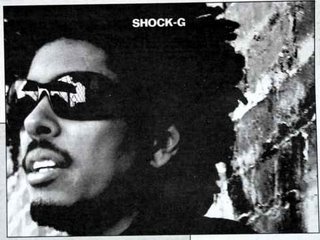
Behind the Nose -- Shock G steps out

by Garrett Caples
September 2005


Kev Kelley is excited. The Hunters Point emcee has been taken on as a protege by Shock-G, legendary leader of Digital Underground, who produces two tracks on the 23-year-old’s upcoming debut. It’s 3 a.m. Shock’s exhausted, having just wrapped a two-hour jam between DU and a funk band called Slapback, in celebration of his own “solo debut,” Fear Of A Mixed Planet. As we roll to the hotel for the interview, Kev insists on carrying Shock’s bag, despite its owner’s modest protests. “Fuck that!” Kev yells, zooming ahead with his treasure. “I’m doing what 2Pac did!” Shock accepts this with the habitual calm that contrasts so strikingly with his on-stage presence, whether as Shock-G or as his plastic-nosed alter ego, Humpty Hump. And Kev has a point. While never just a roadie — “We were producing and grooming and trying to get him a deal the whole time,” Shock says — 2Pac definitely lugged his share of equipment on the first DU tour in 1989. Shock’s ear for talent, moreover, is undeniable; through DU over the years he’s also boosted the careers of Saafir, the Luniz, and Mystic, among many others. As a producer Shock profoundly influenced rap’s development in the early ’90s. Two years before The Chronic had everyone jumping on the Mothership, Shock drew the blueprints for a hip-hop built on P-Funk principles. Tracks like “Rhymin’ on the Funk” (Sex Packets, 1990), “Same Song” (This Is An EP Release, 1991), and “The D-Flo Shuttle” (Sons Of The P, 1991) — all on Tommy Boy Records — laid the groundwork for much that followed. According to Digital Underground: Raw Uncut, a new DVD documenting the group’s entire history, “Freaks Of The Industry” remains, after 14 years, the #1 requested song on the Bay Area’s main hip-hop station KMEL despite never being a single. (#2? The Bay Area Ballers mix of the Luniz’s “I Got 5 On It,” also featuring Shock.) Such achievements and innovations have been obscured, however, by the huge pop success of “The Humpty Dance,” which led many to see the group as a bubblegum novelty. The beautifully eclectic, meticulously detailed, and deeply felt Fear Of A Mixed Planet is Shock’s ambitious attempt to finally step out of the shadow of Humpty Hump.

GC: Describe the end of the Tommy Boy period.

SHOCK: Tommy Boy always wanted to be with the current trend. When they thought Digital Underground was hip, they were all for it but when we started not being the cutting edge, they were chasing what was next. DU and other groups that incorporated humor started to slump in sales. Gangsta and pimp stuff was on the rise. They were looking at that. Learning the unity thing from Parliament made me want to have a group that all shined, but all that got squished up under Humpty. So The Body-Hat Syndrome (1993) was our anti-radio album. They were squeezing us so hard, the only way we could fight back was to turn in something that couldn’t be considered just pop, that wasn’t quite the Humpty they were looking for. It’s not that we couldn’t make those beats anymore; we made “I Get Around” for 2Pac that year. But if we gave them a “Kiss You Back”, they were going to keep running us that way. That’s why on Body-Hat there’s a lot of stuff that didn’t have our logo handclap and a lotta Humpty being a little meaner than usual.

We didn’t want to get dropped but I wanted to get on a different label. I’ve always been a keyboard player, an artist. I was an Afrocentric type and followed the stuff Pac rhymed about. There was a side of me that always wanted to voice that. Me and Tom Silverman [of Tommy Boy] made a deal, after Body-Hat didn’t do so well that if I produced some things for the label, I could have DU do what I want. So he let us go.


GC: How did DU’s 1998 album Who Got the Gravy? come about?
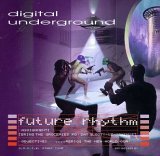
SHOCK: Critique had all these experimental things and wanted DU too. They told us, “you didn’t get a fair shot; we can promote you well.” I was like, ”OK, let me make an album that picks up where Sons of the P left off, instead of Body-Hat.” So Future Rhythm happened. I think there weren’t really marketable singles on it. I was still trying to get out of being pigeon-holed as pop. So it didn’t happen; Critique ran out of money and folded. But then this guy who produced Steely Dan, Gary Katz, pops up. He was saying the same thing: “We don’t think Critique did anything right with your record. Let’s do another one.” So we did it and that was Who Got The Gravy?

The company was called Jake Records. Dan Hartman — brother of the Saturday Night Live comedian Phil Hartman — was one of the people who was not only putting the money up for the label, but he ran it and was the DU fan. When Phil’s wife shot him, Dan just fell apart. So I didn’t want to bug him no more about making records.

Then I figured I’m not going to make records; I’m just going to produce. That wasn’t moving for me either. By then, we’re not on tour because we’re chasing the dream; we’re on tour because we have to eat. So I just got into drugs and shit back then. Started partying a lot. We turned into ecstasy heads, but then we bottomed out with that. Sobriety and consciousness hit me and my mom was like, “Why do you work with all these people talking about weed and guns? Why do you talk about pimping? You’re not a pimp.” I was just like, “Mom, that’s not how the rap business is.”

Through all that partying, my mom was like, “How come you don’t own property, what are you gonna do when you get old? Just give me 10%, when you get money; I’ll put it away for you.” After my accountants started taking it out automatically, I forgot about it. One day my mom was like, “You got almost $60,000 tucked away.” I was like, “I can put that on a house now.” But then I was like, “But mom, I wanna do an album! But I see now, I see what you mean!”

And not just her; a lot of things started to change. People were coming to me for my 2Pac stories, finally. From when Pac died ‘til Thug Angel (2000) [a documentary on 2Pac], nobody asked me nothing. That shit really hurt me. He was with us for four years but nobody was interested in what we had to say. Doing Thug Angel gave me the opportunity. With everybody speaking on him, I was like, “damn, he was giving so much of himself.” We all stand for different things, and maybe some of the things I stand for are broader than what 2Pac stood for; some are really smaller. But whatever I stand for, I felt I could stand up more for it, more of the time, with everything I do.

Thug Angel really got people to know there was something else to DU besides Humpty. And the crew was starting to shine, people associating us with the Luniz and Mystic. Mystic used to be suicidal before she joined DU. At the beginning of Gridlock’d there was this spoken word poetry by Pac’s girlfriend in the movie. That was Mystic. But she was still depressed because her father was a musician who never made it and OD’ed and died. A zebra child we called her, a white parent and a black parent, so she never fit in anywhere. She was so fragile. Sometimes you’d go to her house and she’d have the pills sitting there, a gun right here and a knife right there and she’d be like, “Give me a reason to keep going.” Crazy shit! She went on tour with us, right? She used to come to me and go, “I’ve never laughed this much. In my life! When I get home I’m going to start on my album.” And I’m like, “What you waiting for?” I was good at telling it to other people to hide my own depression. But, she came home, started on the album; next thing you know, Mystic got nominated for a Grammy, best new female artist.

GC: Talk about the production on Fear of a Mixed Planet.
SHOCK:
I related the dense sound of Future Rhythm to the ’90s. To chunky it all up like that didn’t sound new and different. I thought there was a lot of space missing in rap music. Usually a song starts and once the rap starts it goes straight to the chorus, then more rap, chorus, more rap and that’s it. No songs had that space like a Miles Davis record. There’s a lot of space in Portishead, Groove Jazzmatazz, Easy Mo Bee — that last Miles record. I’m not into disco but you know Jamiroquai? One thing I liked about his record is it had a lot of space. I thought, if somebody did a rap album like that it would stand out.

GC: What does the future hold for Digital? Will there be a new album?
SHOCK:
DU’s a group; even though it was my project, I still shared a lot of it and I wore a lot of hats. And I hid behind the character of Shock-G. Not just Humpty. Humpty’s a character, of course; but Shock-G’s a character. That’s me being a rapper. I feel like I never really stood up for the issues I stand for, never made that record. The things I really say, when I’m not on stage and I’m behind closed doors, I wasn’t putting that stuff in. So this album allowed me to speak my heart. But I’ll never be like, “I’m solo now, I don’t do DU no more.” I’m trying to take it like Wu-Tang. If one of us drops a solo album, it’s just making our reach broader. If I’m the central figure, maybe I’m like the RZA of the group; I just did me a Bobby Digital album. Wu-Tang still is there. Digital Underground’s still here.

Read More...

You ain't knowin' -- DU and 2Pac

All roads lead back to the Digital Underground and 2Pac
By Garrett Caples
San Francisco Bay Guardian March 16, 2005

I CAN'T COUNT how many surprised responses I've elicited with the information that 2Pac started out in Digital Underground. To anyone first exposed to him through the movies or during his final phase on Death Row Records, the idea of Pac coming up under the plastic-nosed guidance of Humpty Hump is scandalous. Such skeptics are referred to the 2004 documentary DVD Digital Underground: Raw Uncut, which features footage of the future Makaveli rocking "The Humpty Dance" for all he's worth.
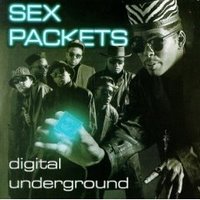
Atron Gregory, the group's first manager, introduced the young 2Pac to Humpty's alter-ego, D.U. leader and producer Shock-G, after the group completed Sex Packets (Tommy Boy, 1990) but before the album's release. As a result, Pac was on hand for the group's MTV-fueled explosion, making his recording debut on "Same Song," from their 1991 This Is an EP Release (Tommy Boy). Inevitably, once he blew up with the 1992 film Juice, 2Pac concentrated on his solo career, though he continued to appear on D.U. albums until 1996's Future Rhythm (Critique).

In a sense, to take a cue from Dotrix 4000, "the underground is all connected" – through D.U., which some might say laid the blueprint for the Bay's blend of sexed-up P-Funk grooves, psychedelic thought, and streetwise yet conscious hip-hop.

"I couldn't have ever been 2Pac," Shock says now. "It's not my personality. By the same token, Pac probably couldn't have ever made it like I did as a producer-central figure in a collage of people. You gotta do you."

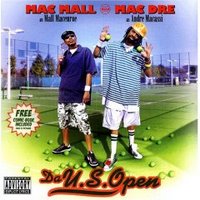
This is not to say Pac lacked protégés, however. In 1993 he put Mac Mall on the map by directing and appearing in the video for "Ghetto Theme," Mall's first single. Having recently taken over Mac Dre's Thizz Records in order to release their collaboration, Da U.S. Open, Mall still maintains his own Sessed Out Records and has recently joined with Ray Luv (see "The Post-2Pac Pack," page 41) in the rap-rock group Crhyme Scene.

Though he moved out of the Bay Area – first to the Pocanos, then to Los Angeles – after the Oakland hills fire in late 1991, Shock has always turned to the Bay for new talent. Rap historians might note he was the first to tap Richmond, helping the duo Goldmoney score a deal with Tommy Boy and featuring them on Sons of the P (Tommy Boy, 1991). But Shock's most successful protégés after 2Pac are undoubtedly the Luniz, who appear on Future Rhythm and whose platinum debut, Operation Stackola (Noo Tribe, 1995), features production by Shock. That year Shock appeared on the remix of the Luniz' weed-smoking anthem "I Got 5 on It," alongside such local heavyweights as E-40 and Richie Rich.
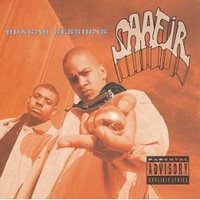
In the late '90s, Shock continued to influence the Bay through his associates. D.U. members DJ JZ and Saafir joined Hobo Junction for the critically acclaimed Box Car Sessions (Qwest, 1999) as well as three classic underground discs on their own Hobo Records. While D.U.'s 1998 album Who Got the Gravy? (Jake) failed to make a huge impression, it introduced Esinchill (see "Breaking Down the Battle Lines," page 43) as well as Mystic, whose debut, Cuts for Luck, Scars for Freedom (JCor), was nominated for a Grammy in 2002.

Now, with the release of his first solo album, Fear of a Mixed Planet (33rd St), Shock has finally begun to receive his due as a pioneer. He's been producing tracks for Hunters Point MC Kev Kelly, even as he's transformed D.U.'s live show with the addition of an eight-piece funk band called Slapback. "I think people saw Humpty as a gimmick," Numskull of the Luniz says, "but Humpty is just a part of Shock. Shock is our driving force. For real. He's a genius."


Read More...