Showing posts with label J-Stalin. Show all posts

20070528

Holdin' the weight of the Bay -- Mistah F.A.B.

By Garrett Caples
San Franciso Bay Guardian May23, 2007

The rapper all rapers want on their album, and the first pure product of the hyphy movement. Mistah FAB works around Atlantic's delay of his major-label debut, walks out the independent Da Baydestrian...

Still looks like slavery

But it's the black legacy

--Mistah FAB, "100 Bars"

One night last September, I hitch a ride with G-Stack of the Delinquents and Dotrix of Tha Mekanix to Dem Hoodstarz's album release party in San Francisco. As we park outside the club, Mistah FAB rolls up with a modest posse. In contrast to his usual iced-out Technicolor clubwear, the man also known as Fabby Davis Jr. is low-key, dressed all in black, a pair of designer stunna shades supplying the main clue to his identity. He hops in Stack's car to hear a newly laid track for the latter's upcoming Purple Hood, then we set out for the club, a less than half block journey whose distance is lengthened interminably by a series of well-wishers and business consultations. It's like following two CEOs across the floor of the stock exchange: Stack is on two cell phones, trying to shake hands with someone. FAB, meanwhile, handles minor transactions, poses for a photo, and takes a call, all while briefing me on the deal he had just signed with Atlantic Records for Da Yellow Bus Rydah, the much-anticipated follow-up to his 2005 disc, Son of a Pimp (Thizz Ent.).

Near the door, a man takes FAB aside. "FAB, you gotta do something about the violence," he says, meaning specifically the 141 homicides in Oakland in 2006 under former mayor and present attorney general Jerry Brown. FAB nods at what is clearly an unreasonable request, albeit one that reflects the disproportionate political burden borne by black entertainers in America. No one would turn to, say, Justin Timberlake to stop violence. Then again, I imagine no one asks Keak Da Sneak either. FAB's position, in other words, is unique.

Though he made his early reputation as a freestyle battle rhymer and owes his success to hyphy hits like "Super Sic Wit It," FAB's lyrics seldom stray into gangsta or pimp terrain — the title of his last album is simply literal. Yet he can get down on a track with the most thugged-out MCs. Aside from the giants Too Short and E-40 and on par with the perpetually hot Keak, FAB is the rapper all Bay Area rappers want on their albums, because he has the biggest buzz on the radio and in the streets. His popularity gives him influence, but FAB commands respect in the hood because he's from the hood: his compass-based hit "N.E.W. Oakland" was the first major rap recognition of his native North Oakland as a hood. This rapport with the alienated and isolated ghetto youth who constitute hyphy's core audience separates him from the vast majority of MCs to whom the label "conscious" may be applied.

"You go up to someone in the hood and be, like, 'Dick Cheney had a heart attack,' they be, like, 'Who the fuck is Dick Cheney?'" FAB says later. "But you tell him, 'Jay-Z donated a million dollars to improve water in Africa,' they be, like, 'For real?' That's something of their world. Being a Bay Area artist, I'm of their world. So you have the opportunity to teach without them knowing."

"People who have influence," FAB continues, "have an obligation to tell people, 'Preserve life. Save lives. Help lives.' But it's hard to reach people if you're not giving them something they relate to. The hyphy movement is something they relate to. Hyphy gets you in the door, to open their ears to what I'm saying. It's up to them to digest it."

That night at the club, FAB exerts his influence. When things get salty between security and Dem Hoodstarz's East Palo Alto associates, the group calls FAB to the stage to perform their collaboration "Ugh." Things chill out. FAB issues an impromptu plea against violence and murders. These are problems no single person can solve, but FAB is doing his part. Yet by the show's finale — the "Getz Ya Grown Man On" remix, on which he has a verse — Fabby Davis has left the building. Being Mistah FAB, I realize, can be exhausting.

FOLLOW THE YELLOW BUS ROAD

Mistah FAB's deal with Atlantic is a landmark in a scene long neglected by the majors. Along with Clyde Carson's signing with Capitol, FAB's arrangement — including distribution for his Faeva Afta Entertainment — is the first serious acknowledgment of the renaissance Bay Area rap has undergone in the past three years. Unlike E-40, a regional star who'd already achieved platinum sales on Jive before his push last year by Warner Bros., FAB's an unknown quantity outside the Bay. And in contrast to Frontline or the Federation — whose deals came through the respective backing of nationally known producers E-A-Ski and Rick Rock — FAB is the first evidence for a new generation of local rappers that enough talent and dedication can get you signed. It's another weight on the shoulders of the man born Stanley Cox Jr.

"Lots of people are putting their hopes into the album," he acknowledges. "They're, like, 'I hope FAB do it, because it'll kick in the door for all of us.' I realized when I was creating this album it's not just something I want to do. It's something my whole region depends on."

Da Yellow Bus Rydah's journey has been anything but smooth, however. Bottom line: Atlantic has postponed the album's tentatively scheduled spring release, due to controversy surrounding the Ghostbusters-themed advance single, "Ghost Ride It." A tribute to the hood-invented practice of throwing your car in neutral as you walk alongside and steer, "Ghost Ride It" was generating a buzz through its a video on YouTube and the minor-league MTVs when a Dec. 29, 2006, Associated Press story ("Hip-Hop Car Stunt Leaves 2 Dead") linked the song with a pair of unrelated deaths: Davender Gulley, 18, of Stockton, who "died after his head slammed into a parked car while he was hanging out the window of an SUV," and an unnamed "36-year-old man dancing on top of a moving car [who] fell off, hit his head and died in what authorities said was Canada's first ghost riding fatality." While the scant details obscure whether these incidents stemmed from ghost riding or more traditional automotive horseplay, Fox News's Hannity and Colmes found the trend alarming enough to call FAB on the carpet in January.

"You understand that a lot of kids look up to you?" Sean Hannity accused rather than asked FAB. "They sing your songs. They dress like you. They talk like you — they wanna be you!" Aside from displaying an oversimplified sense of the relationship between artist and audience, Hannity's remark reveals a comic lack of familiarity with hip-hop and their guest in particular: what part of "Super Sic Wit It" do you sing? Moreover, while rap fans undoubtedly draw from the same well of slang, the idea that they all talk the same — or even like FAB, for that matter — is a stereotype.

"I don't think they expected me to be so articulate," FAB recalls with a laugh. Yet among MCs, FAB is singular interview subject. While he has a clear sense of his talent and importance, he's more apt to discuss his personal relationship with God or how his lonely childhood as a latchkey kid inspired him to create rather than brag about how real he is. His power to articulate the struggle of urban youth — to explain the rage that motivates, say, ghost riding — is the very reason he's often labeled the spokesperson for a hyphy movement otherwise devoted to "going dumb."

Hannity treated FAB like he's dumb, but FAB turned the tables. Hannity's denunciation of his effect on the "kids" prompted the rapper to question whether his influence rightly extends to a Canadian 11 years his senior, which Hannity countered by accusing FAB of wanting as much "money and controversy" as he can get. When FAB speculated on the influence of turning on the TV and seeing 3,000 soldiers die in Iraq, Alan Colmes was sent in as a balm, ending the segment.

"Both those people were adults," FAB says later of the ghost-riding deaths. "I feel bad for the families, but at the end of the day, an adult has to take responsibility for his actions."

GHOSTBUSTED

The next pothole for Yellow Bus was a late March cease and desist letter from Columbia Pictures for copyright infringement in the "Ghost Ride It" video — just as it was about to debut on MTV's 106 and Park. "We had permission [to use the Ghostbusters van] from the man who built it and owns it," FAB explains. "But Columbia owns the logo." The video was immediately pulled from all media outlets, impairing Atlantic's ability to market the single nationally. As a result, the Yellow Bus has been parked. The official explanation, from Atlantic VP Mike Carin, is that the label is focusing on FAB's "artistic development." Despite the inevitable rumor that the rapper was dropped, Carin confirms that "the deal is still in place."

Still, such delays have silenced many MCs' buzz: witness how the delay of Raekwon's album on Aftermath has converted excitement into skepticism, or how the Team's World Premiere (Moedoe/Koch, 2006) dropped too long after its singles had peaked, leading to lower-than-expected sales. Fortunately, the structure of FAB's distribution deal allows him an unusual degree of freedom.

"They were willing to sacrifice certain things," he says of his initial decision to sign with Atlantic among competing offers. "They allowed me to do what I want to do — if I want to drop an independent album, I can."

ENTER DA BAYDESTRIAN

This flexibility has allowed the prolific FAB to immediately walk out another new album, Da Baydestrian, on May 15, through SMC/Fontana. Although, according to SMC cofounder Will Bronson, Atlantic has options to include as many as five of its songs on Yellow Bus, Baydestrian is an otherwise distinct project intended to satisfy the demand for a follow-up to Son of a Pimp. FAB's also preparing a series of summer releases, including a second installment of the all-freestyle Tonite Show with DJ Fresh. (Fresh, incidentally, edited FAB's 2005 DVD, The Freestyle King, now packaged with Baydestrian as a bonus.) With Beeda Weeda and J-Stalin, representing the East and West respectively, FAB's formed the multihood group N.E.W. Oakland, whose mixtape is nearing completion. Prince of Da Bay (In Yo Face/Hooker Boy Filmz), a documentary on FAB by local hip-hop director Dame Hooker, should be out by press time, while FAB's next DVD, Shoobalaboobie TV, is in the works.

"You do what you have to do to keep the buzz going," FAB says. "Also sales — on the independent level, your numbers are what's important [to major labels]." Da Baydestrian thus has Atlantic's blessing, but its commercial success will determine the fate of his deal.

Yet the need to appeal to the marketplace hasn't inhibited FAB's creativity, and Da Baydestrian refuses to play it safe. Rather than exploit the hyphy sound he helped establish, FAB only sprinkles it in, most obviously on the remix of the Traxamillion-produced "Sideshow" and the opening title track, one of six bangers produced by FAB protégé Rob-E. The young Martinez-born producer proves his versatility on tracks like the triumphant "Get This Together" and the melancholy "Life on Track," featuring Faeva Afta vocalist J-Nash, whose Hyphy Love drops in August. Another four productions by Son of a Pimp collaborator Genessee contribute to Baydestrian's in-house feel even as the family breaks new ground: "Can't Wait," say, evokes Andre 3000's explorations of go-go, filtered through FAB's hyphy sensibility, while "Shorty Tryin' 2 Get By" is a contemporary "Keep Ya Head Up" spiced with Bay Area R&B. The album is refreshingly free of skits, and guest stars are kept to a minimum, but Too Short blesses the disc three times, an unambiguous stamp of approval from Bay rap's founder.

What makes Da Baydestrian one of the most extraordinary albums since hyphy's inception, however, is its social consciousness. "Deepest Thoughts," for example, hits out at President George W. Bush, but even more pointedly at Gov. Arnold Schwarzenegger for expanding the prison system instead of aiding the poor. The Sean T–produced "Crack Baby Anthem" addresses teen dope dealers, seeking to uplift without castigating or glorifying their activities — for the nonghetto audience, the song connects the dots between poverty, crime, and the present political climate. FAB describes his approach as "hip-hyphy," presenting an alternative to hip-hop fans who consider hyphy juvenile or incomprehensible. Granted, the disc's school bus and helmet imagery — referring to the hyphy concept of acting "retarded" — is hardly p.c. Nonetheless, FAB's lunchbox-wielding Baydestrian is a welcome change from the exaltation of guns and dope adorning your average rap album.

"In no way am I trying to say I'm like Martin Luther King or Malcolm X," FAB explains. "But I realized I could create nonsense and seem to support ignorance, or I can get people to start looking at the reality of it, and the reality of it is that young blacks are dying, not only in the Bay; they're dying everywhere. We've been raised in a warlike civilization. We've been brainwashed to accept war as the proper thing to do when things don't go right."

"Tupac [Shakur] said it himself," FAB concludes. "He said, 'I'm not going to be the one to change the world. But I guarantee I'll plant a seed in the mind of someone who does.' We're all the Tupac generation. Pac was hyphy."

While I don't think it's my place to declare FAB the next Tupac, I can't fail to be struck by his invocation of the Bay Area icon. On a superficial level, of course, with all his non-thugged-out, cartoonish imagery, FAB is nothing like Pac, just as the hyphy movement differs from the Bay's mid-'90s sound. Yet locally, if not nationally, the two rappers occupy the same position on the map of hip-hop: like Pac, FAB has cred with nearly everyone, he has a positive message within an utterly street aesthetic, and he makes tunes everyone wants to hear.

No rapper has embodied all three attributes since Pac, and that combination makes FAB extraordinary.

www.myspace.com/mistahfab


Read More...

DJ Fresh -- So fresh and so clean

By Garrett Caples
San Franciso Bay Guardian February 14, 2007

Some weeks ago I ran by Melrose Middle School in East Oakland to catch DJ Fresh in action. Voted third-best DJ in the United States at the International Turntablist Federation finals in 1999, the 26-year-old veteran is a nationwide presence in hip-hop and handled the 1s and 2s behind figures such as Nas and Common before going on to produce a series of album-length projects during the past two years with Bay Area luminaries such as Mistah FAB, J-Stalin, and Sac-Town kingpin Smigg Dirtee. But the gig at Melrose was a little different...

... an afternoon class in rap and production for a bunch of mildly rambunctious middle schoolers. (He teaches two groups there, in addition to an adult education course at Eastside Alliance in Oakland.)

"This is my good class," he said with a wry smile, and in a way his performance managing the kids is more impressive to me than his two national tours as Nas's DJ for Stillmatic and God's Son (Sony, 2001 and 2002 respectively). Laid-back, allowing the students to address him as DJ Fresh, he can still rock the don't-mess-with-me teacher mode when necessary, commanding respect and obedience. It's something you need a knack for.

Fresh was born in Baltimore and moved with his mother to San Jose at age nine. He spent his teens going back and forth between the coasts, developing his talents on piano as well as turntables. "I tell people I started DJing when I was nine," he said, "because I was on them things, fucking with it every day." Inspired by older brothers DJ LS1 and DJ Dummy, who remained back East, the teenage Fresh joined 12-Inch Assassins, a clique of battle DJs featuring his siblings and DJ Chaps.

LS1 went on to DJ for DMX and more recently G-Unit, while Dummy worked with Onyx and currently DJs for Common. Through Dummy, Fresh got to perform at his first major rap shows, spinning at a number of Common gigs. By 18, Fresh was back in the Bay Area, only to be recruited by Nas, whose tours really put him on the map.

"The nigga just called me up one morning," Fresh recalled. "I knew it was going to happen, but I'm the kind of person, I'll believe it when I see it. He was, like, 'Have you done any major shows?' I kinda lied. My brother told me, 'Before you tell him what you want, tell him to make you an offer.' So he made me an offer I couldn't refuse. His manager called me back the next day, and it's been on since then."

"After my second tour with him, I went to school," Fresh continued. "I took that money and used it for my schooling over at Expression in Emeryville. The tour shit is cool, but I didn't want my eggs in one basket. I went for sound engineering — I learned a lot of shit there." Though many rap producers eschew such formal training for fear of losing their autodidactic uniqueness, Fresh is a prime example of someone whose education has only enhanced his natural talent. Check, for example, the mix on his 2006 collaboration with J-Stalin, The Real World: West Oakland (FreshInTheFlesh). The sound is spacious — huge — clean and clear as a bell, requiring technical virtuosity behind the boards. Combined with his knowledge of '70s and '80s R&B — "What I See," for example, interpolates "Strawberry Letter 22" — Fresh's beats immediately stand out.

"When I make my beats, I still got the DJ mentality," Fresh said. "Right when you hear it, it's catchy. When you doing a party, you trying to keep it cracking, keep it off the hook. I take a lot of old shit and re-create it and reflip it. Bring it back with 808s and claps and all that good stuff." While such music could hardly be described as hyphy, it was, in fact, Mistah FAB who first put Fresh on the map in the Bay, freestyling on a 2005 full-length in Fresh's main series, The Tonite Show (FreshInTheFlesh).

"It was before FAB had blew up," Fresh pointed out. "We had a song called 'We Go Stupid in the Bay.' It had a buzz, so that was my first establishment. Then he needed his DVD made — The Freestyle King. So we swapped. I edited the whole shit. That put me on blast more too."

Both the DVD and The Tonite Show helped fuel the increasing buzz around FAB's main album, Son of a Pimp (Thizz, 2005), a process Fresh hopes to replicate for FAB's upcoming Sony disc, The Yellow Bus Rider. A second FAB-hosted Tonite Show is projected for a March release.

This year promises to be a big one for Fresh: His gang of impending Tonite Show releases includes a compilation with his frequent collaborators due Feb. 23, as well as The Tonite Show with DJ Fresh, a mixtape-style installment of Fresh DJing his own music, slated for late February on Koch Records. He's also shooting beats at his previous big-name associates — soon to drop are Tonite Shows starring Beeda Weeda and J-Stalin, Nump of "I Got Grapes" fame, the Acorn neighborhood phenom Shady Nate, and even Nas himself — and he intends to start a production team, the Whole Shebang, with Jamon Dru, 10AK, and Tower, an extraordinarily deep-voiced rapper who's a cousin of Richie Rich. To top a furious schedule, Fresh has a radio show, running Mondays through Fridays on the first and third weeks of every month on Rapbay.com, called The World's Freshest Hour.

"He's just a hustlin' dude," FAB remarked. "He's always on his grind, and I respect that. He's very humble, and that's what makes working with him so easy."


myspace.com/thetoniteshow

myspace.com/djfreshh

myspace.com/thewholeshebang2


Read More...

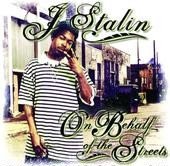
J-Stalin -- On Behalf of the Streets (Livewire Records/Zoo Entertainment)

Album Review by Garrett Caples
San Francisco Bay Guardian January 3, 2007

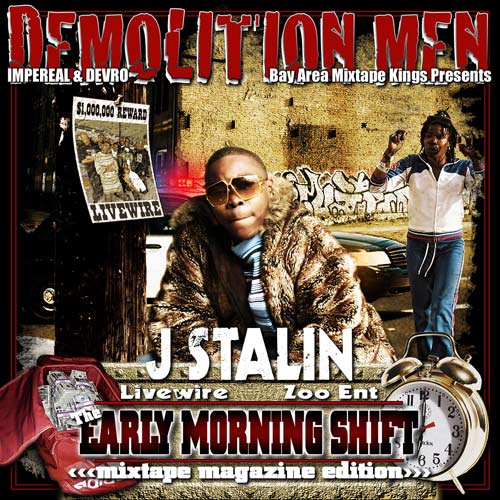
Following two superb, albumlike mixtapes — Early Morning Shift with the Demolition Men and The Real World: West Oakland with DJ FreshOn Behalf of the Streets is J-Stalin's so-called official debut, produced by Tha Mekanix, a.k.a. Dotrix4000 and Kenny Tweed. While the East Oakland producers have dropped album-length bombs in the past, Streets is the first release over which they've had total control, and the result is one of the most individual Bay Area rap albums since the region got hot again. With their ultrasynthetic sonic palette and penchant for minor chord filigree, Tha Mekanix are among the most distinctive producers in the area, making music that works with hyphy (check "The Function") but also is its own thing.

Much credit, of course, goes to the pint-size rapper with the gravelly voice whose self-harmonized hooks lend real poignancy to semiautobiographical tales of life as a young d-boy in West Oakland's Cypress Village: "A long time ago, man, I was told / If you got money, man, crack you sold," Stalin warbles on "I Was Told." Stalin is most surprising with his unabashed flair for R&B, evident on "Party Jumpin' " and the sensuous "Fuck U," on which the young playa engages in Prince-like seduction over the fattest, roundest bass thump in recent memory. With the right mix of local dons (Keak Da Sneak, Mistah FAB) and Stalin's own formidable crew (Shady, Jonah, Maybeck), Streets is state-of-the-art Oakland hip-hop from a rapper who's only just begun.

Read More...

20061220

Hyphy Holidays


Bay Area lays down the top 10 albums of 2006
Plus: What really happened at the BARS Awards?


Hyphy Holidays

by Garrett Caples
San Francisco Bay Guardian December 12, 2006

A few weeks ago while writing a story about Fillmore rap, I called JT the Bigga Figga, only to be greeted by a long outgoing message informing callers he was in Nigeria on his Mandatory Hyphy tour with Snoop Dogg "for the next 48 to 72 hours." Though the message was largely a public self-congratulation delivered in the veteran rapper-producer's bigger-than-thou banter, even JT sounded surprised, as if the content of his boast for once exceeded his formidable powers of expression.

And in truth, it was big: as recently as last year, such a feat would have seemed impossible. But JT's association with Snoop — forged by the pair's recent DVD, Mandatory Business (Get Low) — and the idea of so ambitious a tour under the rubric of hyphy indicate just how far Bay Area rap has come over the course of 2006. Perhaps encouraged by Lil Jon's example, big names have begun to stick their toes in the Bay, though whether Diddy found any rappers during his largely restaurant-based visit is unknown. MTV stirred the waters with video hits by the likes of E-40 ("Tell Me When to Go," "U and Dat"), Big Rich ("That's the Business"), and Bailey ("U-C-It"), while the Bay sent three Best West Coast DJ nominees to the Justo Mixtape Awards: Demolition Men, DJ Juice, and 40's DJ E-Rock. Upcoming major-label releases by Mistah FAB (Atlantic), the Team's Clyde Carson (Capitol), and the Pack (Jive) promise 2007 will continue to build on the momentum of the past couple years.

The best thing about the past 12 months has been the sheer amount of world-class music released. The signal event of the first quarter was, of course, the March release of E-40's My Ghetto Report Card (BME/Reprise), which generated national curiosity about the hyphy movement and set the stage for much that ensued. April through June saw a flood of amazing discs that resumed in late August and hasn't abated since. These periods of activity were symbolically separated by the entrance of Mob Figaz's Husalah, who was given 53 months in federal prison for possession with intent to distribute more than five kilos of cocaine. The loss of this Mac Dre–level talent is a definite blow to local rap. But given six months of freedom after his sentencing to put his affairs in order, Hus recorded several albums' worth of material, two of which — Shower Posse, a duo album with the Jacka, and Explosive Mode III, a quartet with Jacka, San Quinn, and Messy Marv — have just appeared from FriscoStreetShow.com and rank with his finest work.

This year's activity was set to culminate in the second annual Bay Area Rap Scene (BARS) Awards on Dec. 2 at the San Mateo Event Center. Every rapper I spoke to was excited about the event: those who had money bought suits, those who didn't rented, and even those who clung to white T's — or T's with massive airbrushed representations of themselves — approached the affair with respectful seriousness. "The idea was great," said Mistah FAB, who brought his mom to the event. "But the ordeal was a mess."

Despite a stiff cover charge of $50 to $250, the attendance of national press and industry figures, and the promise of performances and presentations by many of the Bay's finest, the show was shut down after short sets by San Quinn and Messy Marv, two impromptu songs by E-40 and Keak Da Sneak, and roughly four awards. Fans were angry, the national press was unimpressed, and Bay Area rap was embarrassed at a delicate moment in its resurgence.

Vibe, for example, posted its online coverage under the headline "BARS Awards Shut Down after Crowd Gets Too Hyphy," a misleading statement immediately contradicted by the story's first paragraph, which blames the event's premature end on "lack of security and poor planning on the part of promoters." The latter assessment is much more accurate. The allegedly "too hyphy" crowd consisted of the accumulated entourages of rappers who refused to leave the stage. Yet with the possible exception of Numskull and the Caliban (who briefly hijacked the show to perform one song), artists' behavior could hardly be called "hyphy" — it was more a sullen milling around brought on by boredom with the show's slack execution.

"If there's a big pause in something that's supposed to be entertaining, of course there's going to be problems, because no one is paying attention," said the Jacka, whose much-deserved Underground Artist of the Year Award was announced to a near-empty hall. "It's like, 'Let's walk around. Fire up some weed. Let's get onstage. They're letting everyone else on.’”

"Last year it was better," he concluded. "They had the kind of security people respected."

It's difficult not to agree with this assessment. Google's cache of a Dec. 1 Craigslist ad page seeking security guards for the next-day event hardly inspires confidence, and the responsibility of securing the stage and choreographing a smooth sequence of events surely lies with the organizers, not the participants. Despite vigorous rebuttals posted by awards staff and promoters on Vibe.com and other sites, the overwhelming impression was that a lack of preparation to deal with what was admittedly stubborn but ultimately nonviolent behavior contributed to the blurry line between performers and spectators so typical of rap events.

"If you're organizing a thousand personalities with a million egos, you've got to give yourself room to deal with things you didn't plan for," said FAB, whose scheduled appearance with Too Short was among the evening's casualties. This was particularly unfortunate as Short has done all he can for hyphy of late, including his single, "Keep Bouncin'," on which Snoop name-checks the movement. Now based in Atlanta, on a major label, and still highly successful, $hort doesn't need the hyphy movement but has taken it under his wing, seemingly out of love for the hip-hop scene of which he is universally acknowledged as the founder.

"Short's a visionary," FAB said. "His sponsorship and persona allow us to get into certain spots. But it's up to us to be accountable for what we're doing."

In any case, it would be a mistake to blame the artists for the collapse of the awards. There were no arrests and no incidents of parking-lot mayhem among cheated fans — just disappointment. The entire scene has worked hard to get to its present level of success and has conducted itself with infinitely less violence since Mac Dre's death.

The rappers deserve a celebration, because whether or not the scene explodes in 2007 on the national level, the impressive collective output of Bay Area rap over the past two years already represents an extraordinary artistic achievement. The following is a strictly chronological list of personal favorites of 2006, culled from a huge stack of worthy contenders.


TOP 10

(1) Demolition Men, The Animal Planet Mixtape (starring Husalah and the Jacka of the Mob Figaz) (Mob Figaz)

(2) E-40, My Ghetto Report Card (Reprise/WEA)

(3) The Team, World Premiere (Rex)

(4) Bullys Wit Fullys, The Infrastructure (SMC)

(5) Husalah, Guns, Dope, and Religion (Sumo)

(6) Beeda Weeda, Turfology (Hieroglyphics)

(7) Traxamillion, The Slapp Addict (Slapp Addict)

(8) Dem Hood Starz, Band-Aide and Scoot (SMC)

(9) Big Rich, Block Tested Hood Approved (Koch)

(10) J-Stalin, On Behalf of the Streets (Livewire)


Read More...

20061108

Confessions of a Gofessional

Free mixtape by Team member Kaz Kyzah scores 7,000 downloads in first week

Things move fast in rap. ...I've been summoned by Kaz Kyzah to discuss The Gofessional...

by Garrett Caples
San Francisco Bay Guardian August 16, 2006

Things move fast in rap. By the time their second album, World Premiere (Moedoe/Koch), dropped in April, the Team already had a new single, the "Hyphy Juice" remix, which now rivals "It's Getting Hot" as their biggest radio hit. Since then, Moedoe label head K.O.A.B. has inked a deal for Hyphy Juice, the energy drink he co-owns with the group, to be sold at 7-11 stores nationwide, while Team member Clyde Carson just signed as a solo act to Capitol Records. Carson’s ambitious project, Theater Music — consisting of one multisong, album-length track à la Prince's Lovesexy (Warner, 1988) — will appear next year, cobranded by Moedoe as well as the Game's Black Wall Street.

Yet my appearance at the Team's condo concerns none of these matters. Instead, I've been summoned by Kaz Kyzah to discuss The Gofessional, his new mixtape with KMEL managing director DJ Big Von Johnson. Consisting of 19 tracks of mostly original material, The Gofessional is part of a growing trend in the Bay Area mix scene — like Husalah and Jacka's Animal Planet and Beeda Weeda's Homework — of blurring the distinction between the carefully crafted album and the "anything goes" approach of mixtapes. What makes The Gofessional unique, however, is its method of distribution: it's available for free at bigvon.com.

In the first week alone, the mixtape was downloaded 7,000 times on the strength of two singles currently spinning on KMEL: "Cocaine," a soulful love-as-addiction metaphor over a 9th Wonder beat, and the LT-produced original "Love" (featuring Jimmie Reign), an R&B-infused investigation of more serious subjects often neglected by the Bay's current "go dumb" ethos.

STALLED PREMIERE?

Before beginning, however, Kaz clears up the lingering mystery around World Premiere's release, not, as anticipated, through major label Universal but rather through independent powerhouse Koch.

"We were on a label of a Mexican artist, Lil Rob, and it wasn't the place for us," Kaz says, referring to the Universal-distributed Upstairs imprint, which caters primarily to Latino rap. "When we got over there, it wasn't what we wanted. But it worked out where we could use it to get the album done and move on. We didn't have to pay any bread. We actually came out winning."

"At the same time, I was going through legal trouble," he continues, describing continuing fallout from a robbery charge he caught at age 18. "I was worried about going to jail and house arrest. I did end up spending a couple of months in jail, so it was a real hectic time."

While the delays of label jumping and legal woes may have muted World Premiere's impact, the period of house arrest last year proved productive for Kaz, who with West Oakland rapper J-Stalin and East Oakland producers Tha Mekanix formed a side group called the Go Boyz and recorded an album at the condo. These late-night sessions featuring an ankle-braceleted Kaz were the genesis of the current Go Movement, which already constitutes a third front in the Bay's hyphy and thizz campaigns.

"What I want people to understand about the Go Movement," the Hyphy Juice shareholder stresses, "is it's not not about getting hyphy, going dumb. But it encompasses a whole lot more and that's what makes it so powerful. Like when I talk to Dotrix [of Tha Mekanix], we'll use go 1,500 times and have an in-depth conversation.

"It was Dot who said, 'You the Gofessional, man.' And that was one of my favorite movies, The Professional, so I used it for my mixtape. I didn't want to come out with the Go Boyz, and nobody know what Go is all about. I was talking to some people from Marin, they never even heard of the Go Movement. To us it's old, but a lot of people are still catching on."

GOING FOR THE STREETS

The free download format of The Gofessional is proving to be an effective means of spreading the word. (Another 5,000 hard copies have already been distributed for the benefit of those not online, and more are on the way.) For Johnson, who apart from Kaz is the author of this largess, the free mixtape is designed to boost record sales as well as keep the Bay's current buzz alive.

"I got 7,000 downloads in a week, when I know artists who put out records that took seven months to reach that in sales," Johnson says later that day at KMEL. "There are a lot of big artists, a lot of songs on the radio, but sales aren't adding up. So I feel like, give some away. Instead of trying to break a song, I'm trying to break an artist in the streets. I definitely think this will stimulate album sales."

It's refreshing to hear such a statement these days, when the "free download" has been blamed for bringing the recording industry to its knees. To me, Johnson's logic is irrefutable; I'm more likely to check out something for free than for $15, and I'm way more likely to buy a $15 album from someone whose previous work I have and like. As The Gofessional is easily better than dozens of albums I've actually purchased, the odds of me buying an eventual Kaz Kyzah solo album are extremely high. Given the current excitement in Bay rap and Carson's deal with Capitol, the interest in Kaz's mixtape hasn't failed to attract the attention of majors as well.

"I got a lot of labels looking at me," Kaz confesses. "I ain't put out an album. They're checking for me off of mixtapes, which is weird, but it's a beautiful thing. People be, like, this is hotter than people's albums. But I'm a perfectionist, so doing a solo album is going to take a minute, really sitting down and figuring out what I want to do with it. And not being too quick to jump on the wrong deal."

Read More...

20061104

Dope, rap, and religion

With two hot collaborations, one new solo joint, and an upcoming reunion with Mob Figaz in the works, Husalah should be on top of the world. Instead, he's spending the next four and a half years behind bars


by Garrett Caples
San Francisco Bay Guardian July 12, 2006

I'm on the set of the video for "Never Blink," a song off Mob Figaz member the Jacka's 2005 solo disc, The Jack Artist (Artist), featuring Dubb 20 and J-Stalin. The "set" in West Oakland where 10th Street meets Mandela is not sanctioned by a film commission but monitored from a distance by a slowly circling caravan of three police cruisers. A Mercedes SL500 creeps through the crowd and parks in the middle of the road, retracting its hard top with the slow-motion elegance of a moon landing before a familiar 6-foot-3-inch frame unfolds from the low roadster and begins the usual round of hand slaps and hugs. Husalah is on the set.

"I represent the Iraqi Space Program," he announces, then immediately reconsiders. "The Nigga Spaceship Association." He has the air of one whose wit is so fertile he must double-stack its results.

Though Hus doesn't perform on "Never Blink," he has turned up on behalf of his fellow Mob Figa for some whoridin' — that art of dancing, lyric miming, and tough posturing behind the rapper — and for the next several takes nearly steals the show. He can't help it. Combined with his athletic build and strikingly handsome face, his height makes him conspicuous in any crowd, while his desire to "take it further," evident in his innovative, melodic flows and ever-evolving gangsta argot, also animates his appearance. Instead of imaginary bills, Husalah pulls out a stack of new hundreds, fans it to show it's all hundreds, shuts the fan, and begins to count, licking the bills instead of his thumb as he goes while bobbing to the mournful yet light-as-air RobLo production. Fielding an imaginary call, Hus shoulders his phone as he continues to count and dance, gazing off abstractedly as though processing information. It's a performance worthy of a Mac Dre or an André, though more thugged out and unmistakably Husalah's own.

Husalah's been recording for eight years, debuting as a teen with the other Mob Figaz — Jacka, Fed-X, AP9, and Rydah J. Klyde — on "Ride til We Die," the opening cut on C-Bo's Til My Casket Drops (Awol, 1998). Now, at 25 he is hitting his creative stride just as Bay Area rap is making itself felt on a national level. Three hot Husalah projects are currently in stores: 3 da Hard Way (FriscoStreetShow, 2005), a trio with Jacka and hard-spitting MC Marvaless; Animal Planet (2006), a Demolition Men mixtape cohosted with Jacka; and Dope, Guns and Religion (Sumo, 2006), a solo debut drawing on new and unreleased material. With a Mob Figaz reunion on the horizon, the timing couldn't be better, except for one small catch.

In February, Husalah was sentenced to four and a half years in federal prison for possession with intent to distribute "more than five kilos" of cocaine, a charge dating from 2001, when the rapper was 20. At press time, he was set to turn himself in July 10.

BLACK DIAMOND

"Where I come from," Husalah says several days before the video shoot, at the Mob Figaz's studio, hidden away in an upper-middle-class chunk of Antioch, "it's all about getting money, staying fly, being the coolest dude." Born in 1981 in nearby Pittsburg, the young Tito Alston grew up in el Pueblo Housing Project, notorious for its colorful "hood rich" hustlers, who made small fortunes dealing dope and pimping. It's exactly the sort of "subculture that glorifies swagger over work," according to a March 20 New York Times article and "causes the deepening ruin of black youth." Such preferences likely are also the effect of poor education and few opportunities for low-income inner-city families. Pittsburg may not be your classic inner city, but it's certainly no exurban paradise. An inland port first known as New York Landing, it was rechristened Black Diamond following the 1903 discovery of coal in the hills and received its present name in 1911 to honor the arrival of the steel industry. The low-paying jobs available to unskilled laborers (in chemical and power plants and oil refineries and distribution centers) are ones few would wish to take or even consider safe.

As a teen Husalah rapped in talent shows, but his first love was sports. He played basketball and football and even boxed. His hoop dreams were quashed, however, when he was expelled from Pittsburg High in 10th grade after being caught with crack he intended to sell. Following a brief stint at the alternative Riverside High, where he was again busted with his stash, he was expelled for good and sentenced to a year of house arrest. "I used to sneak out at 10 every night, until 8 in the morning [to sell crack]," he recalls. "That was my shift." By 16, Hus was "heavy into the streets. I didn't care about music no more."

"Then one day I was playing basketball in the gym," he continues. "Jacka, AP9, and RobLo came and got me. They was, like, 'C-Bo at the record store — he want to hear y'all rap.' I was, like, 'I don't care about this shit no more.' I got $4,000 in my pocket. To a young ’un that's big." Fortunately his friends managed to persuade the young Husalah to have his date with destiny.

"We weren't even a group," he says. "We were just the tightest dudes in the area. But C-Bo was fresh off 2Pac's All Eyez on Me [Polygram, 1996], selling 300- or 400,000 units consistently. We went into the studio that day and did 'Ride til We Die.' After that, Bo's, like, 'We fittin' to do an album.' We went on tour, dropped the album [C-Bo's Mob Figaz (Git Paid, 1999)], and sold 140,000."

If the number seems small to platinum-conscious readers, consider that this occurred in the middle of Bay Area rap's long commercial decline, when even an album with a radio hit — such as the Delinquents' Bosses Will Be Bosses (Dank or Die, 1999), featuring "That Man!" — only moved 50,000 units. Or that the stir caused two years ago by Frontline's Who R U? (IMG) was based on sales of 10,000. For an independent debut in the Bay, 140,000 would still be huge. The figure was more than sufficient to establish the Figaz as a force in Bay Area rap.

“THIS IS MONEY”

For a couple of years, Husalah says, "I was, like, 'OK, this is money.' But then Bo went to jail and it got stagnated." The loss of C-Bo's leadership coupled with the Bay's commercial misfortunes slowed the group's momentum. "I fell back into [dope dealing] because it was lucrative," Hus confesses. "I've always been the nigga to wear the flyest kicks, the best fits, the best chick, so I gotta keep that standard going." Work on an attempted follow-up album, Mob Figaz, languished so long that the exasperated Warlock Records would eventually release it unfinished in 2003.

As he returned to the streets, however, Husalah began to develop a spiritual consciousness. E-40's remark on In a Major Way (Jive, 1995) advising the listener to "read Proverbs" in times of stress got Husalah perusing the Bible, and from there he moved to the Koran. It was the Koran that spoke to his struggles and sensibility. "It's all about God first," he says. "It ain't about preaching. It's about knowing what's real." His conversion to Islam led him to wrestle seriously for the first time with the implications of selling crack to his community.

"Allah says you can't be judged for what you weren't aware of," Hus comments. "I thought I was doing right as a youth. That's what all the older people I came up under did to make money. You get dope at hoop or be catching long bombs or sell dope. There's not a lot of opportunity here. But once you become a man, you get aware of what you doing. It's not an excuse now that you're aware of it."

The ambivalence Hus developed toward his primary source of income is documented on Dope, Guns and Religion, which despite its celebration of the hustling lifestyle is threaded with contradictory feelings born of his spiritual awakening: "But at the same time I barely touch packages/ ’Cause I believe pushing poison is for savages/ But then again, this shit got advantages/ How could I live if my pockets is Somalian?" As these lines from "Rainman" illustrate, Husalah has tapped into Bay Area rap's 2Pac-inspired tradition of the "conscious thug," using the dope dealer or pimp persona to articulate the dilemmas faced by black high school dropouts — more of whom, by their late 20s, are incarcerated (34 percent) than employed (30 percent), according to the same New York Times article. But where 2Pac was a conscious rapper who adopted the thug persona, partly from his on-screen success in Juice, partly as a way to get his message across, Husalah is a thug rapper who achieved consciousness, seeking a way out of the dope game even as he remained ensnared by its financial rewards.

COKE ADDS LIFE?

Though he scaled back his activities, Husalah was unable to resist what seemed like a quick job for a big payoff in 2001 and arranged to help ferry "a large amount of cocaine" from Chicago to Cali. "That was a decision I made," he explains today. "It wasn't out of ignorance. It was out of a sense of desperation or hopelessness. I felt like I had no other choice."

"Some dude ratted me out; we were being watched the whole time," he continues. "I caught a federal conspiracy charge in Chicago. There was another guy driving the car, but they said I was the one who coordinated, flew him out there to pick something up, to take something around. With the feds, you got to take the charge and do your time. You can't win."

Nonetheless, after posting bail Hus returned to the Bay, hiding out for the next 18 months. "I wasn't really on the run because it was an out-of-state case and they didn't know where I was," he explains. "I'm, like, 'I'm not surrendering until they pick me up.' In the meantime, the grand jury indicted me, and I was snatched up by the task force in Pittsburg.

"I didn't have no criminal record. I'd been to juvenile hall, but this was my first time going to jail and I'm looking at 10 years."

Bailed out again, Hus would spend another three years fighting the case in court before eventually agreeing to plead guilty to possession and intent in exchange for the feds dropping the weightier conspiracy charge. Sentencing him to 53 months in February, the judge granted Husalah a six-month stay to get his musical affairs in order before entering the Federal Correctional Institute in Sheridan, Ore.

"My whole thing now is making music," says Husalah, who, in addition to completing his parts for the upcoming Mob Figaz album, has been hard at work finishing a half dozen projects, including a rock album, The Unusual Suspects; a dancehall disc with Jacka as the Shower Posse; and Harsh Reality, the full-length he was making when his legal woes began. "Plus, I figure I'll still be able to work in there, because in the federal system it's a lot more open. I'm pretty sure I'll have a mini ADAT recorder. There'll be new product." With the group’s business partnership, MobFigaz, LLC, continuing in his absence, Husalah has no fear of losing his musical profits. “I know they’re gonna keep it rockin',” he says. “We gonna make sure our check is in the mail.”

“Husalah is a phenomenal artist,” says Mistah F.A.B., who featured a farewell interview with Hus on the most recent installment of his new WILD 94 show. “He’s very intelligent and his character and charisma leave an impression on people. It’s unfortunate he has to go to jail for his past mistakes, but his stock will rise for doing his time and we’ll be waiting for him when he gets back. It’s going to be a learning experience.”

Husalah, it seems, agrees. “If Allah made me go through what I had to go through, there's a reason. I'm a better person. I learned what not to do. The statistics show it's death or jail for a street nigga, so for me it happened to be jail. I feel like it's a blessing that I'm breathing, I'm healthy."

"When you look at the whole situation, I had a lot of fun," he concludes philosophically. "I rocked a lot of models, rode a lot of rims, dropped a lot of tops, popped a lot of bottles, all that bullshit, so I'm trying to see what I'll evolve into now. I might be heavily religious. I might be into different types of music. Whatever it is, I'm gonna stay a real nigga, keeping this mob shit rocking. I'm gonna lay down and do my time. Then get right back and make money like I never left."

www.myspace.com/husalahofthemobfigaz


Read More...

20061029

Ruling party -- Rising hip-hop star J-Stalin morphs from d-boy to Go Boy

by Garrett Caples
San Francisco Bay Guardian April 26, 2006


J-Stalin knows how to make an entrance.

The first time we meet, in November 2004 at the Mekanix's recording studio in East Oakland, he enters nonchalantly, sporting an embroidered eye mask as though it were everyday wear. He walks up to me and shakes my hand. "I'm J-Stalin. I write and record two songs a day," he says with boyish pride.

I had a hard time retaining the notion the rapper wasn't a boy, for though he'd recently turned 21, his five-foot frame and preternatural baby face gave the impression of a raspy-voiced, blunt-puffing, Henny-swilling 14-year-old.

Yet he already had a storied past. A teen crack dealer, or "d-boy," from West Oakland's Cypress Village, Stalin was busted at age 17, spending the next 11 months on parole with weekends in juvenile hall. During this period, to both stave off boredom and possibly escape the multigenerational cycle of dope-dealing in his family, the young Jovan Smith began writing raps, finding out about the other Stalin in 11th-grade history class, and soaking up game at the Grill in Emeryville, where family friend DJ Daryl had a recording studio.

After letting him watch for a year, Daryl put Stalin on a track — the result so impressed Daryl's frequent collaborator, Bay Area legend Richie Rich, he immediately commissioned a hook. Stalin would end up on three cuts on Rich's Nixon Pryor Roundtree (Ten-Six, 2002) and on two as a member of the Replacement Killers, a group that included Rich and Crestside Vallejo's PSD. Several more songs from this period had just surfaced on Rich's 2004 compilation, Snatches, Grabs, and Takes (Ten-Six), though Stalin had since defected to the Mekanix's production company, Zoo Entertainment. By the time we met, the highly productive crew had recorded most of Stalin's upcoming debut, On Behalf of Tha Streets.

He's next

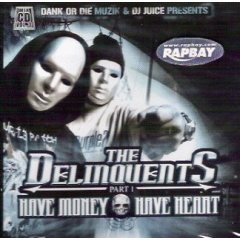
During the next 18 months, J-Stalin would generate no small amount of buzz, thanks in part to high-profile guest shots on projects like the Jacka's The Jack Artist (Artist, 2005) and the Delinquents' Have Money Have Heart (Dank or Die, 2005). Three advance tracks from On Behalf — "Party Jumpin’," featuring Jacka; a clean version of "Fuck You"; and an homage to the classic drum machine, "My 808" — have accumulated spins on KMEL, while the video for "My 808" has more than 20,000 plays on Youtube.com. Too $hort says he's "next," E-40's dubbed him "the future," and major labels like Capitol and Universal are checking him hard.

To crown these achievements, Stalin's copped a coveted spot hosting an upcoming project for the Bay Area's mix-tape kings, DJ Devro and Impereal, alias the Demolition Men (see sidebar).
Named after Stalin's penchant for calling the DJs at 7 a.m., ready to lay verses, The Early Morning Shift is a potent fusion of mix tape beats and Mekanix originals, laced with Stalin's melodic raps and distinctively raw, R&B-style vocals. Taking advantage of the industry's current structure, whereby you can drop a mix tape or two without compromising your "debut" album marketability, The Early Morning Shift will be most listeners' first chance to hear the prolific J-Stalin at length, in the company of stars like Keak, F.A.B., and the Team, as well as Stalin's Cypress Village crew, Livewire. Having generated some 60 tracks in the scant two weeks devoted to recording the disc, Stalin has literally given the Demolition Men more than they can handle: Talk of a "part two" is already in the air, though the DJs are still rushing to finish the first for an early-May release.

The Early Morning Shift comes at a pivotal time in J-Stalin's career. At the very least, the mix tape will warm up the Bay for On Behalf, which Zoo Entertainment plans to release independently in the next few months. With everywhere from Rolling Stone to USA Today catching on to the Bay's hyphy/thizz culture, and major labels lurking in the wings, it's probably only a matter of time before Stalin gets a deal. But the rapper is adamant on signing only as part of the Mekanix's Zoo.

"We don't want an artist deal," he says. "If they give us a label deal, it'll work, because I ain't fittin' to sign no artist deal."

If this sounds a tad dictatorial in the mouth of so young a playa, consider that Stalin left a famous rapper's camp to work with a then-unknown production duo, a decision fraught with risk. But Stalin's instincts regarding his own artistic strengths are sound. He thrives on quantity, and the Mekanix's intense productivity suits Stalin's seemingly endless supply of rhymes and hooks. The duo's ominous, minor-key soundscapes provide perfect vehicles for the rapper's exuberant tales of West Oakland street hustle and melancholy, often poignant reflections on d-boy life.

"I used to listen to their beats," Stalin recalls, "and be like, 'Damn, them niggas got heat!' Plus they ain't no haters. I mean, I'm a leader; I ain't no follower. They allow me to still be me and fuck with them at the same time."

A few months ago I had a chance to watch this process in action, dropping by the studio as Dot and Tweed were putting the finishing touches on a hot new beat, one in tune with current hyphy trends yet retaining the dark urgency characteristic of the Mekanix sound.

"Let me get on it," Stalin says, as he usually does when he hears something he likes.

Sometimes Dot says yes, sometimes no, depending on their plans for a particular session. With a beat this fresh and radio-ready, one they could easily sell, Dot is noncommittal: "What you got for it?"

Without a pause Stalin breaks into a melody, accompanied by an impromptu dance: "That's my name / Don't wear it out, wear it out, wear it out ..." Simple, catchy, the phrase totally works, and in less time than it takes to tell, he's in the booth laying down what promises to be the main single from On Behalf: "That's My Name."

Sitting behind the mixing board, Dot shoots me a smile, as if to say, "See why we work with this guy?"

On the Go Movement

With The Early Morning Shift about to drop, and On Behalf on the way, the only thing Stalin needs is his own catchword, à la hyphy or thizz. Enter the Go movement. Among recent innovations in Bay Area hip-hop slang is a certain use of the word go to indicate a kind of dynamic state of being, widely attributed to Stalin.

"I ain't sayin' I made it up, but somebody from West Oakland did," Stalin says. "Even before there was hella songs talkin' about Go and shit, that shit came from ecstasy pills. We used to say, 'Goddamn, you motherfuckers go.' And then you refer to a female like, 'She go.' I swear it used to just be me and my niggas in the hood. I started fuckin' with the Mekanix and sayin' it at they place. Then, before I knew it, everybody was talking about Go."

Like thizz, Go quickly expanded beyond its drug-related origins, partly because it epitomizes so well the fast-paced environment of rappers' lifestyles. Among the early cosigners of the Go movement is the Team, whose album World Premiere (Moedoe) dropped at the beginning of April. Not only did the group release a between-album mix tape and DVD called Go Music (Siccness.net, 2005), but Team member Kaz Kyzah has hooked up with Stalin and the Mekanix for a side project called the Go Boyz. First previewed on Go Music, on a track also featuring Mistah F.A.B., the Go Boyz have already recorded their self-titled debut, and Zoo is in talks with Moedoe about an eventual corelease.

"Where I'm from, we don't say, 'Go stupid.' 'Go dumb.' We just go," Kaz Kyzah says, explaining the term's appeal.

"Really, it's a way of life for us," he continues. "Me, Stalin, Dot, and Tweed, we'd be up all night just goin'. Every song was recorded at like four in the morning. Listening to some of the stuff now, you can feel it in the music."

Getting in early

Since I began this piece, Stalin, it seems, has gotten even bigger, as word of The Early Morning Shift and the Go Boyz has spread through the scene. People are suddenly lining up to work with him, and he's already committed to new projects with DJ Fresh, Beeda Weeda, the Gorilla Pits, and J-Nash, an R&B singer featured on Mistah F.A.B.'s upcoming Yellow Bus Driver. In a late-breaking development, E-40 confirms he intends to sign the Stalin/Beeda Weeda duo project to Sick Wid It Records.

During our interview, Stalin and I run by DJ Fresh's studio so J can lay a rhyme for an upcoming installment of Fresh's mix tape series, The Tonite Show. Another rapper, watching Stalin pull a verse out of thin air four bars at a time, is clearly awed: "He's amazing. I mean, he's on the records I buy."

Stalin takes it all in stride, though; aside from when I've watched him perform live, this is the first time I've ever seen someone react to him like he was a star. I get the feeling, however, it's far from the last.


J-Stalin
Fri/28, 10 p.m. doors
Club Rawhide
280 Seventh St., SF
$20
(415) 621-1197
myspace.com/jstalinofficialpage

Read More...

Bring on the Demolition Men

by Garrett Caples
San Francisco Bay Guardian April 26, 2006


The Demolition Men, Impereal and DJ Devro, definitely didn't earn their reputation as the Bay Area's mix-tape kings by staying at home. As DJs the duo has performed together and separately at clubs all over the world, from China and Japan to South America and Europe. Native Spanish speakers — Impereal hails from the Colombian community in Queens, NY, while Devro is Southern California Creole — the pair also hosts Demolition Men Radio, broadcast Thursdays from 6 to 7 p.m. on Azul 1063, a hip-hop station in Colombia's Medellin. Yet if you live in the Bay, you're most liable to see them on the street, selling mix tapes out of their backpacks.

"We're like a walking promotional retail machine," Impereal jokes. "If you don't buy a mix tape, you going home with a flyer."

Such determination, coupled with the DJs' high output (more than 30 releases since late 2003, including three volumes each of R&B and reggaeton) and elaborate graphics, has finally kick-started the Bay's once lackadaisical mix tape scene.

An integral component of hip-hop in New York and the South, enabling new talents to be heard alongside vets and vets to issue bulletins with an immediacy unavailable to corporate labels, DJ-assembled mix tapes at their best are the ultimate in no-holds-barred hip-hop. Considered "promotional material" and usually printed in limited quantities, the discs are generally unencumbered by legal requirements like sample clearance.

Until recently, however, mix tapes weren't much of a factor here. While the Demolition Men are quick to pay homage to their local predecessors — like Mad Idiot, DJ Natural, and DJ Supreme — Natural acknowledges the mix tape scene was a bit dead before the Demolition Men began shaking it up.

"Out here DJs were concentrating on clubs," Natural says. "Then they started putting stuff out constantly." Now there's sufficient trade in mix tapes for Natural to move his formerly virtual business, Urban Era, to brick-and-mortar digs at 5088 Mission, making it the Bay's only all–mix tape music store. Yet even with increased competition, he notes, the Demolition Men still routinely sell out.

In addition to their up-tempo release schedule, the success of the Demolition Men's mixes might be attributed to the conceptual coherence they bring to their projects. While they do put together general mixes featuring more mainstream fare — such as the Out the Trunk series, which boasts exclusives from Ludacris — the duo's hottest projects tend to tap into the Bay's reservoir of talent. Aside from their multifaceted Best of the Bay series, the Demolition Men have released mix tapes hosted by Bay Area artists like Balance, Cellski, El Dorado Red, and the Team.

Currently the Demolition Men's most successful disc has been their most ambitious: Animal Planet, not so much a mix tape as music cinema, starring the Mob Figaz' Husalah and Jacka. A mighty 34 tracks — featuring production by Rob Lo, Traxamillion, and the Mekanix, and appearances by F.A.B., Keak, and Pretty Black — Animal Planet is an incredible collection of almost entirely exclusive, original material, seriously blurring the boundary between mix tape and album. Its success has encouraged bold undertakings, like The Early Morning Shift with J-Stalin and Block Tested, Hood Approved, a mix tape/DVD starring Fillmore rapper Big Rich. "I guess we're taking the mix tape to the next level," Devro says.


Demolition Men DJ
Thurs/27 and the last Thursday of every month, 9 p.m. doors
Vault
81 W. Santa Clara, San Jose
$10
(408) 298-1112
myspace.com/demolitionmenmusic

Read More...

20061014

Is There Really a New Bay Rising?


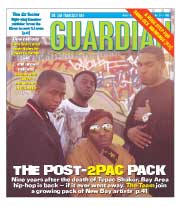
The post-2Pac pack
Did the death of Tupac Shakur throw Bay Area hip-hop into a tailspin? And is there really a "New Bay" rising?

By Garrett Caples
San Francisco Bay Guardian March 16, 2005


You can pick me up; I'll be posted on 10th Street

'Cause you know that's where I'll be

Stuck like a telephone pole.


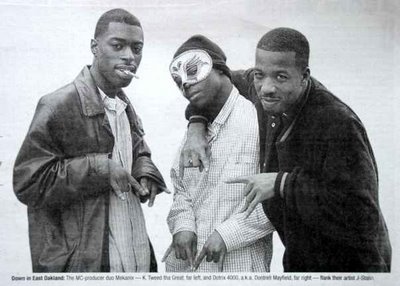
SO SINGS YOUNG rapper J-Stalin – a DJ Darryl discovery and former Richie Rich protégé – on a hook from his recent first mix tape, R-N-B. And it's true. As I roll up 10th Street in West Oakland's Oak Center, I see the short, wiry MC in the distance, standing in the middle of the street, talking on his cell. On the other end of the line, next to me in the car, is Dotrix 4000, a.k.a. Dontrell Mayfield, a former Digital Underground DJ turned MC-producer as half of the Mekanix. We've just driven from his house in East Oakland to pick up Stalin and bring him back to the Mekanix's studio, where they're finishing Stalin's debut, On Behalf of the Streets, for the duo's new label, Zoo Entertainment.

I live downtown, in a neighborhood no one calls Lakeside, about 20 blocks from where Stalin's "posted." In effect, I've spent my day doing a citywide doughnut. But Stalin's hood is worth it. A post-WWII black community inhabiting the structures of a middle-class Victorian past, Oak Center is funky as hell, beautiful blocks of houses in all shades and states of repair, dotted with buildings of a more recent vintage.

According to the fall 2003 Oakland Heritage Alliance News, the entire neighborhood was slated for demolition by the Department of Housing and Urban Development in the early '60s to make way for vast, anonymous housing projects. Only stubborn local resistance thwarted the plan.

'New Bay' vibed

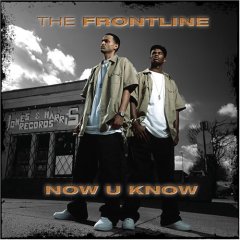
Like Oak Center, Bay Area hip-hop is characterized by stubborn resistance, epitomized by 2Pac and still evident in Stalin's provocative choice of namesake. And that same spirit animates the community's reception of the catchphrase "New Bay." Coined by Oakland MC Balance but popularized by Richmond duo the Frontline, the term "New Bay" has led to press in national publications like Vibe and XXL. The latter forecast a "resurrection" of Bay Area hip-hop based on Virgin's 2004 success with the Federation (from Fairfield) and Ryko's signing of the Frontline on the strength of their EA-SKI-produced hit "What Is It." Since the single broke into the rotation of the notoriously local-leery KMEL, 106 FM, the radio exposure has helped the group move 10,000 copies of Who R You (IMG), their 2004 independent debut, which will be updated and rereleased by Ryko as Now U Know.

Yet the phrase has also sparked a firestorm of controversy in the Bay Area hip-hop scene.

"I guess people are like, we done worked too hard to let people come in and say, 'We're the New Bay – fuck all the old shit,' " Dotrix 4000 says. "Those cats screaming, 'New Bay' – they ain't connected. But the underground is all connected. We've been connected."

As if cued, G-Stack of Oakland's Delinquents calls Dotrix 4000's cell. "I think it's bullshit," he says of the New Bay concept. At the same time, he lets it be known his gripe isn't personal. "I think the Frontline does have talent, and I wish them well. But it's about public perception. 'New' comes right after 'old.' "

Therein lies the problem. Like most forms of popular entertainment, hip-hop is extremely susceptible to the cult of the new. Careers start young and end early, unless you can adapt to rap's ever-changing circumstances. It requires indefatigable effort to stay on top of the game, the type of effort that's driven the Delinquents to record not one but two mix CDs – Have Money Have Heart volumes 1 and 2 (Dank or Die Records) – addressing the New Bay controversy. In a gesture of defiance, G-Stack and fellow Delinquent V. White enlisted the aid of Too $hort, Oakland's ultimate OG, for "Say Bitch," the lead single, which disses the New Bay in no uncertain terms.

The "2Pacalypse" Theory

To fully understand why a phrase so small could generate a reaction so extreme from a vet like G-Stack, we must invoke the "2Pacalypse" theory. Believers argue that Pac's death in '96 triggered an artistic decline that left Bay Area hip-hop incapable of attracting a national audience or major-label interest. Thus, the Frontline's bio on www.thefrontlineonline.com offers, "In the past six years, the Bay Area hip-hop scene has become stagnant, passing off replicas of established artists as new talent." Add a couple of years to account for the age of this blurb and we're back at 1997, without even mentioning Makaveli directly. The New Bay clearly presupposes the 2Pacalypse, insofar as there must be a grave from which to resurrect Bay Area hip-hop.

But the 2Pacalypse theory has at least two major holes that make it an unsuitable foundation on which to build an understanding of local hip-hop. For starters, it holds the artists responsible for the behavior of major labels. Yet even before 2Pac's death, major labels were getting cold feet in the Bay. On his Web site, www.guerillafunk.com, for example, Paris is vocal about his problems with Tommy Boy and then Priority regarding the political content of his work, which effectively stalled his career in the mid-'90s.

Or take the case of Ray Luv, 2Pac's partner in the Marin City group Strictly D.O.P.E. In 1993, Ray scored an independent radio hit with "Get Your Money On," on Mac Dre's Strictly Business Records. In 1995, with Dre in prison, Ray signed with Atlantic (once part of Time Warner and now with Warner Music Group), through Khayree's label, Young Black Brotha. Atlantic, he tells me, "put out my album about six weeks before Time Warner was about to fire Interscope over Death Row and 2Pac. So every record like Pac's basically got shelved because they didn't want you to blow up."

"I'd be in L.A. – I'm getting walk-ons on the biggest shows," he says. "Shows they couldn't get me, I'm getting. Atlantic moved me from there and sent me to Kansas City for five days. And I'm like, what just happened? Once we pissed each other off, they were sending me to hotels where my window faced a brick wall. It got weird, so I quit. I took from '96 to '99 off."

If this sounds like the paranoia of a could've-been contender, consider the source. Handsome and charismatic, Ray was already a proven hit-maker, as was Khayree. The label exec who couldn't exploit so close a connection to Pac for at least gold in 1995, when he was already the biggest-selling rapper ever, strikes me as an underachiever at best.

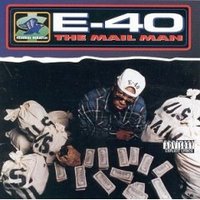
The second hole in the 2Pacalypse theory is the fact that the creative decline of Bay Area hip-hop never really occurred. With the major labels increasingly reluctant to sign acts, much of the scene went underground. If you generated huge numbers, like E-40, whose 1993 EP, The Mail Man, debuted in the Billboard Top 20 with no distribution deal, you could force the majors to deal with you. (E-40 was quickly signed by Jive.)

But it grew increasingly apparent that you could do without them. Indie scenes sprang up around artists like Blackalicious and the Soulsides/Quannum collective. In Oakland, Pam the Funkstress and Boots reinvigorated political rap on a national level as the Coup. Artists like Del tha Funky Homosapien left labels like Elektra to establish their own companies, while others, like the Delinquents, built huge followings from the ground up.

New bosses

By 1999, the revolution was in full swing, as independent tunes began to infiltrate the airwaves. Among the local hits on KMEL that year was "That Man!," by the Delinquents, who went on to move 50,000 copies of 1999's Bosses Will Be Bosses (Dank or Die). By the end of the year, however, Clear Channel had bought KMEL, and G-Stack says he's been unable to get airplay since. (As of press time, KMEL musical director "Big Von" Johnson was unavailable for comment.)

The Delinquents maintain a sizable fan base. "They are Oakland," Dotrix 4000 says, "in terms of selling records and reppin' our city. They can't throw a party and it's not sold out." But while successful acts like the Delinquents have countered the lack of radio exposure and label support through relentless hustle, it's unclear whether hustle alone can withstand the effect of the media actively promoting other artists as New Bay hip-hop.

On the phone, the Frontline are more conciliatory than they come off online. They seem genuinely nonplused by the furor the New Bay catchphrase has provoked. "Without the veterans," MC Locksmith of the Frontline says, "you have no Frontline, without the Too $horts, the E-40s, the Delinquents, the Luniz, without any of these cats." His partner, Left, concurs: New Bay was meant to be "a fresh way of looking at Bay music" rather than an attack. "Let everybody come up. Let's all make good music and all come up together."

I brought this statement to a number of rappers, and responses ranged from "They should've said that first" to "SKI should've known better" to "Fuck them niggas" – disappointing, but you can see their point. We're talking about a scene that still produces entire albums dedicated to Rappin' Ron of Bad Influenz, who died in a car crash in 1997. Most Bay Area rappers I've spoken to have real reverence for the tradition on which they build, and the New Bay concept offends their sensibilities.

Like the residents of Oak Center, they're proud of their community and don't want it wrecked by decisions made outside. In that light, the resentment provoked by the New Bay concept and the flurry of accompanying diss records shouldn't be ascribed to envy. They signify, instead, the stubborn resistance of a community that has survived without assistance and that refuses to cooperate, or be co-opted, except on its own terms.


Read More...